Vehicle-to-grid tech put to test in SA trial
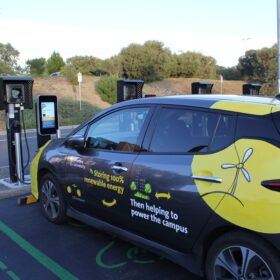
South Australia’s Flinders University has launched a trial that will test bidirectional vehicle-to-grid charging technology that allows electric vehicles to either be recharged or used as batteries to provide back-up power to the grid.
Biwatt unveils new residential sodium-ion batteries
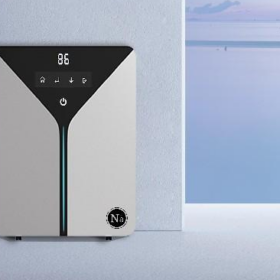
Biwatt Power, a Chinese manufacturer, has developed new residential sodium-ion batteries with an efficiency rate of 97% and a projected lifespan of more than 3,000 cycles.
Altech pushes ahead with Germany-based battery projects
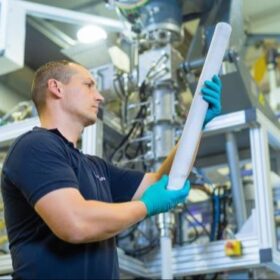
Western Australia battery tech company Altech Batteries has raised $13.3 million (USD 8.7 million) to advance the development and commercialisation of its sodium-chloride solid state battery project and to progress construction of a silumina anodes battery materials plant in Germany.
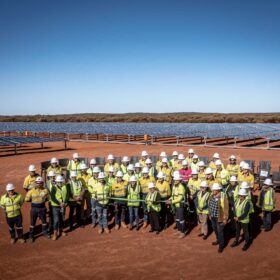
Pacific flicks switch on 6 MW solar farm as hybrid plant powers up
Australian renewables company Pacific Energy has powered up the first of four solar-fuelled hybrid power plants being rolled out at Westgold Resources’ mining operations in Western Australia.
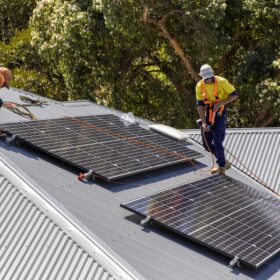
Switch to all electric tipped to save households $4,320 a year
Australian households that make the shift to all-electric energy-efficient appliances, combined with solar panels, battery storage and electric vehicles, could save $3,500 a year by 2030 and $4,320 by 2050 compared with a fossil-fuelled household that relies on gas appliances and petrol or diesel vehicles.
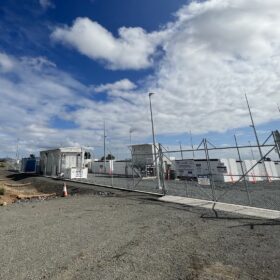
Battery capacity overtakes pumped hydro in NEM
The energisation of two new battery projects totalling a combined 150 MW has seen the charging capacity from grid-scale battery energy storage systems surpass that of pumped hydro in Australia’s national grid.
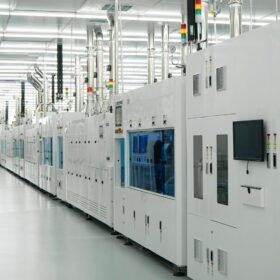
Vena launches Indonesia production plan to support solar, storage ‘megaproject’
Singapore-based developer Vena Energy has announced it will investigate opportunities to manufacture solar panel components and battery energy storage systems in Indonesia to support a hybrid megaproject featuring up to 2 GW of solar capacity and more than 8 GWh of energy storage.
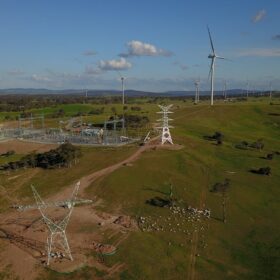
EnergyCo ‘right sizes’ plans for Central-West Orana REZ
The size of Australia’s first coordinated renewable energy zone is set to be increased with the New South Wales government announcing the network capacity of the declared Central-West Orana Renewable Energy Zone will be expanded to better meet the state’s future energy needs as coal-fired power stations progressively retire.
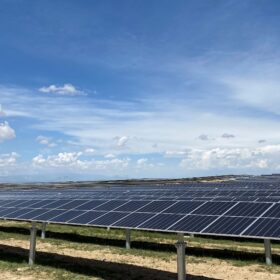
Modelling shows solar ‘ramps’ future threat to grid stability
Developers of large-scale PV projects in Australia are being told it is of the utmost importance that they plan for increased frequency of sudden solar power fluctuation events – known as ramps – with new research suggesting that climate change may affect the future stability of grid-connected solar power systems.
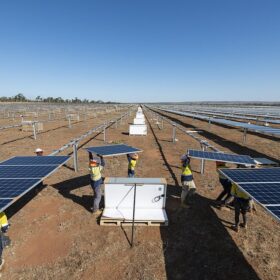
Investors provide 4.7 GW response to NSW generation and storage tender
Investors have lodged bids for 3.1 GW of wind and solar projects, along with 1.6 GW of long-duration storage projects, in response to the New South Wales government’s latest tender for renewable energy generation and storage capacity as it prepares for the exit of coal-fired power generation from the state’s electricity grid.