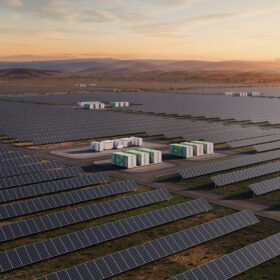
New South Wales invests in Spanish hybrid renewable energy platform
The New South Wales Treasury Corporation, the state’s sovereign investor, has entered into a partnership with United Kingdom-based developer Equitix to grow its renewable energy hybridisation platform in Spain.
Australia’s renewables target marathon still far from COP28 finish line
Australia is one of only seven countries outside the European Union that has updated its 2030 national renewable target with an 18 GW boost, since the 2023 COP28 global tripling pledge.
Grid scale solar and battery projects score Western Power connection offers
Western Power has closed off 759 MW of connection offers for FY2024/25, announcing the last two projects for the period, and in the coming financial year expects to offers made for a further 300 MW of storage and 112 MW solar generation.

Renewables developers shift focus in search for project sites
Renewable energy developers are increasingly shifting their focus to pre-approved “progressed” solar, wind, and battery project sites that are ready for construction as Australia’s clean energy rollout continues.
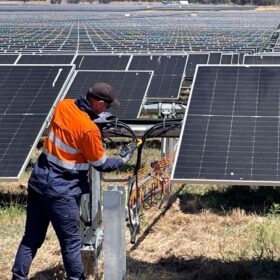
OX2 secures federal tick for NSW solar, storage project
A 90 MW solar farm and four-hour battery energy storage system planned for the Richmond Valley in northern New South Wales has passed through the federal environmental approvals process in just 30 business days.
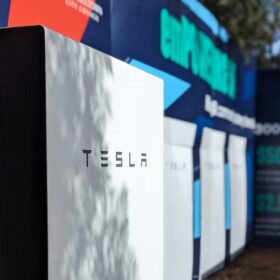
AGL to build 11.2 MW community battery fleet in SA
AGL Energy continues its push into community power, announcing plans to build and operate a portfolio of community batteries located across metropolitan and regional South Australia.
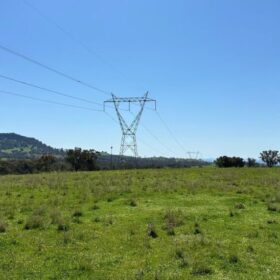
North Harbour lands funding to back twin battery projects
Australian renewables developer North Harbour Clean Energy has secured early-stage funding for two large-scale battery energy storage projects in New South Wales.
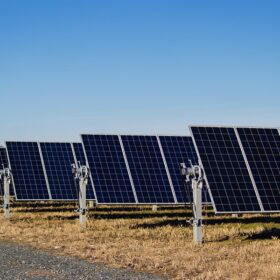
Federal renewables subsidy scheme expanded to 40 GW
The federal government is scaling up its support for renewables, expanding its flagship Capacity Investment Scheme in a bid to accelerate Australia’s clean energy transition.
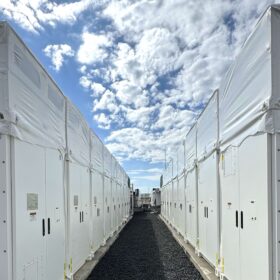
NSW tender to target 500 MW of energy firming projects
The New South Wales government has launched a new tender seeking 500 MW of firming capacity to support the transition to renewables as its ageing coal-fired power stations are shut down.
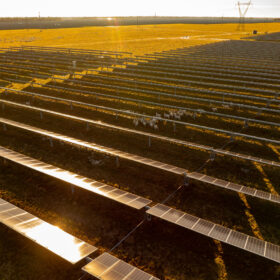
Dutch investment giant APG pumps $1 billion into Australian renewables platform
Dutch pension fund giant APG Asset Management has committed more than $1 billion to expand the renewable energy platform of developer Octopus Australia.