Mapping Australia’s battery mineral waste ‘gold mine’
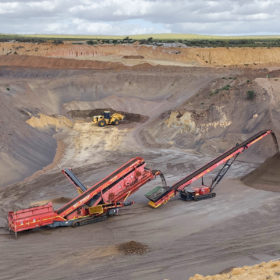
To encourage industry to consider the battery mineral opportunities currently sitting in neglected heaps around the country, Geoscience Australia and its partners are developing an Atlas of Australian Mine Waste. The public database hopes to highlight the opportunity in reprocessing mining waste for new markets.
10 GW Desert Bloom green hydrogen project attracts major Japanese partner
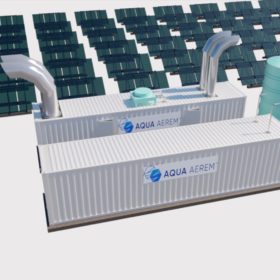
Water-from-air technology company Aqua Aerem’s Desert Bloom green hydrogen project received Major Project Status from the Northern Territory Government last year, now it has announced a partnership with Japanese energy giant Osaka Gas which not only brings the 10GW project closer to reality, but has also seen the company boost its ambitions to 20GW in light of “quickly developing demand.”
Asia Pacific to lead global battery storage market, clock 68% share by 2026
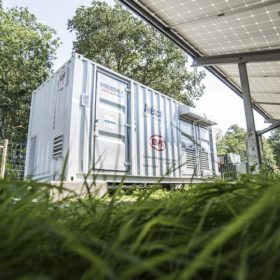
The global battery energy storage market will grow to US$10.84 billion (AU$14.54 billion) in 2026, with around two-thirds of the demand concentrated in the Asia Pacific region.
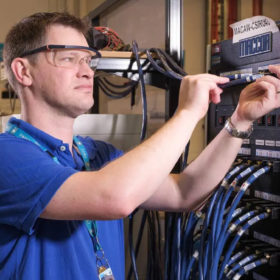
CSIRO to invest $50 million in storage tech of tomorrow
The CSIRO will invest $50 million in four new programs to drive critical breakthroughs in electric vehicle batteries and creating storage solution which could “mimic pumped hydro.”
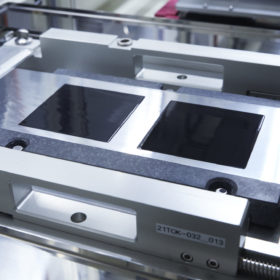
Mobility rEVolution: Nissan moves forward with in-house all-solid-state battery production
In other news, GM and Honda are jointly developing affordable EVs, the Biden administration holds an EV industry meeting, and Mercedes-Benz Energy agrees to supply EV batteries to BatteryLoop for its scalable, circular energy storage products.
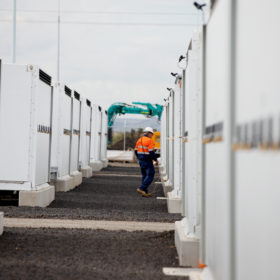
Australian battery storage market passed 1GWh in 2021
Australian deployment of battery storage remained steady in 2021, according to market research firm SunWiz, bringing cumulative installations to 1,089MWh.
Rare earth refinery to be built in WA as country vies to become serious China alternative for EV supplies
Western Australian miner Iluka Resources will build Australia’s first integrated rare earths refinery to supply electric vehicle and renewable energy industries. The project has been enabled by a $1.25 billion loan from the Commonwealth government and is part of a broader push within Australia to establish ourselves as a serious alternative to China for the supply of processed critical minerals.
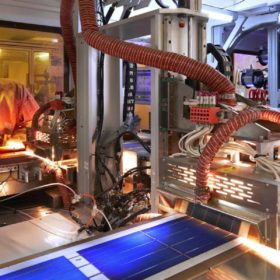
Trina Solar achieves 25.5% efficiency in n-type TOPCon solar cell
The result was confirmed by the National Institute of Metrology of China. It was achieved with a cell size of 210x210mm.

New Zealand opens $9 million in funding for renewable projects for Māori housing
New Zealand’s federal government has opened the final funding round in its NZ$14 million (AU$13 million) Māori Housing Renewable Energy Fund, open to small and larger-scale projects.
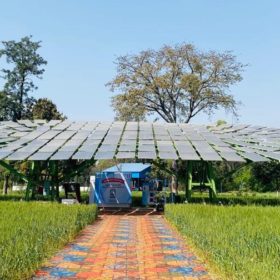
World’s largest solar tree record smashed
With a PV panel surface area of 309.83m2, the solar tree is officially certified by Guinness World Records (GWR) as the largest solar tree in the world.