Hanwha Qcells shuts down 3.5 GW solar factory in South Korea
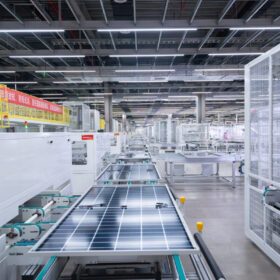
Hanwha Qcells has closed its 3.5 GW solar factory in South Korea as part of plans to optimise its PV module production capabilities amid a stagnant domestic solar market.
BP to take full control of Lightsource BP
Energy giant BP announced today it would take full ownership of solar and wind energy developer Lightsource BP once a deal – pertaining to the purchase of the remaining renewables company’s shares BP does not own – goes through next year.
Australia’s biggest battery project changes shape as Equis reaches FID, begins construction
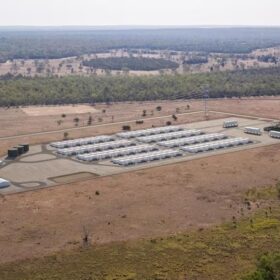
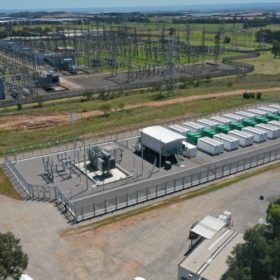
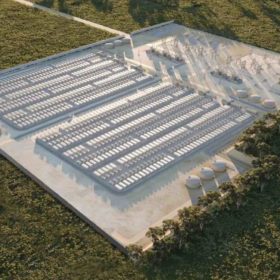
Through a co-funding deal with Victoria’s newly revived SEC, Equis Development has reached financial close and begun construction on phase 1 of its giant 1.2 GW Melbourne Renewable Energy Hub. Plans for the hub, which includes gigawatt hours of storage, seem to have shifted somewhat, with phase 1 now three independent batteries of 200 MW with either two- or four-hours of storage.
Tritium scrabbles for finance, courts investors and bans media from AGM
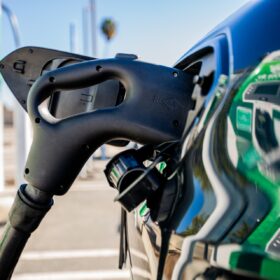
Brisbane-based electric vehicle charging company Tritium has been involved in a whirlwind of activity this week as it fends off being thrown off Nasdaq, sets about closing its manufacturing in Brisbane and courts new investors. Tritium has pioneered standards in fast charging not only for electric cars but also solutions for trucks and speciality vehicles. Chargers from Tritium went into operation today for container tractors at the Port of Long Beach, California.
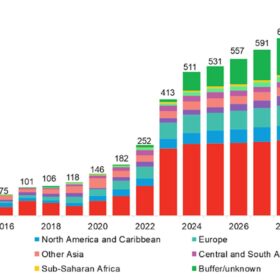
New solar installations to hit 413 GW this year, says BloombergNEF
BloombergNEF says historically low module prices will drive the global solar industry to record installations in 2023.
Victorian EV owners to receive road-user charge refunds, including interest
The Victorian government will repay, with interest, electric vehicle owners who paid a road-user charge later deemed unconstitutional by Victoria’s High Court.
‘Worst’ year for investment in Australia’s large-scale segment, report finds
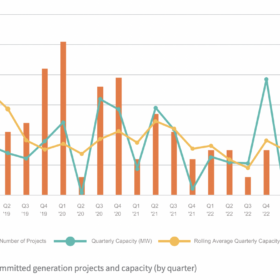
Investment in Australia’s renewable energy sector is more than 10 times lower than where it should be to reach 2030 targets, according to the Clean Energy Council calculations. Australia’s “sluggish” large-scale segment is the result of a confluence of issues, and illustrates the urgent need for the federal government’s newly supercharged Capacity Investment Scheme.

Renewables helping China to halve power prices compared to Australia, Europe
Wood Mackenzie says in a new report that China could install 230 GW of PV and wind capacity and export more than 200 GW of solar panels in 2023. Unlike Europe and United States, the country is avoiding the high curtailment of PV and wind.
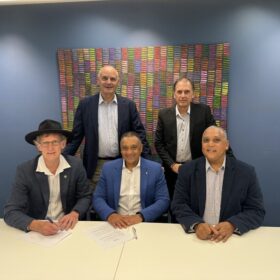
Sunshine Hydro signs 20% First Nations equity deal on flagship Queensland project
Sunshine Hydro and project partner Energy Estate have signed an agreement to give First Nations stakeholders a 20% equity option in the companies’ Djandori Gung-i Superhybrid project at Miriam Vale, Queensland. The project proposes to deliver up to 600 MW of pumped hydro capacity and up to 300 MW of hydrogen electrolysers.
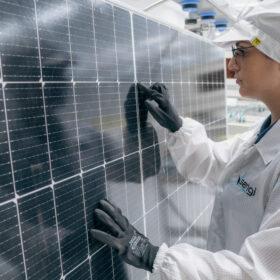
With China PV modules reaching record low prices, is there a chance for local PV manufacturing elsewhere?
From the International Solar Energy Society’s perspective, and the vision of a world with 100% renewable energy for everyone used wisely and efficiently, PV module production should not become an oligopoly and should not be concentrated in one corner of the world.