The Hydrogen Stream: Projects move forward in China, Japan, Australia and across several European countries
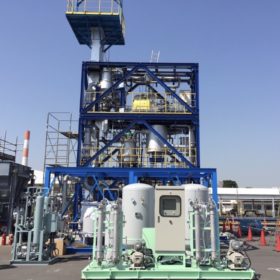
Sinopec wants to build 1,000 hydrogen refueling stations by 2025. Ways2H is building a facility in the Tokyo area that will convert daily 1 ton of dried sewage sludge into 40-50 kilograms of hydrogen for fuel cell mobility and power generation. Ørsted wants to deploy two renewable hydrogen production facilities for a total of 1 GW by 2030. Wacker Chemie is planning to produce green hydrogen and renewable methanol at its German site.

GoodWe launches two residential batteries
The Chinese manufacturer has unveiled a low-voltage battery with a modular design and a high-voltage storage system which is claimed to have a one-hour, ultra-rapid charge rate.
ACT faces ‘substantial’ electricity bill increase, Evoenergy blames renewable energy targets
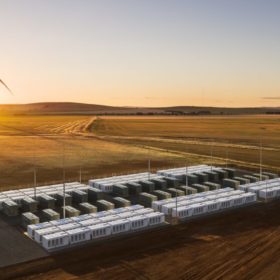
Evoenergy has blamed the Australian Capital Territory’s renewable energy targets for its proposed price hike, which would see average residential customers pay around 40% more for network charges, amounting to around $280 per year.
Australia’s renewable growth outpaces world, even as new report finds record global expansion in 2020
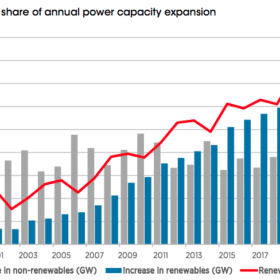
More than 260 GW of renewable energy was added globally in 2020, surpassing 2019’s previous net increase record by almost 50%, data from the International Renewable Energy Agency found. Australia’s pace of growth was almost double the global average, coming in at 18.4%.
Sunday read: Building PV for the future
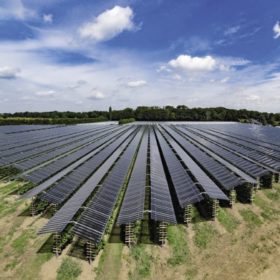
Financiers and investors have always understood that PV power plants play a more prominent role than just generating profits – they also produce electricity without emitting carbon. Lately, the sector is discovering that PV can fulfill a much larger range of environmental functions – improving biodiversity, removing carbon from enriched soils, and producing food in an environmentally sustainable way. Everoze Partner Ragna Schmidt-Haupt argues that putting ecological sustainability at the heart of PV project planning and operation should become the new standard.
AEMO publishes ‘Engineering Framework’ for accelerating energy transition
The Australian Energy Market Operator has published an engineering framework as it looks to conceive a broader framework for how the National Energy Market can facilitate the accelerating energy transition.

Here’s what Biden’s infrastructure bill offers solar and cleantech
The $2 trillion package includes a proposed 10-year extension of the ITC and PTC and calls for further incentives to add transmission capacity. Most solar advocates liked it, but one nonprofit panned it as being too industry-friendly.

Apple’s suppliers embrace renewable energy
The move is part of the U.S. technology company’s 2030 plan to rely 100% on renewable energy.
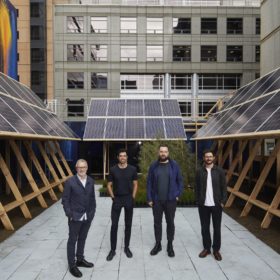
Solar steals the show at Melbourne Design Week
An independent exhibition brought to Melbourne Design Week by a group of 15 of the city’s top architectural firms demonstrates the blueprint for Melbourne’s transformation to “A New Normal”. “A New Normal” is a plan to transform Greater Melbourne into a self-sufficient city by 2030.
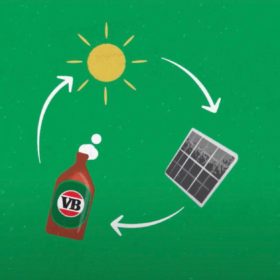
Solar earns the thirst, you drink the beer – new platform lets you trade PV for VB
Iconic Australian beer Victoria Bitter has partnered with Diamond Energy and Power Ledger to develop Solar Exchange, a blockchain-enabled platform that allows residential PV owners to exchange their excess solar for cases of beer. This is not an April Fool’s prank, miracles do happen, stay calm and exchange your excess solar for slabs!