WA announces members of its Future Battery Industry taskforce
A collection of mining companies, industry bodies and union groups have been announced as the members of the Future Battery Industry taskforce, the Western Australian McGowan Government’s unit designed to grow the value chain of critical minerals for the energy storage industry for domestic use and export opportunities.
WA invests in electric vehicle strategy, emissions continue to rise
Western Australia’s long-awaited Climate Policy has landed with somewhat of a whimper, nevertheless, there is something to be said of its investment in the uptake of electric vehicles, including what is to become Australia’s longest EV charging network. Nevertheless, there is perhaps something more to say about how dovish this policy is in regards to some of the world’s largest emitters being harboured in Western Australia.
NSW Energy Infrastructure bill passes with a bonus Hunter REZ
It makes sense that the Hunter-Central Coast, with its energy infrastructure, heavy industries and transitioning workforces should turn its resources and assets toward renewable generation. As NSW celebrates the passing of the NSW Liberal Coalition’s foresightful bill, the Hunter region is settling into its new place on the REZ map.
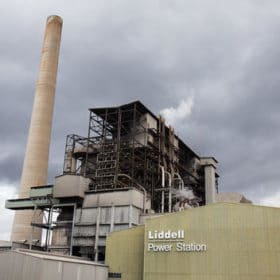
The ACTU firms up a fair employment pathway to renewable transition
From coal-orientated to renewable and inclusive, the ACTU has detailed an agenda for better skills-based training and more secure employment opportunities in renewable energy.
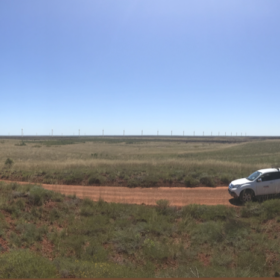
Report: Australia shapes as green energy “superpower”
Australia is positioned to become a renewable energy “superpower” with multinational consultancy Ernst & Young (EY) suggesting the nation’s green hydrogen and solar energy export plans have it well placed to take advantage of a growing market.

New WoodMac report forecasts renewables cheaper than coal by 2030 across Asia-Pacific
A new Wood Mackenzie report has forecasted a massive swing in the levelised cost of electricity across the Asia-Pacific over the course o the next decade. Before 2030, renewables will be cheaper than new coal and gas almost everywhere, and significantly cheaper in Australia.
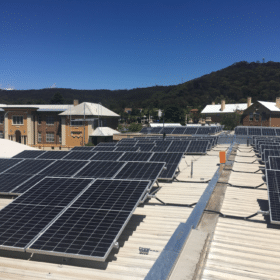
In the heart of NSW coal country, Lithgow turns to rooftop solar and Tesla battery storage
Lithgow City Council is smack-bang in the thick of NSW coal country, its surrounds are littered by coal-fired power stations (most of them closed). However, the immunity of solar and energy storage to the power outages brought on by emergencies like bushfires, as well as the Council’s own community goals, means times are a changing.
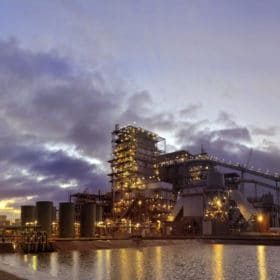
Japanese owner of WA’s Bluewaters coal plant reports worst ever loss in face of energy transition
The Sumitomo Corporation has reported a stunning ¥26bn (US$251m) loss on its Western Australian Bluewaters coal fired power investment. The loss assures the company’s worst ever annual performance and comes as a result of international and financial pressure against coal funding.
Clean energy ‘clear winner’ of Victorian state budget with $1.6bn in funding
The Clean Energy Council have called renewable energy the “clear winner” of the Victorian Budget 2020/21, saying the $1.6 billion in allocated in targeted funding represents a landmark for the state.
What’s NUW in energy? An alliance of three NSW universities concentrates clean-energy expertise
Recognising that the major problems facing the world can’t be solved by any one organisation, three New South Wales universities at the peak of renewable-energy research have rewritten the rules of collaboration to influence policymakers and accelerate solutions to market.