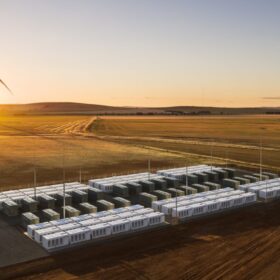
South Australia earmarks $180 million for home & grid-scale batteries, demand response
The South Australian government says it is looking to implement a series of reforms to improve the reliability, affordability and security of the state’s energy market. According to its latest state budget, released on Tuesday, it has allocated $180 million to execute the program.
Reports: Goldwind Australia looking to offload solar, wind project pipeline
Chinese wind turbine supplier and project developer Goldwind is looking to offload its Australian wind and large scale solar development pipeline, according to reporting from the Australian Financial Review. The move amounts to one of the first international players looking to exit the Australian renewables marketplace in the face of policy chaos.
Origin to develop 5 MW virtual power plant in Victoria
Following a grant from the Victorian government, Origin Energy is gearing up to connect solar and battery systems of up to 650 residential and commercial properties across the state, in what will be its first virtual power plant and the largest one in Victoria to date.
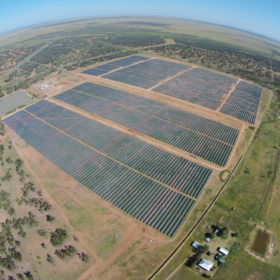
Queensland could go 90% renewable by 2030
If all planned renewable energy projects were to proceed, Queensland would be in line for a $24 billion injection into the state’s economy and over 35,000 new jobs, argues a new Solar Citizens report.

EnergyTrend expects price shuffle after EU ends MIP
According to the Taiwanese analysts, the solar PV module market is still stable. However, EnergyTrend expects a new price war to erupt with the end of minimum import tariffs (MIPs). In particular, Taiwanese manufacturers will have to cope with increasing price pressure.
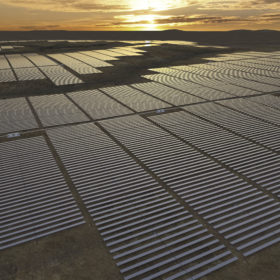
Wholesale power price to halve thanks to renewables
The addition of 7,200 MW of large-scale renewable energy supply since the closure of coal-fired power plants in 2016 in expected to almost halve wholesale electricity price over the next four years, shows the latest analysis from Green Energy Markets.
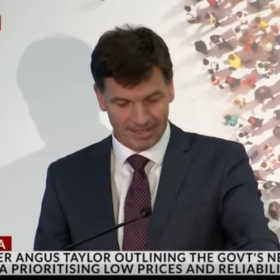
Taylor takes aim at gentailers, networks, renewables
The new federal Energy Minister has revealed his thinking, although few details, as to the measures the government will take in pursuit of its new “laser like” focus on electricity price reduction. While denying that he is a climate sceptic, emissions reduction clearly has no place in proposed policy measures.
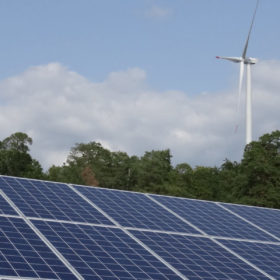
Queensland sets up CleanCo
The delayed establishment of state-owned renewable energy corporation CleanCo has kicked off. The new generator is expected to save households approximately $70 annually.

Is China about to add 10 GW of unsubsidized solar?
Rumor has it industry lobbying has persuaded the government to agree to 300-500 MW of distributed PV in each of the populous nation’s 34 local government areas, with a reduction in “non-technical costs” making up for a lack of guaranteed payment.
No cheers for solar from new energy minister
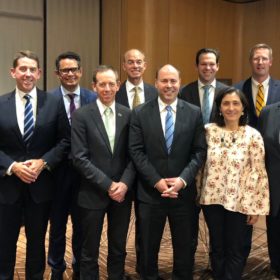
It is unclear whether Angus Taylor is a climate sceptic, but with new PM Scott Morrison having immediately separated the energy and environment ministries – and having in the past professed a curious affection for coal – life could be about to get a whole lot tougher for the Australian PV industry.