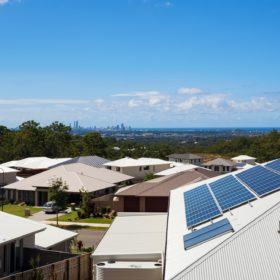
WA rolls out new rules to manage booming rooftop solar sector
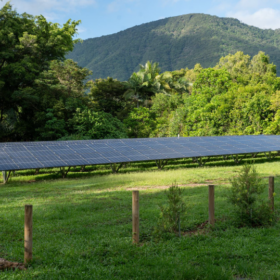
Western Australia will today introduce new curtailment rules which will allow for all new and upgraded solar PV and battery energy storage installations with an inverter capacity of 5 kW or less to be remotely turned down or switched off in emergency situations.

Major marine survey launched for proposed $3.5 billion transmission project
The proposed 1.5 GW Marinus Link transmission project, which would link Tasmania and the Australian mainland via an undersea electricity interconnector, has reached another milestone with the launch of a new engineering survey which aims to identify the most suitable corridor for the cables.
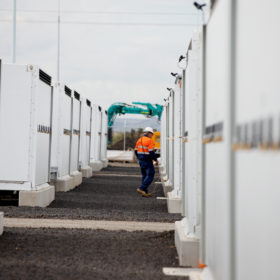
Australia’s battery capacity to double in 2022
After the deluge of announcements last year, 2022 will see the trickle of big batteries actually operating in Australia turn to a flood. According to Rystad Energy, the country’s battery capacity is set to double before the year is out.
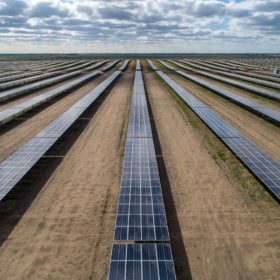
Investors submit 34 GW of wind, solar and storage for NSW renewable zone
Renewable energy investors’ appetite for large-scale development in Australia appears far from sated with the New South Wales Government revealing almost 50 new solar PV, wind and energy storage projects, totalling more than 34 GW, have been proposed for the South-West Renewable Energy Zone.
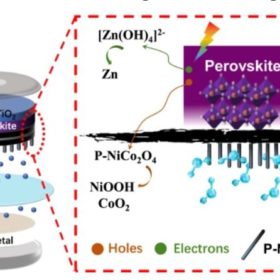
PV-powered rechargeable aqueous zinc battery
Conceived by scientists in China, the device combines an integrated carbon-based perovskite solar cell module with a rechargeable aqueous zinc metal cell. The proposed system achieved an overall efficiency of 6.4%, and a steady operation for more than 200 cycles with little performance degradation.
Sunday read: V2G driving grid changes
The uptake of EVs in the years ahead will add up to staggering battery capacity, mostly sitting idle on driveways. The two-way flow of electricity from EV batteries, known as vehicle to grid, could not only enable power systems to rely on intermittent renewables, but could also be the trump card for network operators to respond to grid disturbances. However, there are still a few catches to be worked out, as Marija Maisch explains.
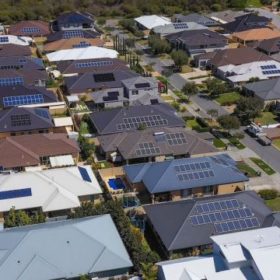
EleXsys targets rooftop solar increase with trial of next-gen technology
Queensland company eleXsys Energy has secured more than $450,000 to help finance a trial of next-generation technology designed to manage grid stability in low voltage areas, potentially allowing for an increase in the amount of distributed energy resources, including rooftop solar, that can be connected to the grid.
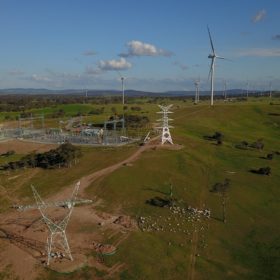
NSW declares massive 8 GW renewable energy zone
The New South Wales Government is forging ahead with plans to bring 12 GW of renewable energy and 2 GW of storage online by 2030 with the formal declaration of Australia’s second coordinated renewable energy zone in as many months.
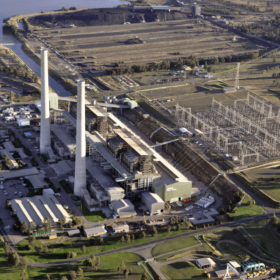
Saturday read: New tools for fossil fuels
Long thought of as adversaries to renewable energy, fossil fuel assets and infrastructure also present opportunities for solar, its green-hydrogen output, and smart energy storage. Natalie Filatoff reports on the opportunities and approaches the miners are taking.

Philippines’ first utility scale battery for grid stabilisation
The first 20MW/20MWh battery energy storage system in the 470MW/470MWh portfolio Fluence is deploying for Filipino conglomerate San Miguel Corp has started serving the island nation’s electricity network.