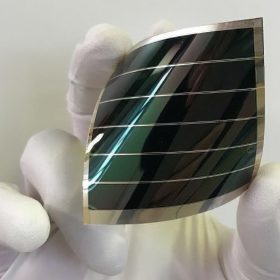
An organic solar cell with 25% efficiency
The ‘best conversion performance in the world in a dark room’ is how the developers of a new organic PV device have described it. Such cells could be used as a wireless source of energy for internet of things applications or in gadgets such as temperature-humidity and motion sensors.

CEC CEO Kane Thornton on why ARENA needs refunding
With ARENA’s funding set to dry up in mid-2020, many around Australia are concerned the Government is preparing to toss the golden goose. Clean Energy Council head Kane Thornton is here to make sure that doesn’t happen.
CSIRO’s energy unit to sack staff prior to Government’s Carbon Reduction Roadmap
The CSIRO recently told its Energy Business Unit that shortfalls would see approximately 20% of jobs cut despite the Government’s much-awaited Carbon Reduction Roadmap pinning our hopes on technological innovation.
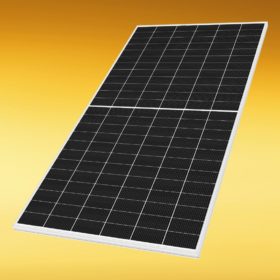
REC Group’s innovative Alpha 72 set for production
The REC Group’s novel Alpha 72 module has tested through the roof and is looking to come in on the roof of the market, literally. pv magazine Australia sat down with REC’s Paul Scerri to lay the module out.
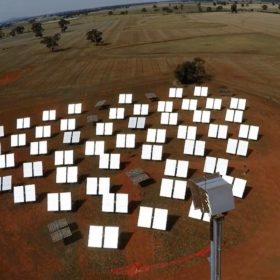
ARENA boosts funding for RayGen’s “solar hydro” power plant
The Australian Government and the Australian Renewable Energy Agency (ARENA) are set to fund RayGen Resources Pty Ltd (RayGen) to the tune of $3 million toward a feasibility study for a 4 MW “solar hydro” power plant in north-western Victoria.
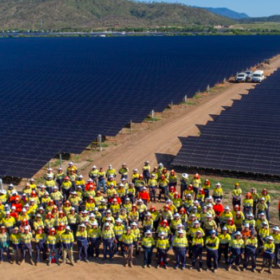
Two solar and one wind farm in north Queensland could be curtailed to zero
Three renewable energy generators in northern Queensland are facing major constraints due to system strength issues.
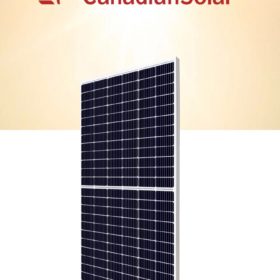
Canadian Solar to release HiKu Mono in Australia
Chinese-Canadian PV heavyweight, Canadian Solar, is looking to harness the power of poetry with the release of its HiKu Mono in Australia. The innovative monocrystalline module enters the market near the top of the range.

AEMC heeds renewable energy industry criticism on new transmission access rules
In welcome news for solar and wind developers in Australia, the network rule maker has decided to not to rush through changes to transmission access rules under the much-criticized Coordination of Generation and Transmission Investment (CoGATI) plan.
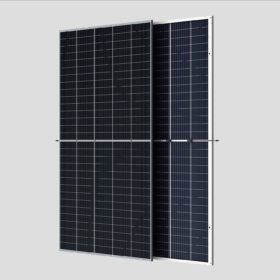
Trina Solar doubles down on PV 5.0
Trina Solar’s two new bifacial solar modules are touted as a “game changer,” not only for utility-scale projects, but for commercial and industrial developments as well. PV innovation continues to reduce costs and improve performance, but Australia’s outdated infrastructure is doing its best to slow the transition down.

QUT to drive green hydrogen export through LNG-focused research center
Queensland University of Technology (QUT) researchers say they will play a key part in developing the green hydrogen export industry by driving production, storage and transport projects under the auspices of the newly established Future Energy Exports (FEnEx) Cooperative Research Centre.