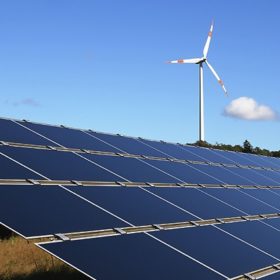
Solar and wind set new output record even as curtailment continues to bite
Grid-scale wind and solar output reached new highs in Q4 last year pushing power prices to a three-year low despite a number of coal-fired generator outages. As Australia’s big PV fleet continues to expand, the National Electricity Market saw the highest output of big PV on record, but also record curtailment.

Energy density advances and faster charging would unlock EV revolution
With electric vehicles making up only 3% of the global car market last year, analyst WoodMac says battery packs need to be cheaper and lighter and range anxiety must be addressed to change the habits of drivers.
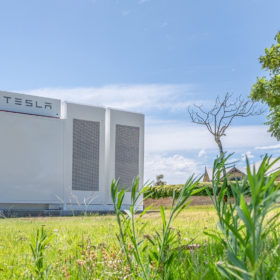
Perth’s first utility-scale community battery
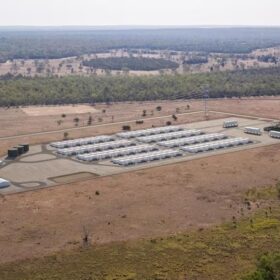
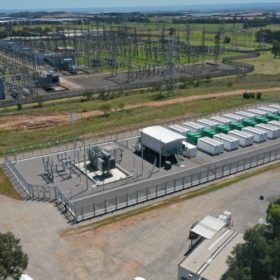
Synergy and Western Power’s PowerBank trial has reached another milestone with the integration of a utility-scale community battery into Perth’s major metropolitan network.
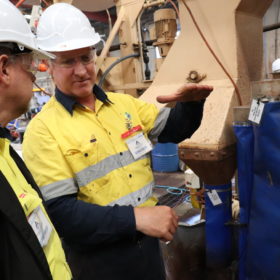
Australian Vanadium boosted by federal grant
Perth-based Australian Vanadium has received another boost from the Federal Government with the award of a further $1.25 million research and development grant to fund research into improving vanadium processing.

Power Ledger wins contract with Italian energy utility
West Australian peer-to-peer (P2P) energy trading pioneer Power Ledger has won a lucrative contract with Alperia SpA, one of Italy’s largest renewable electricity utilities.
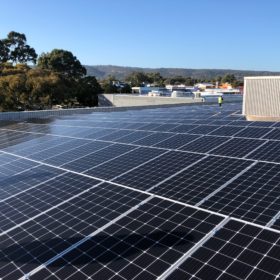
City of Adelaide commits to 100% renewable electricity
From July 1, if it is run by the City of Adelaide, it is being powered by wind and solar electricity under a landmark power purchase agreement inked electricity retailer Flow Power.

Scott Morrison’s gas transition plan is a dangerous road to nowhere
As Australia continues to battle horrific bushfires, Prime Minister Scott Morrison has announced a renewed focus on gas-fired electricity to reduce emissions and lower energy prices. This is a dangerous and completely unnecessary route.
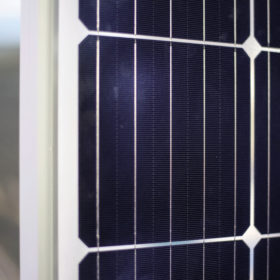
UNSW Sydney: Preventing LID in a 23.83% efficient Longi PERC cell
Australian researchers have unveiled hydrogenation technology to reduce light and elevated temperature-induced degradation in Czochralski silicon PERC solar cells. The developers say the process can minimize degradation without sacrificing performance in cells and modules.
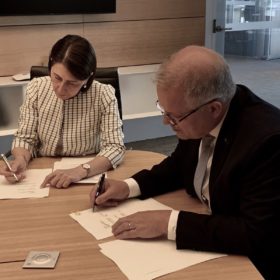
Morrison-Berejiklian energy deal: Opportunity for renewables or climate deal with the devil?
An energy deal struck between the Morrison and Berejiklian governments that will see more than $2 billion invested to increase gas supply and reduce greenhouse gas emissions from the electricity sector has prompted a flurry of reactions that boil down to two conflicting interpretations of its purpose.
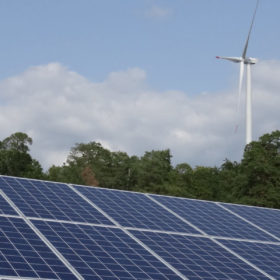
Renewables investment collapses due to network woes and policy uncertainty
In yet another confirmation of a dramatic drop in spending on large-scale renewables in Australia, a new analysis by the Clean Energy Council reveals a fall from 51 projects worth $10.7 billion in 2018 down to 28 projects worth $4.5 billion in 2019. Mounting regulatory risks, under-investment in transmission and policy uncertainty are the main reasons behind investment slow-down, which is set to put greater pressure on reliability and power prices as Australia’s old coal-fired power stations continue to close.