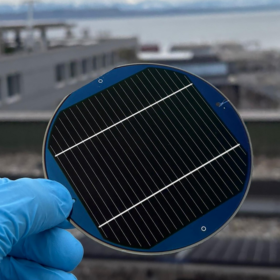
How long do rooftop residential solar panels last?
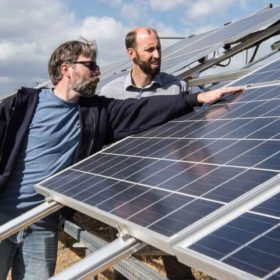
Multiple factors affect the productive lifespan of a residential solar panel. In the first part of this series, we look at the solar panels themselves.
Adani Green commissions world’s largest wind-solar hybrid plant in India
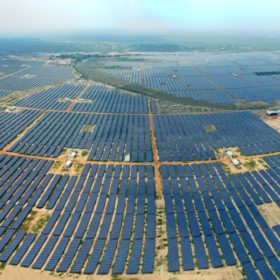
Adani Green’s newest project includes 600 MW of solar and 150 MW of wind capacity in the Indian state of Rajasthan. It will sell the electricity to Solar Energy Corp. of India under a 25-year power purchase agreement at a rate of INR 2.69/kWh (AU$0.051/kWh)
SA’s first solar-powered crypto mining centre to combat curtailment
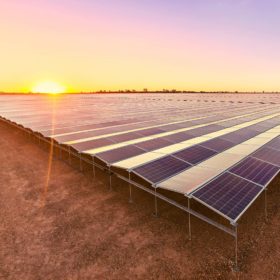
The operators of an energy-intensive cryptocurrency mining centre in the South Australian industrial city of Whyalla believe it offers a solution to curtailment issues that haunt many developers of solar PV projects in the National Electricity Market.
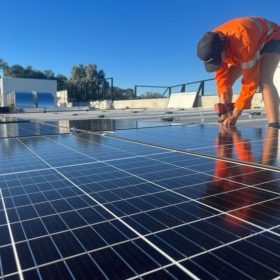
Victoria tips in $10 million to tackle solar panel waste challenge
With Australia’s appetite for solar energy fuelling a projected surge in end-of-life solar panels, the Victorian government has launched a $10 million program to help deal with the more than 180,000 tonnes of PV panels expected to enter the state’s waste stream by 2035.
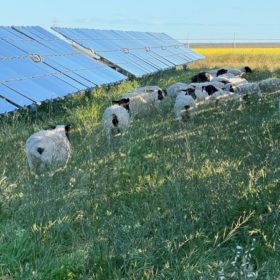
Bright reports positive signs in sheep grazing pilot
Renewables developer Bright Energy Investments has reported positive signs after launching a sheep grazing trial to replace mechanical methods of maintaining vegetation growth at the 40 MW Greenough River Solar Farm in Western Australia’s mid-west.
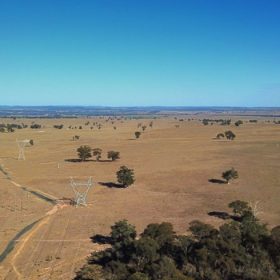
ACEN commits $800 million for 600 MW solar and storage project
A solar PV and battery energy storage project planned for the New South Wales Central West tablelands has achieved a major milestone with project developer ACEN Corporation approving $800 million for the construction of the 400 MW Stubbo Solar Farm.

New insurance facility to speed up low-carbon hydrogen projects
Marsh has launched the world’s first insurance facility for green and blue hydrogen project risks. Pv magazine recently spoke with the company about the challenges that operators face in securing insurance coverage for new technologies.

Indian player reveals expansion plans, including manufacturing solar cells, electrolysers
India’s Jakson Green will expand its solar module and cell manufacturing capacity to 2 GW by the end of 2024, CEO Bikesh Ogra told pv magazine this week at the Renewable Energy India Expo 2022. He said the company also has aggressive plans for green hydrogen and ammonia, with a specific focus on distributed generation.
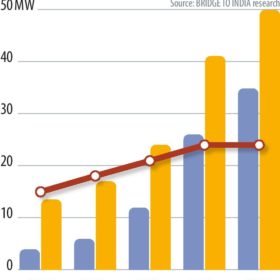
Weekend read: strong prospects to ‘Make in India’
India’s renewable energy sector, having so far focused almost solely on adding more generation capacity with ever lower tariffs, is undergoing a drastic change, as policy pivots toward domestic manufacturing. Vinay Rustagi, managing director of Bridge to India, looks at how the border conflict with China and endless supply side disruptions in the wake of Covid-19 have together strengthened the Indian government’s resolve to support the establishment of a more localised supply chain.
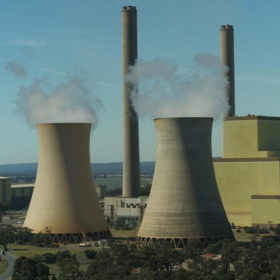
Shutting Australia’s dirtiest coal plant a decade early won’t jeopardise electricity supply
AGL Energy – Australia’s largest emitter of greenhouse gases – announced this week it will shut the Loy Yang A power station in Victoria’s LaTrobe Valley in 2035, a decade earlier than planned.