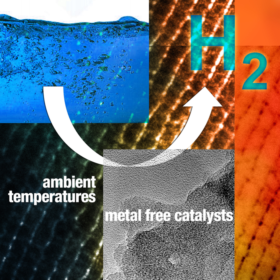
New dehydrogenation process to improve hydrogen storage
The U.S. Department of Energy’s Ames Laboratory launched a new catalyst based on nitrogen and carbon to extract hydrogen from hydrogen storage materials at mild temperatures and under normal atmospheric conditions. Furthermore, South African President Cyril Ramaphosa said that the country is working on attracting new investments in electric vehicles and hydrogen and Norwegian consultancy and classification society DNV launched, together with 18 industry partners, a new Joint Industry Project (JIP) to enhance the standardisation for hydrogen production systems that use renewable energy-powered electrolysis to produce green hydrogen.
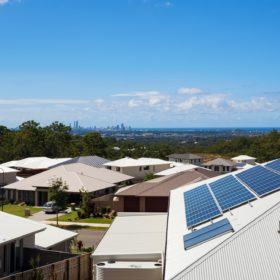
WA rolls out new rules to manage booming rooftop solar sector
Western Australia will today introduce new curtailment rules which will allow for all new and upgraded solar PV and battery energy storage installations with an inverter capacity of 5 kW or less to be remotely turned down or switched off in emergency situations.

Major marine survey launched for proposed $3.5 billion transmission project
The proposed 1.5 GW Marinus Link transmission project, which would link Tasmania and the Australian mainland via an undersea electricity interconnector, has reached another milestone with the launch of a new engineering survey which aims to identify the most suitable corridor for the cables.
Seasonal frequency in the NEM: is VRE continuing to drive it?
On 16 March 2021, the Australian Energy Market Commission (AEMC) published a draft determination rule which confirms the mandatory primary frequency response (PFR) arrangements to remain unchanged beyond the sunset date of 4 June 2023 established in March 2020. The primary frequency control band implemented under mandatory PFR is 49.985Hz -50.015Hz.
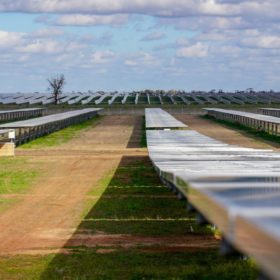
Renewables reach new highs in NEM as fossil fuels slump to historic lows
Renewable energy production reached record highs in Australia in 2021 with new data from the Climate Council revealing clean technologies including rooftop solar and utility scale PV supplied five times more power into the nation’s largest electricity grid than gas.
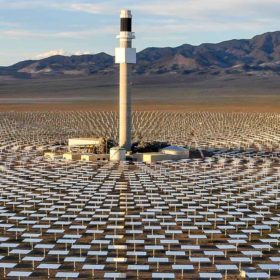
Next-gen concentrated solar power now under development in US
In new studies led by researchers from the National Renewable Energy Laboratory, the US Department of Energy pursues an energy cost goal of US$0.05 per kilowatt-hour.

Weekend read: Expansions in n-type
The past 12 months have been a turbulent time for PV manufacturing. Rapid and impressive developments in technology have been accompanied by price increases up and down the supply chain, and energy shortages weighed on production in the second half of the year. Chinese n-type module manufacturer Jolywood is now pressing ahead with ambitious expansion plans despite the disruption. pv magazine publisher Eckhart K. Gouras and editor Mark Hutchins recently caught up with Cathy Huang, European sales director at Jolywood, to discuss the company’s plans to bring n-type TOPCon technology into mainstream production.
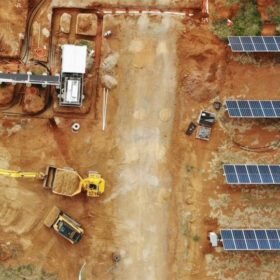
Mytilineos breaks ground on 110 MW Moura solar project
Greece-based industrial conglomerate Mytilineos has initiated construction works at its 110 MW Moura Solar Farm in central Queensland as it looks to further cement its position in the Australian renewable energy market.
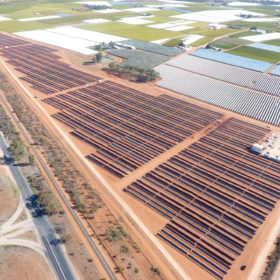
Councils unite to secure renewable energy purchase agreement
A group of New South Wales local councils have banded together to secure a power procurement agreement with solar-focused electricity retailer Mojo Power that they say will allow them to satisfy the electricity demands of their major infrastructure with 100% renewable energy while providing a path for participants to reduce their overall emissions.
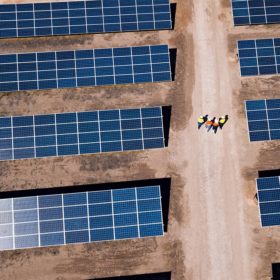
What does the future hold for wind and solar in the NEM – seen via GenInsights21?
Global-Roam and Greenview Strategic Consulting collaborated together recently to publish the Generator Insights 2021 report, taking a deep dive into historical generation performance across the national electricity market and considering what this means for the future. In this article, Marcelle Gannon shares some highlights around the increasing penetration of large-scale wind and solar generation, including historical changes in time-of-day earning patterns, the increasing importance of forecasting of renewable output, and some longer-term challenges.