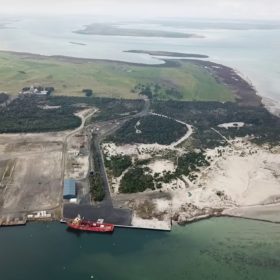
Longi wants to reach electrolyser capacity of 2 GW by 2023; investor enthusiasm for Port Anthony hydrogen project
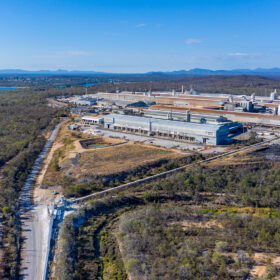
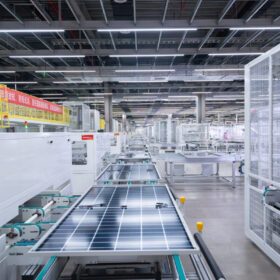
Australian green energy company Port Anthony Renewables’ oversubscribed capital raising exercise has put a fresh $3 million directly into its commercial scale hydrogen precinct ahead of a planned Australian Securities Exchange (ASX) listing next year. Meanwhile, Longi reportedly plans to build 1.5 GW of production capacity of electrolysers next year, up from 500 MW today.

Shell buys solar and storage company Savion from Australia’s Macquarie Green Investment Group
The transaction, for which Shell did not reveal the purchase price, will see the energy company pick up a U.S. project development pipeline which reportedly runs to more than 18 GW of solar generation and energy storage capacity across 26 states.

Variability compounding complexity compounding risk: the state of play in the NEM today
Australia’s energy system was already a complex web, but it’s now transforming into the work of a labyrinth spider, which build tunnels so complicated and thick they look like white silk vortexes. You get the picture. Or you will from reading the Generator Insights 2021 report published today.
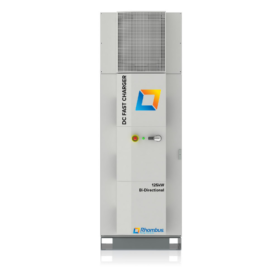
Ever heard of synchroinverters? Grid-stabilising devices connecting renewables to distributed energy resources
A U.S.-Israeli consortium is developing synchroinverters – inverters that mimic a synchronous generator and are able to actively respond to the grid’s frequency changes while stabilising the voltage. The new devices are expected to do this simultaneously and provide grid stability services in less than 16.67 milliseconds.
Grid software solution could more than double network capacity for renewables with no new infrastructure
With Scottish company Smarter Grid Solutions having already seen its software deployed in the U.K., a pilot project in New York State has been a resounding success for a grid solution the NREL has predicted could unlock swathes of network capacity without the need for new power lines.
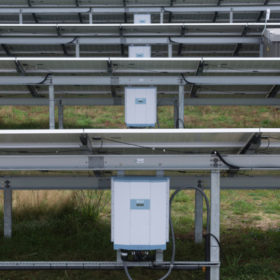
The silly source of Australia’s inverter chaos which threatened a pre-Christmas solar shutdown
When warnings of an end of year solar industry shutdown flared last week caused by rather incomprehensible strings of letters and numbers, gauging how the pieces fit together wasn’t easy. With a resolution all but officially confirmed, it appears the threat of a December 18 Armageddon have been averted, but the whole saga is, as Smart Energy Council CEO John Grimes put it, is “a masterclass in how Australian exceptionalism can backfire.”
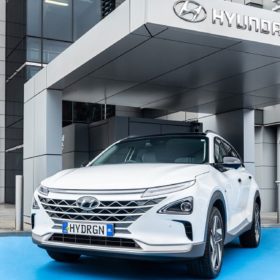
Hydrogen powered freight trains? Police cars? Queensland goes all out
The Queensland government will explore whether hydrogen fuel cells can be used for heavy freight trains, preceding that news with the launch of what is believed to be the first hydrogen powered police car in the southern hemisphere.
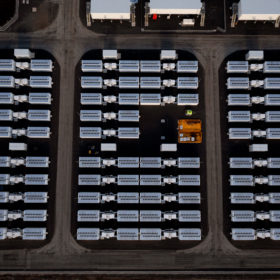
Construction begins on the 100 MW Capital battery in Canberra
Neoen today announced construction has begun on its 100 MW/200 MWh Capital Battery, which doubled from its initial 50 MW capacity proposed last year. The battery is to be built 10km southeast of the Australian capital, Canberra.
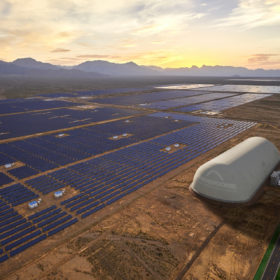
Storing solar power with compressed carbon dioxide
An Italian company has developed a system that can store energy from wind, solar and grid electricity by compressing and using CO2 without any emissions. The system draws CO2 from an inflatable atmospheric gas holder, stores it, and uses it to produce power again, when demand for stored energy arises.
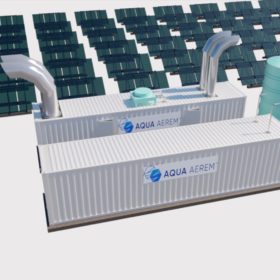
Solar to bloom in the desert thanks to innovative NT green hydrogen project
A $15 billion green hydrogen project that utilises solar powered water-from-air technology to save on the cost of hydrogen generation and save the precious water resources of arid regions, has received Major Project Status from the Northern Territory government and aims to be in commercial production by 2023.