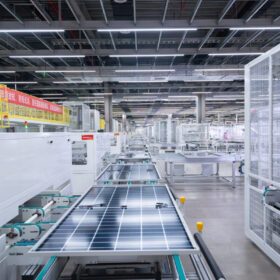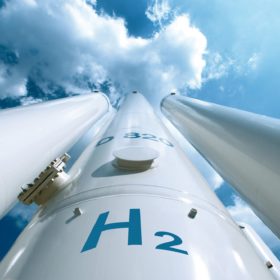
Australian startups join forces to develop 1.3 GW hydrogen export facility in Malaysia
Two Australian companies, hydrogen fuel cell startup H2X and emerging renewables developer Thales New Energy, have signed an agreement with a Malaysian state-owned corporation to develop a 1.3 GW hydrogen export facility powered by hydroelectricity in the Malaysian state of Sarawak.
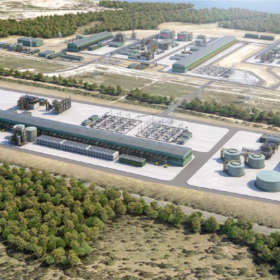
Australia claims global hydrogen spotlight with 1.7 GW project in Tasmania and new tech to produce hydrogen from rooftop PV
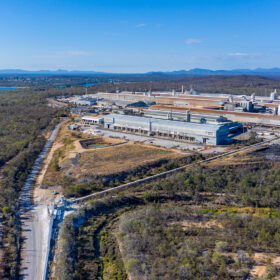
In this week’s edition of pv magazine’s Hydrogen Stream, Australian projects took centre stage including Woodside announcing it had secured land for its H2TAS project, an MoU signed between Perth-based metals manufacturing company Unique Metals and Energy consultancy Xodus, as well as ARENA’s funding for Sun Metals zinc refinery in Townsville.
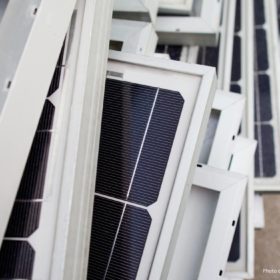
Reuse or replace? Analysis considers all options for underperfoming PV modules
In a new report, experts from the International Energy Agency Photovoltaic Power System Programme (IEA-PVPS) have assessed the economical and environmental benefits of repairing and reusing or replacing solar modules that are not complying with a 30-year expected lifetime. They found that reusing offers the best environmental impact in all cases, while the profitability of this option is currently guaranteed only by rooftop PV under certain conditions. As for large-scale solar, module replacement remains the most competitive option.
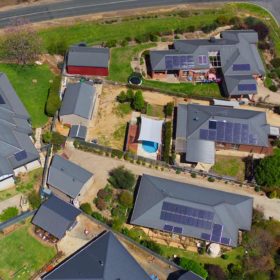
Investability of Australian large-scale renewables remains low
COP flack for Australia’s insubstantial and unstructured response to decarbonisation has not made the country more attractive to investors. Has our first-mover status cruelled our investability, and what could the next Federal Government do to revive investor confidence?
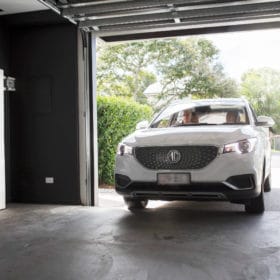
When EVs can’t get a purchase …
Car subscription services are not considered in government EV policies at either a state or federal level in Australia, yet studies show they are growing as a preferred way to access a good, clean drive.
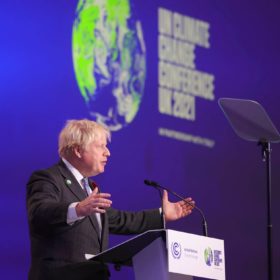
Not a total COP out … except for Australia
Opinions are rife and varied in the wake of the COP26 UN Climate Change Conference. What can we take away from discussions in which the Australian Government positioned itself as a climate pariah?
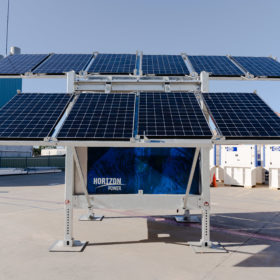
Distribution networks set to shrink: standalone solar hybrid systems are safer, more reliable
Western Australia leads the world in successfully implementing renewables-based energy generation for far-flung customers. Unique joint venture and pioneer in the field, Boundary Power, has been widely recognised for its innovations and is ready to repeat its SAPS successes across Australia and the Asia-Pacific.
Off-grid green hydrogen production in Australia may already be competitive with blue
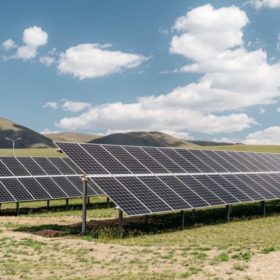
French energy giant Engie has developed a transfer function method based on a model used to assess PV plant variability. Its researchers claim that the new approach does not overestimate the levelised cost of hydrogen (LCOH) of an alkaline electrolyser powered by offgrid solar, finding that in Australia green hydrogen produced with such systems may already be cost competitive with blue hydrogen.

Analysts revise up zero-emission vehicle forecast after bumper year
A report published by BloombergNEF for the COP26 climate change summit has listed global commitments by cities, states, provinces and nations to end the sale of new fossil-fuelled vehicles but, with 2035 estimated as the cut-off date for zero-emission roads by mid century, policymakers need to be more ambitious.
Sunday read: Crypto’s energy conundrum
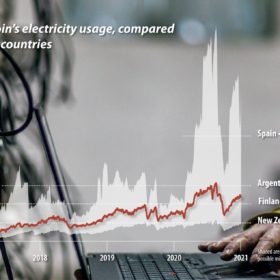
In a financial world of stocks, bonds, foreign exchange, and credit cards, trillions of dollars are traded daily, with money flows handled by a bevy of databanks. In the world of cryptocurrency, billions of dollars worth of Bitcoin are traded through as many as 400,000 transactions per day, consuming the energy supply of a modernised country. The quirk is a “proof of work” feature that provides decentralised security. Is Bitcoin’s energy usage all for nothing, or is it a game-changer for renewable assets and generators? Tristan Rayner explores.