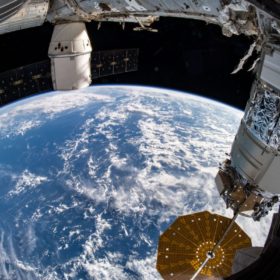
Roll-out solar arrays installed in successful NASA spacewalk
The first new ISS Roll-Out Solar Array (iROSA) has been installed on the International Space Station.
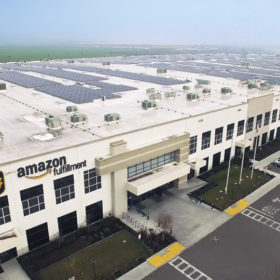
Sunday read: Corporates’ critical solar role
Despite the global pandemic and recession, corporate purchases of clean energy are booming. Several factors are driving this trend, including falling costs, heightened appetite for sustainability among consumers and investors, and increased political will for net-zero development. In recognition of this, the UP Initiative will spend the third quarter investigating sustainable electricity supply. How are PPA models evolving? What are the critical issues around residual energy? And how can greenwashing be avoided? pv magazine investigates.
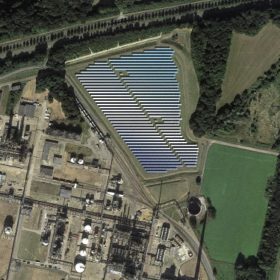
Saturday read: Politicians tend to overpromise, except when it comes to solar
The speed of all transitions is inherently underestimated, and solar PV is no exception. The EU has grossly underestimated its coming of age, as its forecasts for 2020 were off by 67% for the Netherlands and 74% for Germany, writes Rolf Heynen, CEO of Dutch New Energy Research.

What G7 leaders could have said – but didn’t
The four-day G7 summit in Cornwall ended with little cause for celebration from anyone worried about climate change. Most of the pledges that emerged were relatively old news, with the UK repeating its promise of £500 million for ocean conservation efforts and the group reaffirming its commitment to end support for coal production abroad.
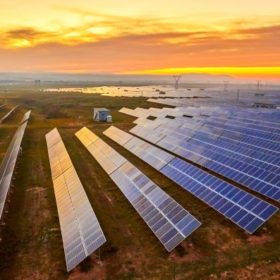
Repowering Gippsland project pushes ahead with Fulham Solar Farm plans
The group behind an ambitious plan to develop more than 600 MW of solar PV and 600 MWh of energy storage in Victoria’s Gippsland region have announced planning for one of the projects included in the proposed three-pronged renewables portfolio is underway.
Environment minister threatens shake-up for module manufacturers
Solar PV module manufacturers have been put on notice with Environment Minister Sussan Ley warning they need to formulate a recycling strategy as the growing number of decommissioned panels threatens a waste management nightmare.
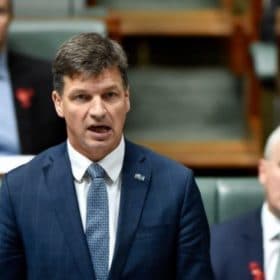
Taylor’s plans for ARENA under scrutiny in senate
Legal doubts have emerged about the Morrison government’s proposed change for the Australian Renewable Energy Agency which would allow it to finance a broader range of technologies including some using fossil fuels.
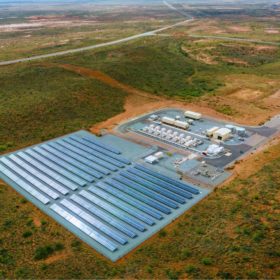
Landmark moment as Pilbara town powered 100% by solar PV and battery
Western Australia utility Horizon Power has achieved a major milestone with the coastal town of Onslow powered 100% by solar PV and battery during a successful trial of what is one of Australia’s largest distributed energy resource microgrids.
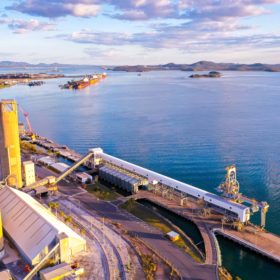
WoodMac forecasts Australia’s low-carbon hydrogen export revenue to reach US$90 billion by 2050
Wood MacKenzie’s energy transition modelling is predicting a primacy in the future low-carbon hydrogen economy for Australia. Thanks to the country’s solar irradiance and renewable energy expertise, as well as its relative proximity to major off-taker markets, Australia could be looking at export revenues of up to US$90 billion by 2050.
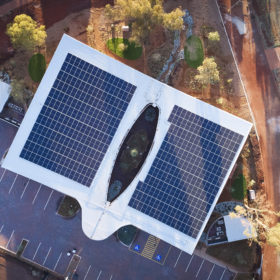
AEMO analysis finds Western Australia on the fast track to energy system transformation
The Australian Energy Market Operator’s latest analysis of the Western Australian Wholesale Energy Market has found that investment in renewable generation and distributed solar is accelerating at a rapid pace, and importantly, that that acceleration is within the control of the state’s energy transition strategies.