Sunny side up? Australia’s egg industry gets a solar boost
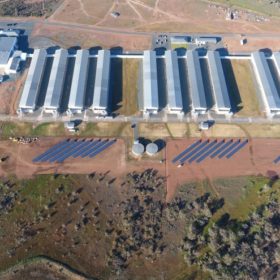
Egg production is an extremely efficient industry, thanks to the chicken, but electricity consumption remains a hurdle to industry sustainability. The Australian Eggs new Solar Calculator cracks the code on optimal system size, savings and CO2 abatement for small-to-medium-sized egg farms.
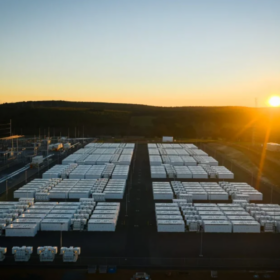
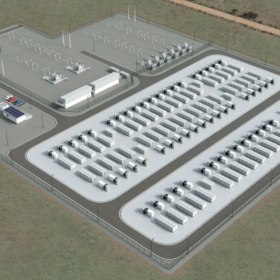
AGL grows massive battery storage in the shadow of retiring fossil-fuelled power stations
AGL, one of Australia’s biggest polluters, is working towards net-zero emissions by 2050 and new relevance in a renewable-energy-powered world. Think big batteries to replace the spinning reserve of some coal and gas generators, and digital management of its customers’ distributed rooftop resources.
Weekend read: Solar needs aluminium, but it has a carbon problem
Few doubt that aluminium frames will be a part of the solar module for some time to come. And with PV manufacturing continuing to scale, the carbon footprint of this versatile metal may prove a sustainability challenge.
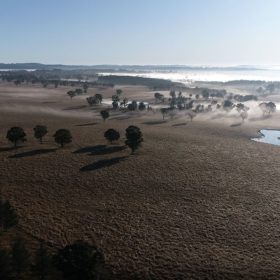
FRV to develop 115 MW Metz Solar Farm
Spanish developer Fotowatio Renewable Ventures (FRV) has reaffirmed its presence in the Australian renewable energy marketplace by adding the 115 MW Metz Solar Farm to its solar portfolio.
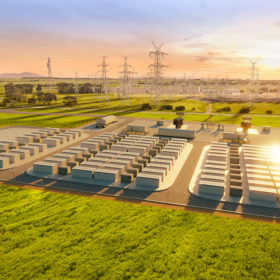
AEMO lays out transmission plan to unlock Victorian renewables
The Australian Energy Market Operator (AEMO) has outlined a $3.5 billion strategy to shore up Victoria’s electricity transmission network and system security as the state accelerates towards the legislated target of 50% renewables by 2030.

Made-in-Queensland hydrogen ferries to set sail
Queensland’s determination to lead the way with hydrogen has reached new levels with Brisbane-based outfit H2X Marine launching plans to construct watercraft powered by renewable energy.
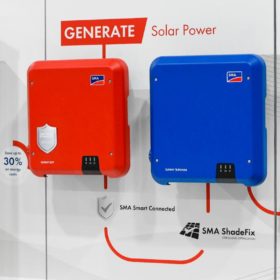
SMA swings to profit in first three quarters of 2020
Despite the coronavirus pandemic, the photovoltaic inverter maker was able to significantly increase its turnover and sales compared to the previous year.

VIC solar industry braces for post-lockdown release of pent-up demand
As Victorians fly out of lockdown and into the thick of summer the solar industry is preparing for the release of pent-up demand for solar which was hungered for during lockdown but went unsatisfied. pv magazine Australia sat down with AC Solar Warehouse’s Grant Behrendorff to gauge the backlog of installations and talk shop in the approach to a bumper summer.
Carbon nanotube gives batteries a boost
Scientists in the U.S. examined the use of different conductive filler materials in a lithium-ion battery electrode, finding that adding single walled carbon nanotubes to a nickel-cobalt-manganese cathode resulted in better electrical conductivity and higher rate capability for the overall battery. The results, according to the group, could provide new insights into design of high power, high energy battery electrodes.
NSW has joined China, South Korea and Japan as climate leaders. Now it’s time for the rest of Australia to follow
It’s been a busy couple of months in global energy and climate policy. Australia’s largest trading partners – China, South Korea and Japan – have all announced they will reach net-zero emissions by about mid-century. In the United States, the incoming Biden administration has committed to decarbonising its electricity system by 2035.