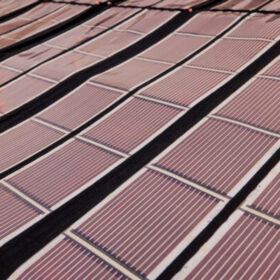
Perovskite-silicon tandems could rapidly scale solar
Halide perovskites combined with conventional silicon could help solar break the 26% efficiency barrier – disrupting the technology without disrupting business systems.

Solar modules are being detained by customs agents, reports suggest
An order issued in late June instructed customs agents to detain solar shipments containing silica-based products sourced from a Chinese firm and its subsidiaries. Three solar players may already have been impacted.

Portable charging trailer for commercial EV fleets
U.S.-based Xos offers a mobile charging station for commercial electric fleets, in order to provide power without making fixed infrastructure upgrades.
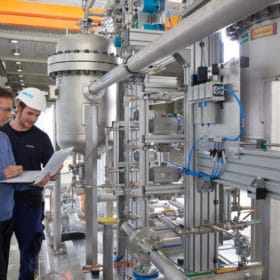
Blue is not the new green
A new study from Stanford University and Cornell University shows that blue hydrogen can produce more greenhouse emissions than heat produced by coal and gas. The modelling classifies blue hydrogen emissions as carbon dioxide and unburned fugitive methane, as well as lifecycle emissions linked to the mining, transport, storage, and use of methane.
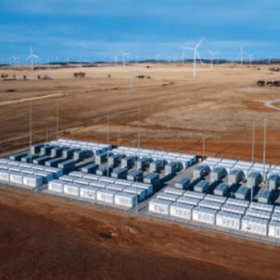
Sunday read: What’s in store for storage
As solar and wind make up larger portions of the energy mix, energy storage is becoming an increasingly important piece of the puzzle in keeping electricity networks running smoothly. And as battery costs fall, new business models are emerging to increase the value of battery energy storage projects for both grid operators and project owners. Focusing on two leading countries – the United Kingdom and Australia – pv magazine looks at what’s in store for large-scale energy storage.
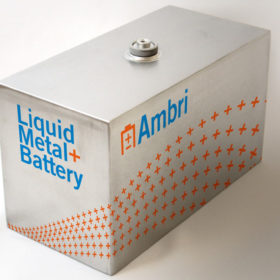
Calcium-antimony liquid metal battery to be commercialised by US company
Ambri has secured US$144 million ( AU$195 million) to commercialise its calcium-antimony liquid metal battery chemistry and open manufacturing facilities to deliver projects in 2023 and beyond.

Harnessing heat in solar cells with thermionics
Scientists in Canada evaluated the potential of a lesser-known approach to boosting solar generation efficiency. Thermionics uses heat from the sun to generate electricity, and could be combined with photovoltaics to create devices with better than 40% efficiency from a single junction. In their evaluation, the scientists find promising pathways for further research, despite a mountain of challenges that will need to be overcome.
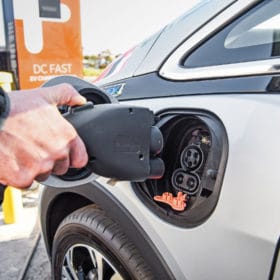
Residential PV makes EVs cheaper, reduces emissions
The maintenance cost of an electric vehicle is estimated to be significantly lower than internal combustion engines, and studies show home solar furthers the cost savings and boosts carbon emission reductions.
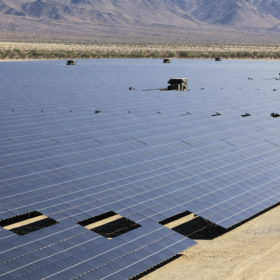
First Solar plans a 3.3 GW Indian module fab
The U.S.-based manufacturer is planning a vertically integrated thin-film solar module manufacturing facility in India. The factory will likely be built in Tamil Nadu and become operational in the second half of 2023.

Multi-day iron-air batteries reach commercialization… at one tenth of the cost of lithium
Boston startup Form Energy has secured US$200 million (AU$270 million) Series D funding for the development of what is being called a breakthrough in energy storage.