Sunday read: Life after PERC
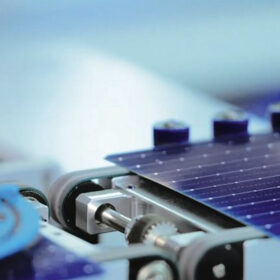
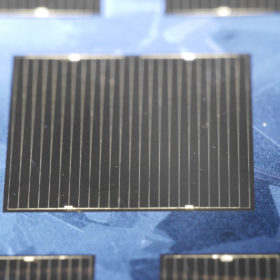
The pursuit of higher conversion efficiencies is an eternal theme in the PV industry. Among all the links in the chain, cell technology is the most fundamental and decisive element. As we look beyond the established PERC technology, whether heterojunction or TOPCon will become the dominant “next-gen” solar cell among China’s manufacturing giants is emerging as a balancing act between incumbent and upstart, reports Vincent Shaw from Shanghai.
Fronius launches new inverter for large-scale PV plants
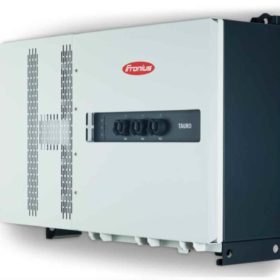
The 50 kW version of the new inverter features an efficiency of 98.6% and a European efficiency of 98.1%. It can be deployed with a decentralised approach, next to the PV modules, or centralised, at the grid connection point.
Panasonic launches 380 W heterojunction solar module compatible with its Evervolt battery
The new module series has a power output ranging from 370 to 380 W, a temperature coefficient of -0.26% per degree Celsius, and an efficiency of up to 21.7%.

Sunday read: All that glitters is HJT
The devil is in the details, as they say, and when it comes to the next generation of mass-produced, high-efficiency PV cells, silver costs may be devilishly hard to reduce. Making things worse, prices for the precious metal are now heading in the wrong direction.
Saturday read: New applications see surge in Chinese demand
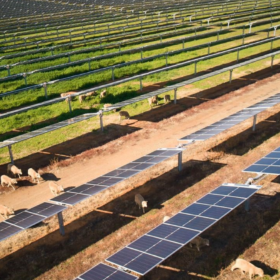
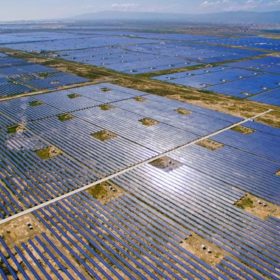
China’s project development segment is dynamic, to say the least. Having undergone significant changes toward a “subsidy-free” footing, developers are now facing requirements to integrate storage, deploy hybrid arrays, and pursue self consumption through BIPV and agrivoltaics applications, writes Frank Haugwitz, the director of the Asia Europe Clean Energy (Solar) Advisory (AECEA).
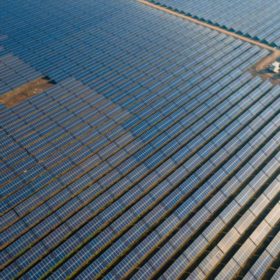
IEA calls for solar PV additions to reach 630 GW by 2030
According to the International Energy Agency, most of the global reductions in CO2 emissions between now and 2030 would come from technologies available today. In a recent report, the agency sets what it described as a “cost-effective and economically productive” pathway resulting in an energy economy “dominated by renewables like solar and wind.”
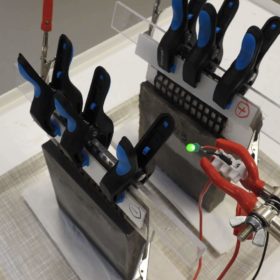
Concrete battery for applications in buildings, rooftop PV
A prototype of a cement-based battery has been developed in Sweden for potential applications in buildings. Its creators claim it could become a solution to store electricity from rooftop PV and they do not exclude that it could also be used for the storage of large-scale renewables.
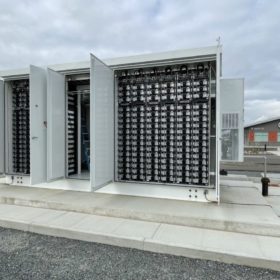
Sensor tech to detect fire in lithium-ion storage systems
The deflagration-prevention system combines automatically controlled door locks with a smart controller which manages signals from fire safety inputs such as smoke, heat, or gas detectors. It is applicable from 50 kW to multi-megawatt cabinets.
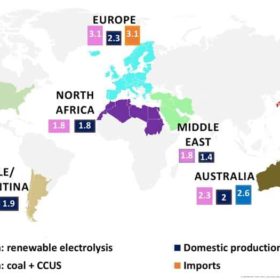
Geopolitical impact of long-distance transport of electricity and hydrogen
In an interview with pv magazine, Indra Overland, the head of the Centre for Energy Research at the Norwegian Institute for International Affairs, explains how long-distance electricity and hydrogen transport differs from that of fossil fuels. He says strong Europe-North Africa connections could prove the viability of cables to connect continents, and notes that integration between countries and regions will increase.

Q Cells announces n-type module with passivating contacts
Production on the new module, called Q.Tron, is expected to begin this year. The product is described as an evolution of the company’s Q.antum cell technology.