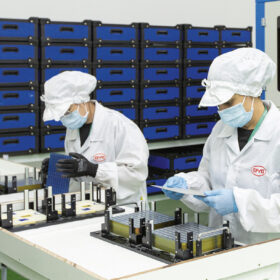
Around 40% of the workforce in global PV industry is female
According to recently published employment report by the International Renewable Energy Agency (IRENA), the global solar industry employed around 5 million people at the end of last year. The report also reveals that women’s employment in the industry was “uneven”, with females mostly hired for administrative positions (58%) followed by science, technology, engineering, and mathematics (38%) and non-STEM technical positions (35%).
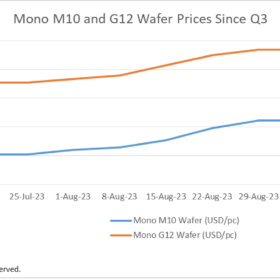
Solar wafer prices fall for first time in 3 months
In a new weekly update for pv magazine, OPIS, a Dow Jones company, provides a quick look at the main price trends in the global PV industry.
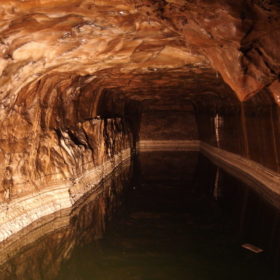
Researchers developing cheap hydrogen storage
Oxford Institute for Energy Studies researchers have developed a cost-effective material to absorb hydrogen at non-cryogenic temperatures, which they consider optimal for fuel cell storage systems.
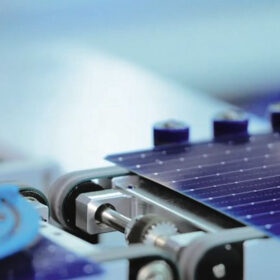
Weekend read: Getting to the bottom of TOPCon degradation
Should the industry be alarmed at the potential degradation susceptibility of tunnel oxide passivated contact (TOPCon) solar cells? Or are the problems easily addressed and more a reflection of rushed-to-market products? pv magazine contributor and consultant Götz Fischbeck reports.
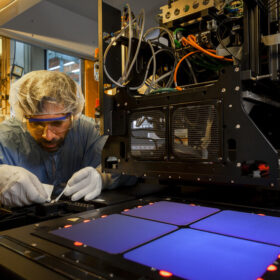
Low-temperature processes to reduce silver use in tandem perovskite-silicon solar cells
Researchers from Germany’s Fraunhofer ISE developed new techniques to reduce silver consumption in tandem perovskite silicon solar cells and heterojunction silicon PV devices. The new processes relate to cell metallisation and module interconnection.
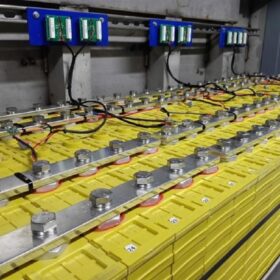
Not all ‘lithium-ion’ batteries carry the same risks
As the energy storage trend unfolds, stories litter the media landscape about lithium-ion batteries catching fire, and even exploding. It’s a valid concern, and the time for consumers to understand a basic truth about lithium-ion batteries is long past due.
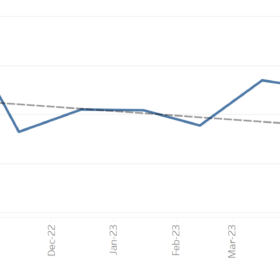
Australia in midst of solar market shakeup with TW Solar entrance, historic global pricing plunge
Australia’s solar market and pricing has been shaken up in recent months with the entrance of Tongwei Solar. Compounding this is the global free fall in panel pricing, which solar analyst Warwick Johnston says is yet to properly hit Australia. “There’s super cheap panels that are coming through and everyone will have to adjust their prices accordingly,” he says.
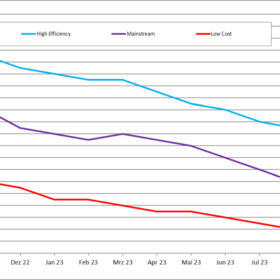
Solar module price falling, with no end in sight
Solar module prices have never fallen so sharply in such a short period of time. One reason for this is the “PV module glut” in warehouses in Europe, according to pvXchange’s Martin Schachinger.
H2EX’s Australia ‘natural hydrogen’ survey set for Q4
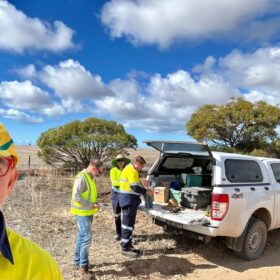
The International Energy Agency has warned that lagging policy support, rising costs, and supply chain disruptions threaten the profitability of low-emission hydrogen, meanwhile the Commonwealth Scientific and Industrial Research Organisation (CSIRO) has identified hydrogen seeps in South Australia.
China solar cell prices hit record lows
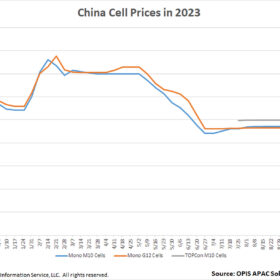
In a new weekly update for pv magazine, OPIS, a Dow Jones company, provides a quick look at the main price trends in the global PV industry.