Storing solar power with compressed carbon dioxide
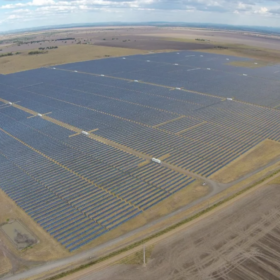
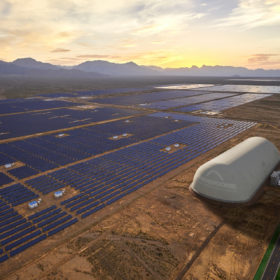
An Italian company has developed a system that can store energy from wind, solar and grid electricity by compressing and using CO2 without any emissions. The system draws CO2 from an inflatable atmospheric gas holder, stores it, and uses it to produce power again, when demand for stored energy arises.
Grid stability and 100% renewables
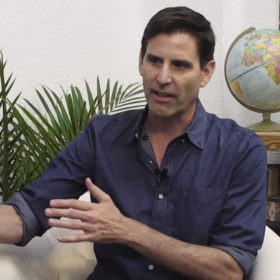
New research from Stanford University professor Mark Jacobson seeks to remove any doubts about grid stability in a world powered entirely by renewable energy. The latest study models 100% wind water and solar powered grids across the United States, finding no risk of blackouts in any region and also broad benefits in cost reduction, job creation and land use.
Google lends a hand in the search for new solar cell designs with open-source tool
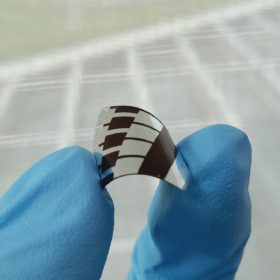
Scientists in the United States developed a computer simulator that can calculate the conversion efficiency of different solar cell materials and configurations – helping to guide research and optimisation of new cell designs. The simulator is available to researchers as an open-source tool to save time and spot the best opportunities for optimisation of any given approach.
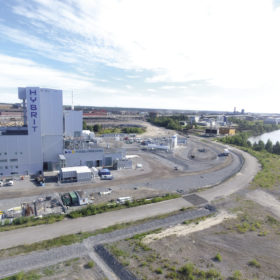
Sunday read: Making cheaper H2
The hype surrounding green hydrogen is real, but does the cost-reduction outlook for its production technologies live up to it? Christian Roselund looks at the technology, transportation, application and enabling policies behind the promising green energy carrier.

Saturday read: China’s path to 100 GW
China is once again the focus of attention across the global solar PV industry. The country’s manufacturers have had a turbulent 2021, but domestic demand remains strong, particularly from the booming residential rooftop segment. Despite the supply challenges, China will likely reach 50 GW this year and possibly even 100 GW next year. Given the dynamic market and policy landscape, pv magazine publisher Eckhart K. Gouras recently caught up with long-time China solar expert Frank Haugwitz, the founder of the Asia Europe Clean Energy (Solar) Advisory (AECEA).
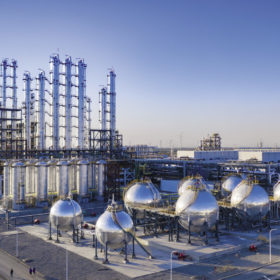
Daqo fires up 35,000-tonne poly fab
The polysilicon producer is sticking by plans to ramp up manufacturing capacity almost 300% within three years and says it will produce the basic material for the new generation of n-type solar panels.
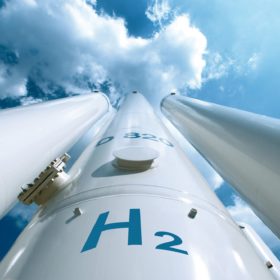
‘China, Chile, Spain and Australia will lead the hydrogen economy’
The International Energy Agency said the four nations are on track to contribute 85% of the 18 GW of global renewables capacity which is set to be dedicated to green hydrogen production by 2026. Elsewhere, the Port of Valencia has unveiled a plan to install a green hydrogen supply station in the new year.
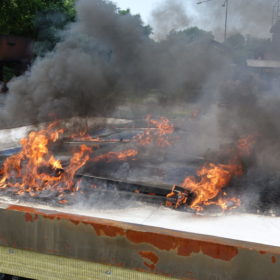
New tool to understand component failure rate in PV-related fires
Scientists have developed a new model based on fault tree analysis to evaluate the frequency of fires caused by rooftop PV systems and assess system safety and reliability. They claim that the new tool has the potential to identify fault linkages in systems, highlight failure patterns before they arise, and compare multiple designs for safety.
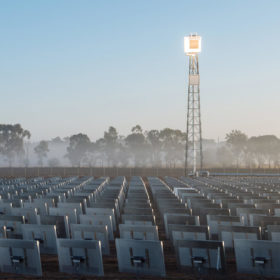
New tank design promises to significantly improve the reliability of thermal energy storage
A consortium including Australian concentrated solar thermal power company Vast Solar has filed to patent a new tank design for thermal energy storage systems. The new design, it says, substantially mitigates the risk of tank failures which have been identified as one of the key shortcomings of the economical storage technology.
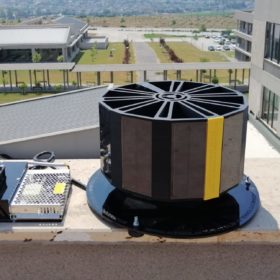
Photovoltaic rotary energy system for domestic applications, high-rise buildings
Developed by scientists in Turkey, a system prototype has operated at lower PV module temperatures and removed most of the dust accumulation. The researchers are now planning to improve the device by applying maximum power point tracking (MPPT) converter topologies.