Tesla reports record energy storage deployment figures
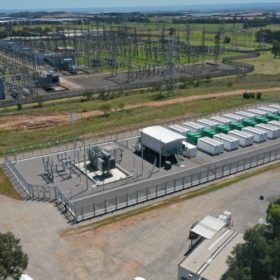
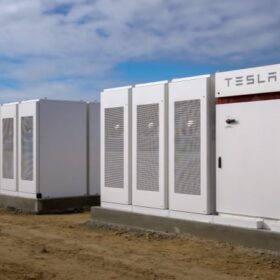
Tesla’s global electric vehicle sales are plummeting, but its energy storage business is surging, with more than 4 GWh deployed in the first quarter of 2024 alone.
Bluetti releases 2.4 kW portable power station
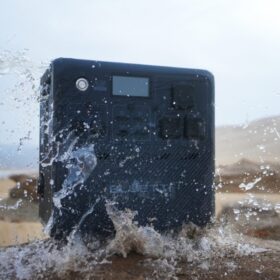
Bluetti has unveiled a new weatherproof portable power station featuring a lithium iron phosphate battery with a power capacity of 1,536 Wh and a 2,400 W rated output.
Weekend read: Can anything topple lithium-ion?
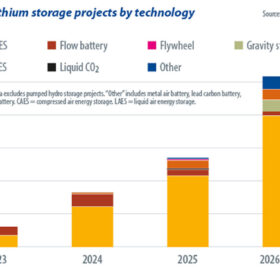
The need for long-duration energy storage in a net-zero world is undeniable but with conventional battery prices tumbling, can anything dislodge the mainstream grip of lithium ion? S&P Global’s Susan Taylor provides an update on non-lithium storage technologies.
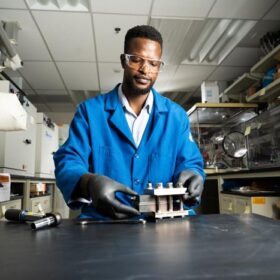
Iron-based redox flow battery for grid-scale storage
Researchers in the United States have repurposed a commonplace chemical used in water treatment facilities to develop an all-liquid, iron-based redox flow battery for large-scale energy storage. Their lab-scale battery exhibited strong cycling stability over 1,000 consecutive charging cycles, while maintaining 98.7% of its original capacity.

Lightsource bp wins federal environmental approval for 750 MW solar, 3,000 MWh storage project
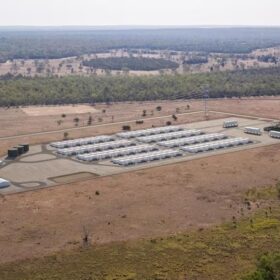
British developer Lightsource bp’s plans to build the biggest solar farm and battery energy storage system on any of Australia’s main electricity grids has a green light to proceed after securing environmental approval from the Australian government.
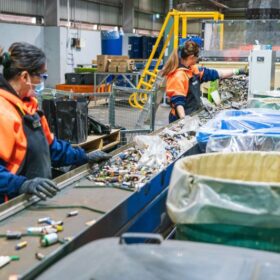
Envirostream eyes increased recycling revenues after boosting battery volumes
Battery technology company Lithium Australia’s 100%-owned subsidiary Envirostream is seeking to scale up its battery recycling efforts, signing an updated agreement with South Korean manufacturer LG Energy Solution in a move that could deliver 770 tonnes of lithium-ion batteries for recycling.
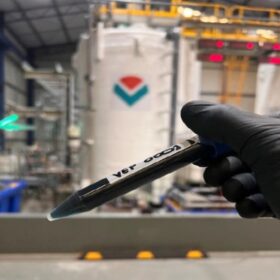
AVL produces first battery-ready vanadium electrolyte
Perth-based resources company Australian Vanadium Limited has executed another element of its planned ‘pit to battery’ strategy, producing the first battery-ready vanadium electrolyte at its new manufacturing facility in Western Australia.
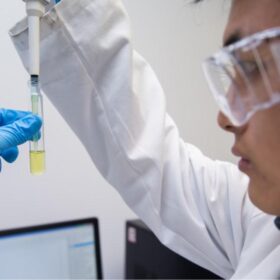
Researchers reveal path to fast-charging lithium-sulphur batteries
A team of Australian researchers has designed a new catalyst that has the potential to deliver a new generation of lithium-sulfur batteries that are capable of being charged in less than five minutes, instead of several hours as is currently the case.
Evaluating profitability of vanadium flow batteries
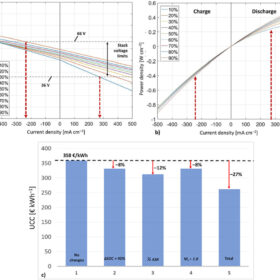
Researchers in Italy have estimated the profitability of future vanadium redox flow batteries based on real device and market parameters and found that market evolutions are heading to much more competitive systems, with capital costs down to $430/kWh at a storage duration of 10 hours.
Investor group calls for policy support to deliver ‘critical’ battery storage
A new report published by the Clean Energy Investor Group calls for federal and state governments to financially back long-duration energy storage assets to ensure Australia’s clean energy transition 2030 targets are met.