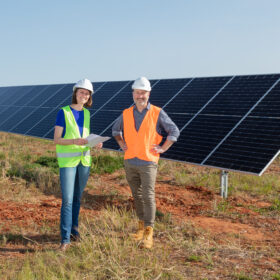
A rose by any other name: Haystacks Solar Garden in full bloom
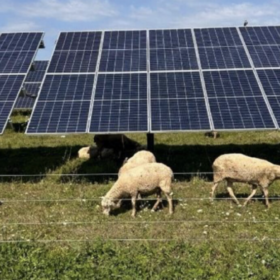
Australia’s first large-scale solar garden will be officially launched in the New South Wales Riverina town of Grong Grong with hundreds of ‘gardeners’ on hand to celebrate the milestone that has allowed people previously locked out of rooftop PV to access the benefits of solar.
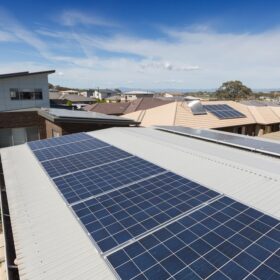
Community battery rollout reaches national capital
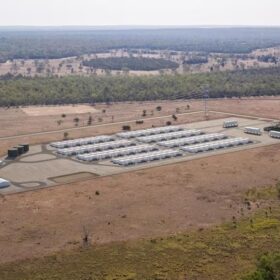
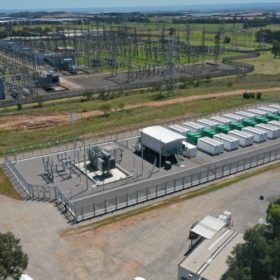
The federal government’s plan to deploy 400 community batteries across the nation to soak up excess solar generated on neighbourhood rooftops has reached the Australian Capital Territory with sites for three new battery energy storage systems unveiled.
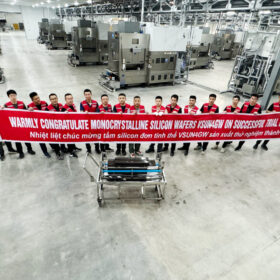
Vsun starts production at wafer facility in Vietnam
Vietnamese solar manufacturer Vsun’s new facility produces n-type silicon wafers and is expected to be ready for full production by the end of the month.
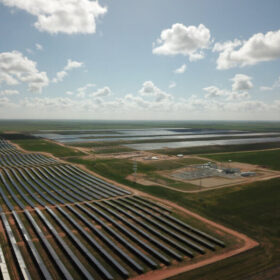
Renewables hit record levels as electricity demand rises
A new report published by the Australian Energy Market Operator (AEMO) shows the nation’s clean energy transition is gathering pace with renewables, including large-scale and rooftop solar, accounting for almost 40% of the country’s electricity generation in the first three months of the year.
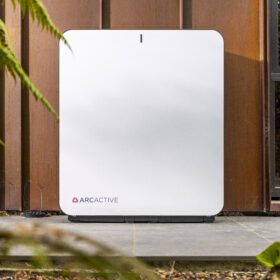
ArcActive targets Australia with ‘re-engineered’ lead-acid battery tech
New Zealand battery technology company ArcActive is planning to establish a manufacturing plant in Australia within 18 months that will be capable of producing 30,000 lead acid-based residential energy storage systems per year.
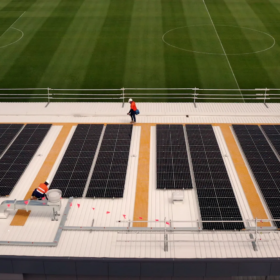
Melbourne City FC kicks renewables goals with Origin partnership
Australian soccer powerhouse Melbourne City FC has teamed with energy major Origin to install a 40 kW rooftop solar system and 13.5 kW battery energy storage system that will help power its newly opened City Football Academy in the Victorian capital.
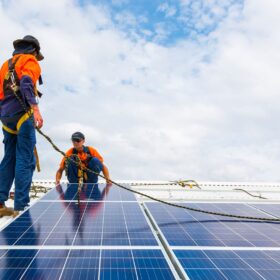
Rooftop solar on the rise in Australia’s clean energy mix
Combined rooftop solar capacity is now the second largest source of renewable electricity generation in Australia with new analysis showing that PV systems mounted atop the nation’s buildings provided more than 10% of the country’s power supply in 2023.
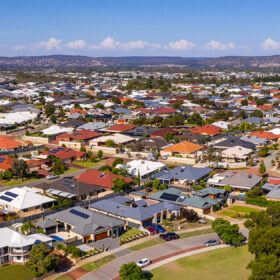
Report reveals 48.5 GW of untapped PV potential on Australian residential buildings
Australia has firmly established its status as a global leader in residential solar deployment with 35% of all houses having already installed rooftop systems but new data reveals there is almost 50 GW of “untapped PV potential” on residential buildings across the country.
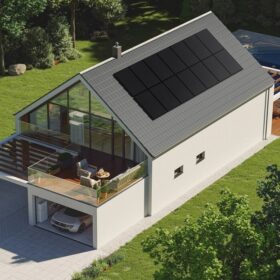
Maxeon unveils TOPCon solar module series for rooftop PV
Maxeon said its new Sunpower Performance 7 panel series features a power conversion efficiency of up to 22.7% and an operating temperature coefficient of -0.29% C.
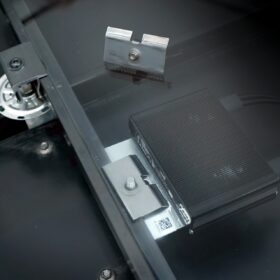
S-5! announces new mounting components for rooftop solar
Mounting system provider S-5! is to boost the size of its Australian catalogue with the impending launch of two new mounting components for rooftop PV systems, including a new mount that allows for module level power electronics to be attached directly to solar panel frames.