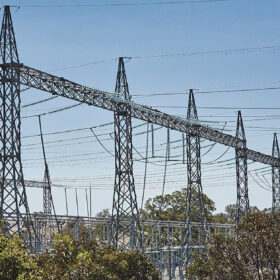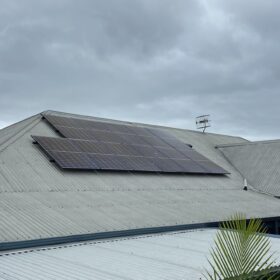
Suppliers owed millions after Victorian installer collapses
The staff of a Victorian solar retail and installation business have lost their jobs and customers and suppliers are owed millions of dollars after the company was placed in the hands of administrators.
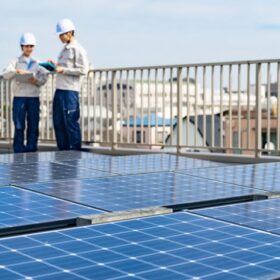
Net metering move puts Indonesia’s 3.6 GW rooftop solar goal at risk
The Indonesian government has ended net metering for rooftop solar installations. The Jakarta-based Institute for Essential Services Reform says this could make it harder for the country to meet its solar deployment targets, as PV installations will become more expensive for households and small businesses.
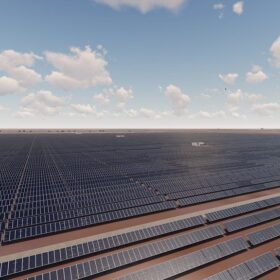
South Australia ramps up net 100% renewables target
The South Australian government has accelerated its net 100% renewables deadline from 2030 to 2027, declaring the target is achievable due to the state’s new wind and solar developments and investment in green hydrogen.
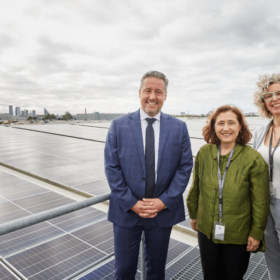
Equinix unveils 1 MW rooftop system at Melbourne data centre
With assistance from a Victorian government energy efficiency initiative, United States-headquartered digital infrastructure company Equinix has installed a 1 MW rooftop solar system atop one of its Melbourne data centres as it continues to build upon its broader clean energy program.

The path beyond 5 TW
With the COP28 climate summit in Dubai resulting in a pledge of at least 11 TW of renewables generation capacity by 2030, Bruce Douglas, chief executive officer (CEO) of the Global Renewables Alliance (GRA), examines the outcomes of the conference and their likely impact on the solar industry.
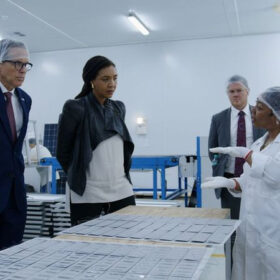
Weekend Read: Blackouts trigger a PV pivot
Decades of mismanagement have eroded trust in South Africa’s state-owned energy utility, Eskom. Last year, households and businesses suffered daily blackouts of up to 10 hours, or even longer. Solar and battery energy storage are booming but a domestic PV manufacturing industry has yet to materialize.
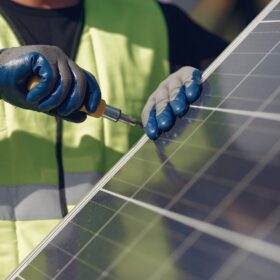
Solar waste tipped to provide material supply security
Researchers from the University of New South Wales have rejected suggestions that end-of-life solar panels will create a “waste mountain” in Australia, saying instead that they could serve as valuable material reservoirs for future production.
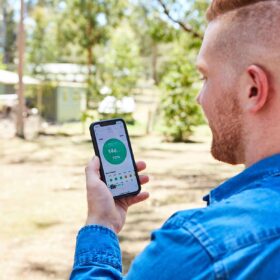
Amber eyes international market after $29 million raise
Commonwealth Bank-backed energy retailer and technology company Amber Electric has raised $29 million (USD 18.9 million) in capital that is earmarked to scale the business in Australia and to take its battery and electric vehicle automation software offshore.
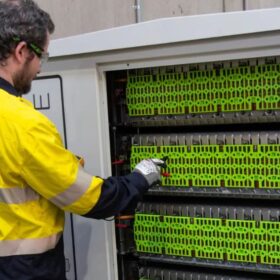
Solar self-consumption boosted as battery cuts grid imports by 94%
The economic benefits of integrating battery energy storage solutions in commercial settings have been highlighted by Relectrify which has released data showing that a recently commissioned 120 kW Revolve battery has reduced the customer’s import of energy from the grid by more than 94%.
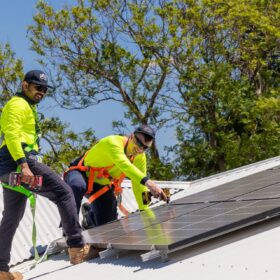
Australia’s power future could be virtually guaranteed
The severe heatwave that moved across Australia in recent weeks, initially in Western Australia, Queensland and then New South Wales, highlights that it is only going to get tougher to maintain a secure, reliable electricity system as our climate warms and demand for energy continues to increase.