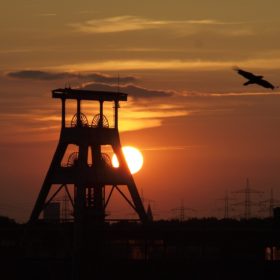
South African mining sector wants solar
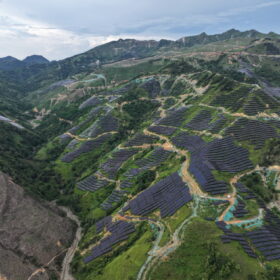
The Minerals Council South Africa has urged the government to solve the country’s energy crisis by adding more power generation capacity from both distributed and large-scale renewables. Meanwhile, several mining companies operating in South Africa are planning their own big solar parks, including two 200 MW facilities under development by Sibanye-Stillwater and Vedanta.
NSW, Victorian hospitals turn to solar for lower power bills
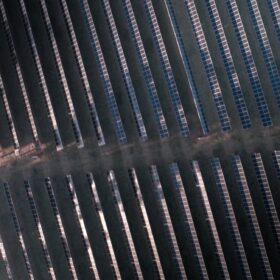
Dozens of hospitals across Victoria and New South Wales are installing solar to slash their greenhouse emissions and electricity costs. In NSW, another four hospitals have received government funding to install solar panels, while the number of Victorian solar-powered health centers continues to rise.
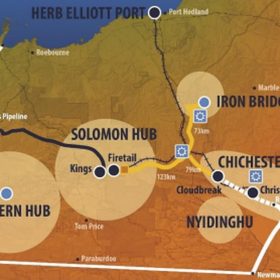
Fortescue invests in solar-gas-battery project to power its Pilbara operations
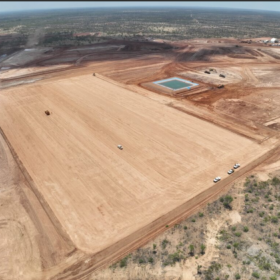
Resources giant Fortescue Metals will invest $US450 million ($668 million) in the next stage of its Pilbara Energy Connect program to combine 150 MW of gas-fired generation, 150 MW of solar PV and a grid-scale battery. The hybrid generation project will provide low cost power to the Iron Bridge magnetite project currently under construction.
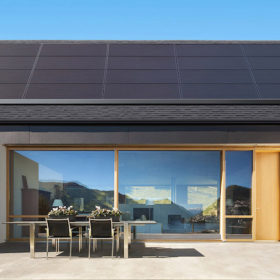
A record-breaking quarter for Tesla energy storage and an improvement in solar
The internet’s favorite energy company installed 530 megawatt-hours of battery storage in Q4, beating out the previous record, set last quarter, as well as showing continued improvement in solar installations.
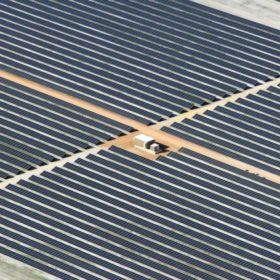
ARENA in desperate need of funding lifeline says Australia Institute
The Australian Renewable Energy Agency (ARENA) is in desperate need of a short-term funding extension as its funds to allocate to new projects is set to dry up by mid-2020. The Australia Institute has published a discussion paper urging the Morrison Government to legislate.
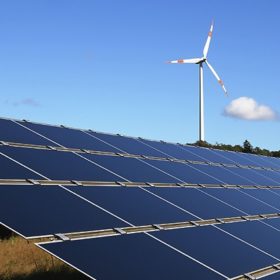
What lies ahead for the NEM in 2020? Some lessons from 2019
After a leisurely break over the holiday period, I have returned to my desk to get right back into the analysis of what I think will be a pretty exciting year for the NEM. Connection difficulties, commissioning delays and stubbornly high storage costs point to uncertainty on the supply side, while strong rooftop uptake continues to whittle out daytime operational demand.
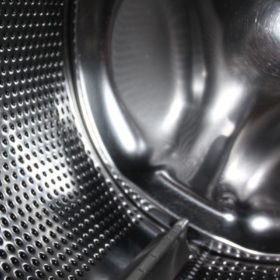
How much can you wash a wearable PV device?
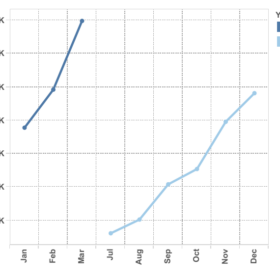
UK researchers claim to have proved the viability wearable photovoltaic devices as an integral part of regular clothing. A solar-powered fabric textile was created by embedding micro crystalline silicon solar cells within the fibers of a textile through very thin copper wires. The scientists claim that the novel device can maintain its performance even after 15 domestic machine wash cycles, 25 hand wash cycles, and 6000 abrasion cycles.
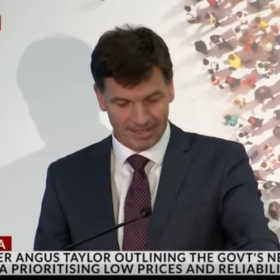
Taylor changes tune: Australia to reach 48% renewables by 2030
Energy Minister Angus Taylor has confirmed that Australia is on its way to hit nearly 50% renewables share by 2030, the target deemed economically suicidal by the Coalition during the last election. With no mention of the widely-reported massive drop in renewable energy investment, Taylor hailed 2019 as a new record year for renewables in Australia.
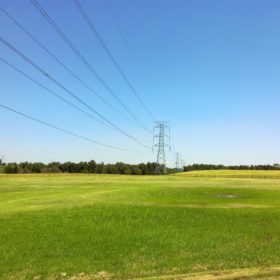
SA-NSW interconnector gets regulatory go-ahead to unlock slew of renewable energy projects
The Australian Energy Regulator (AER) has given its tick of approval to the proposed $1.53 billion electricity interconnector between Robertstown in South Australia and Wagga Wagga in New South Wales. The new transmission line holds the promise of reducing power bills in both states by unlocking gigawatts of planned renewable energy projects in its close proximity.
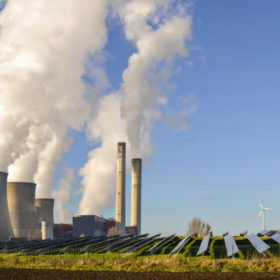
‘China will add 35-38 GW of solar this year’
Power generation statistics released by the National Energy Administration appear to confirm the nation added 12 GW of solar last month. China also deployed another 41 GW of polluting coal-fired power plants last year.