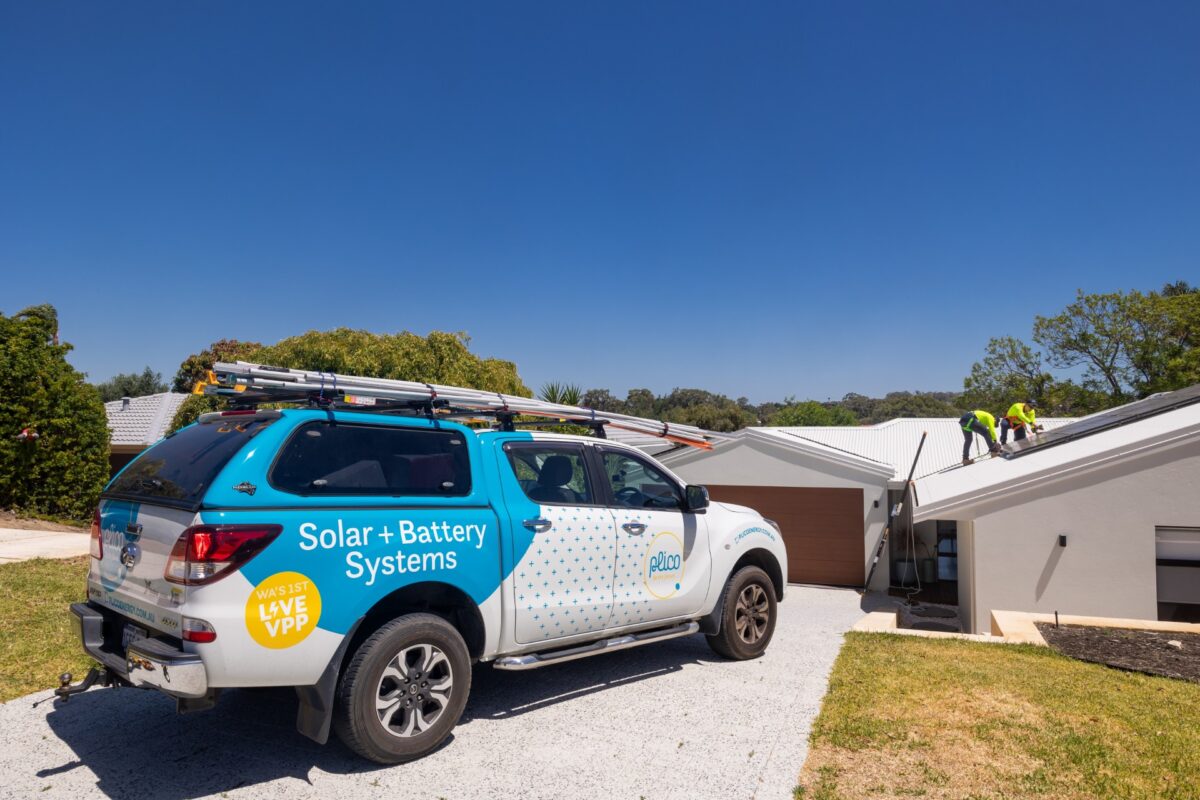





The Clean Energy Finance Corporation (CEFC) has confirmed it will invest up to $35 million (USD 22.9 million) in Plico parent company Starling Energy Group with the funding to support the nationwide rollout of the retail brand’s end-to-end residential solar, battery and virtual power plant (VPP) offering.
Perth-headquartered Plico’s model offers households access to residential solar and battery energy storage system packages for a weekly fee with the company managing installation, monitoring and maintenance for the life of the customer subscription.
As well as generating and storing renewable power for use in the home, the solar and battery systems connect to the Plico VPP, which allows households to earn credits or payment for providing essential grid services in times of mismatches between power supply and demand.
Homeowners who already have compatible solar battery systems can also join Plico’s digitally connected network that already comprises more than 3,500 households.
Plico Chief Executive Officer Robbie Campbell said the CEFC finance is a powerful endorsement of the company’s model that not only help creates tangible value for both the company and its customers but also strengthens the grid at minimal cost.
“The future of energy is community powered,” he said. “With the CEFC’s support, we’re accelerating the shift to a cleaner, more resilient energy system, and we’re only just getting started.”
CEFC Chief Executive Officer Ian Learmonth said smart, flexible technologies like VPPs are playing an increasingly important role in maintaining an agile, responsive and affordable energy system as Australia shifts from coal-fired power to renewables.
The Australian Energy Market Operator (AEMO) has estimated $4.1 billion in additional grid-scale investment would be required to support the National Electricity Market (NEM) without effective coordination of home battery systems.
“As Australia transitions to a more decentralised and decarbonised energy system, new consumer energy models like VPPs are essential,” Learmonth said.
“By tapping into the dispatchable energy capacity of households, coordinated technologies like rooftop solar, home batteries and other consumer energy resources can help stabilise the grid, reduce energy costs, improve system reliability, and maximise the value of renewable energy investments.”
This content is protected by copyright and may not be reused. If you want to cooperate with us and would like to reuse some of our content, please contact: editors@pv-magazine.com.





By submitting this form you agree to pv magazine using your data for the purposes of publishing your comment.
Your personal data will only be disclosed or otherwise transmitted to third parties for the purposes of spam filtering or if this is necessary for technical maintenance of the website. Any other transfer to third parties will not take place unless this is justified on the basis of applicable data protection regulations or if pv magazine is legally obliged to do so.
You may revoke this consent at any time with effect for the future, in which case your personal data will be deleted immediately. Otherwise, your data will be deleted if pv magazine has processed your request or the purpose of data storage is fulfilled.
Further information on data privacy can be found in our Data Protection Policy.