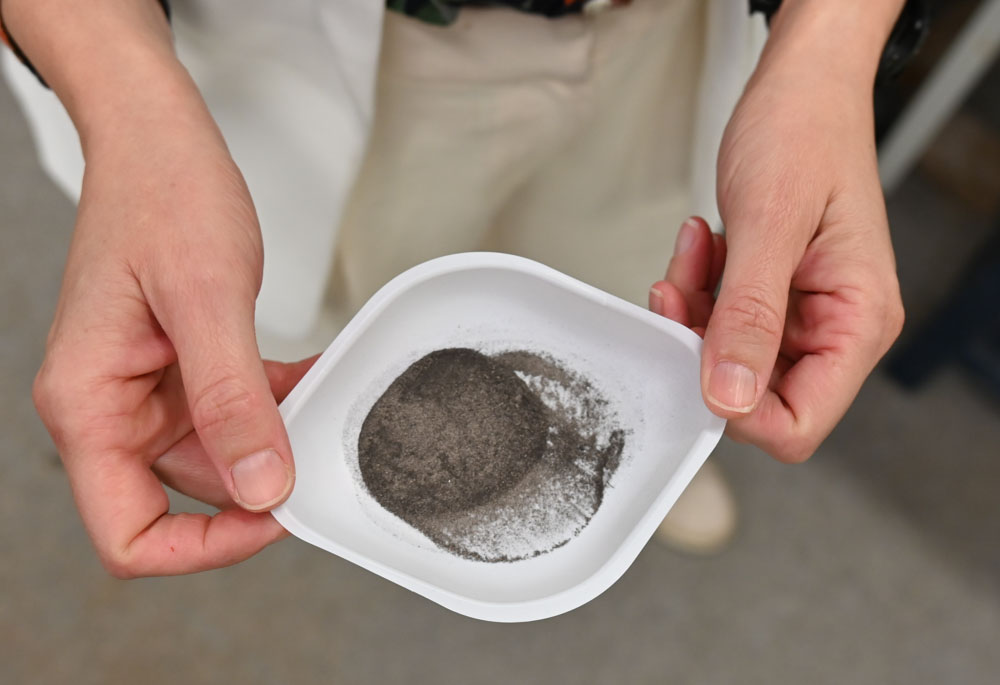





A research team at the University of Newcastle has shown that almost all of the silver inside end-of-life solar panels can be recovered in minutes using an acid-free mechanical process that relies on the same principles used in mineral processing.
Current approaches to silver recovery from end-of-life PV modules are dominated by acid leaching. While effective, the researchers said these approaches impose “substantial reagent and waste burdens that impede large-scale deployment.”
The new method combines comminution – where the panels are mechanically crushed and ground into fine particles – followed by froth flotation, a separation technique that uses water, air bubbles and a small amount of standard floatation reagents to float valuable metals to the surface while waste materials sink.
Lead researcher Associate Professor Mahshid Firouzi, from the University of Newcastle’s Centre for Critical Minerals and Urban Mining, said the work presents, for the first time, the application of froth flotation as an upstream selective recovery step for extracting metallic silver from end-of-life PV modules.
“While froth flotation is widely used in mining to separate valuable minerals from ore, this is, to our knowledge, the first demonstration of froth flotation for recovery of metallic silver from recycled, ground solar panels, something many in the field believed was not feasible,” she said.
Firouzi said the approach reduces chemical intensity and waste generation, and improves overall process efficiency with results, published at ChemRxiv, showing the application of froth flotation using tap water delivered 97.6% silver recovery within about three minutes.
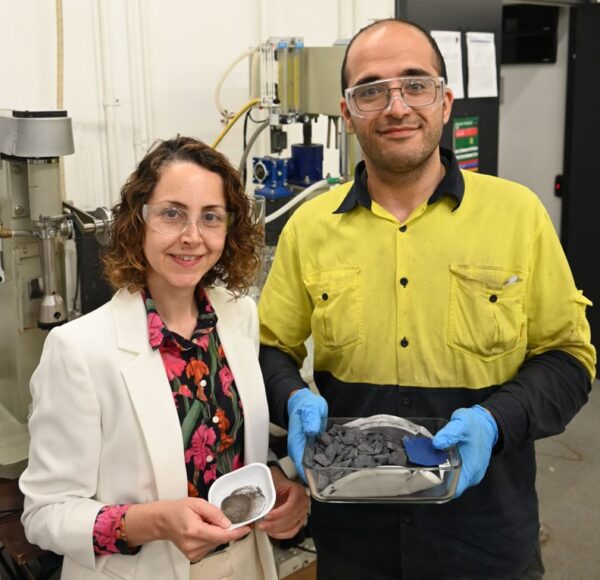
Image: University of Newcastle
The researchers said the results demonstrate a “viable beneficiation route for critical-material recovery from secondary resources, supporting circular-economy objectives with lower reagent intensity and smaller processing footprint.”
They also noted that leveraging this waste stream offers a potential avenue to address the ongoing supply-demand imbalance in the silver market.
The Australian Energy Council has projected global solar panel waste will reach 60-78 million tonnes by 2050, with more than one million tonnes of waste panels expected in Australia, containing an estimated 300–500 tonnes of silver. Each panel contains about 20 grams of silver, currently priced at $3.66 (USD 2.46) per gram.
Firouzi said silver was only the starting point with the research team also investigating the recovery of silicon from end-of-life PV panels.
“Silver was our first test case, but there are likely significant opportunities to apply comminution, flotation science and hydrodynamic techniques to unlock billions of dollars’ worth of other metals and minerals currently trapped in urban and mining waste,” she said.
“We cannot afford to let these valuable resources go to waste.”
This content is protected by copyright and may not be reused. If you want to cooperate with us and would like to reuse some of our content, please contact: editors@pv-magazine.com.




1 comment
By submitting this form you agree to pv magazine using your data for the purposes of publishing your comment.
Your personal data will only be disclosed or otherwise transmitted to third parties for the purposes of spam filtering or if this is necessary for technical maintenance of the website. Any other transfer to third parties will not take place unless this is justified on the basis of applicable data protection regulations or if pv magazine is legally obliged to do so.
You may revoke this consent at any time with effect for the future, in which case your personal data will be deleted immediately. Otherwise, your data will be deleted if pv magazine has processed your request or the purpose of data storage is fulfilled.
Further information on data privacy can be found in our Data Protection Policy.