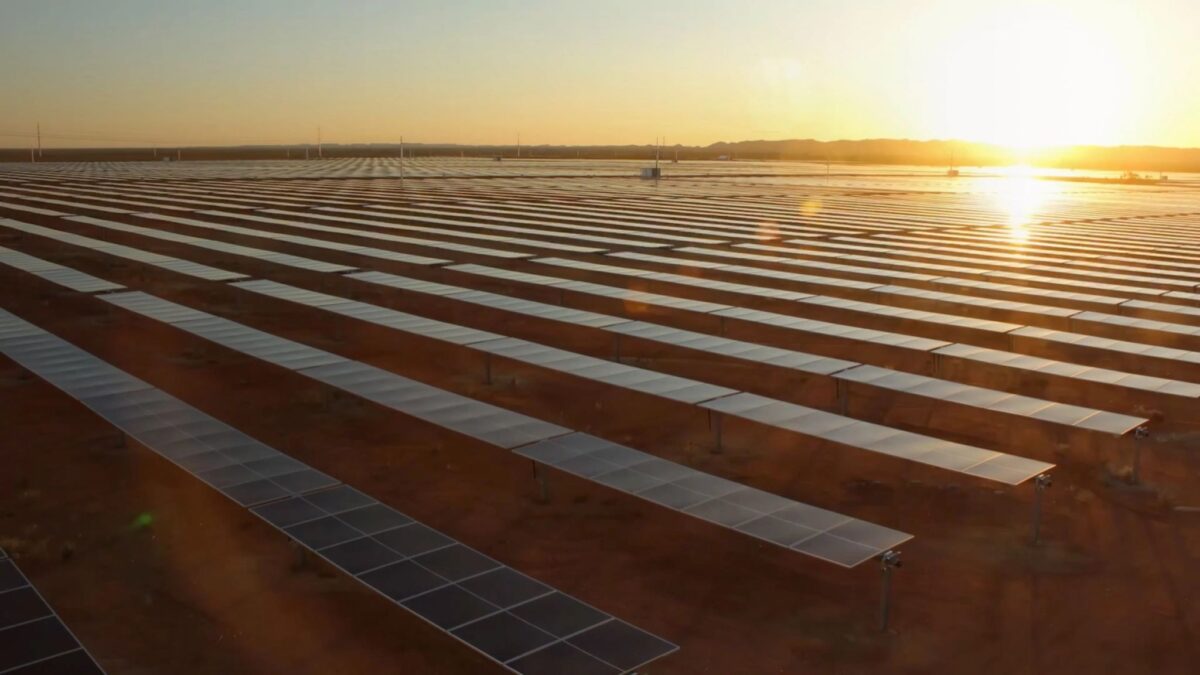





Mining and renewable energy company Fortescue Metals has reached another milestone in its pursuit of “real zero” with the 644 MW Turner River Solar Farm proposed for construction in Western Australia’s Pilbara region awarded federal environmental approval.
The project, proposed for a 1,400-hectare site about 120 kilometres south of Port Hedland, has been approved under the federal Environment Protection and Biodiversity Conservation (EPBC) Act, subject to a range of conditions including limits to how much land can be cleared.
Fortescue has also been ordered to pay a minimum of $3.39 million (USD 2.26 million) into a special purpose account to compensate for any impact on the habitats of the Greater Bilby and the Northern Quoll.
The Turner River project includes the installation of solar panels with a total capacity of 644 MW, substation and 220 kV transmission line spurs connecting the plant to Fortescue’s existing Pilbara Energy Connect integrated electricity network.
The facility is to help power Fortescue’s mining operations in the Pilbara as part of its mission to achieve real zero for scope 1 and scope 2 emissions by 2030 at its iron ore operations, which means no burning of gas or diesel for electricity or land transport and machinery.
The decarbonisation strategy includes establishing a portfolio of solar and wind farms, transmission infrastructure, substations and battery installations to cater for the energy needs of its operations.
Fortescue said it is already making good progress with the 100 MW solar farm at North Star Junction currently supplying more than 25% of energy demands at its Iron Bridge mine site while the 190 MW solar farm being built at its Cloudbreak site is expected to commence operations in 2027.
The federal nod for the Turner River project comes after the state government provided its approval for the project that shapes as one of the biggest solar projects in the nation.
If it was built now, the Turner River Solar Farm would be the largest PV project in Western Australia and the second biggest in the country, edged out only by the 720 MW New England project under construction in New South Wales.
The largest solar farm currently operating in Western Australia is Indonesian developer Sun Energy’s 100 MW Merredin Solar Farm, that came online in the state’s Wheatbelt region in 2020.
This content is protected by copyright and may not be reused. If you want to cooperate with us and would like to reuse some of our content, please contact: editors@pv-magazine.com.



1 comment
By submitting this form you agree to pv magazine using your data for the purposes of publishing your comment.
Your personal data will only be disclosed or otherwise transmitted to third parties for the purposes of spam filtering or if this is necessary for technical maintenance of the website. Any other transfer to third parties will not take place unless this is justified on the basis of applicable data protection regulations or if pv magazine is legally obliged to do so.
You may revoke this consent at any time with effect for the future, in which case your personal data will be deleted immediately. Otherwise, your data will be deleted if pv magazine has processed your request or the purpose of data storage is fulfilled.
Further information on data privacy can be found in our Data Protection Policy.