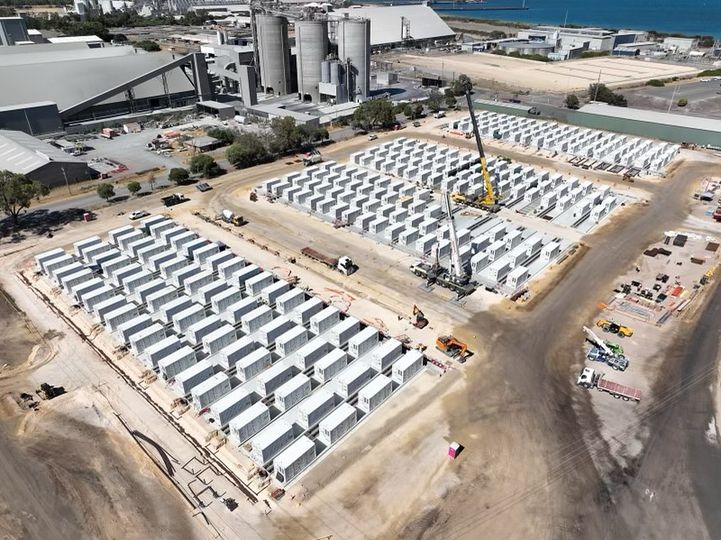





Battery energy storage technology outperformed past records in Q4 2025 in both the National Electricity Market (NEM) and Wholesale Electricity Market (WEM) in Western Australia (WA), according to the Australian Energy Market Operator’s (AEMOs) Quarterly Energy Dynamics (QED) report.
Household batteries
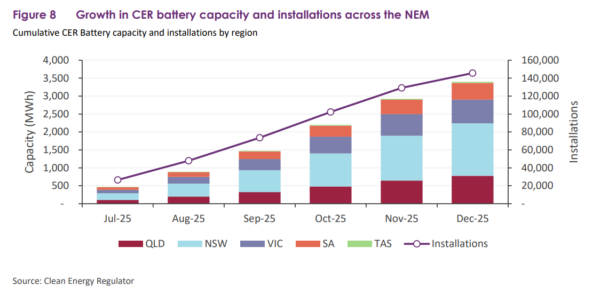
Rallied by the Australian government’s cheaper home battery program launched on 1 July 2025, household adoption of batteries surged past 145,000 installations by the end of 2025 achieving a total distributed storage capacity of 3,398 MWh. The figure to the end of January 2026, is now 200,000.
“Program-installed household batteries now provide a combined NEM-wide storage capacity three times higher than the largest fully commissioned grid-scale battery (Eraring, at 1,073 MWh), and in every mainland region the aggregate capacity is comparable to or larger than each region’s largest grid-scale battery,” the report says.
“By the end of 2025, program-installed household battery capacity reached 1,468 MWh in New South Wales (NSW), followed by Queensland (776 MWh), Victoria (659 MWh), South Australia (463 MWh) and Tasmania (32 MWh).”
Grid-scale batteries
Battery connections during Q4 2025 made up half of the applications approved, and registrations, comprising 46% of the capacity of projects in the connections pipeline, with 74% of batteries being grid forming, the report says.
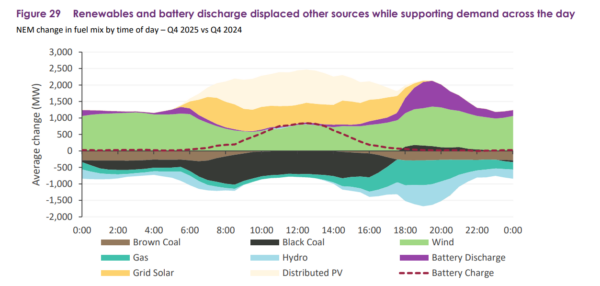
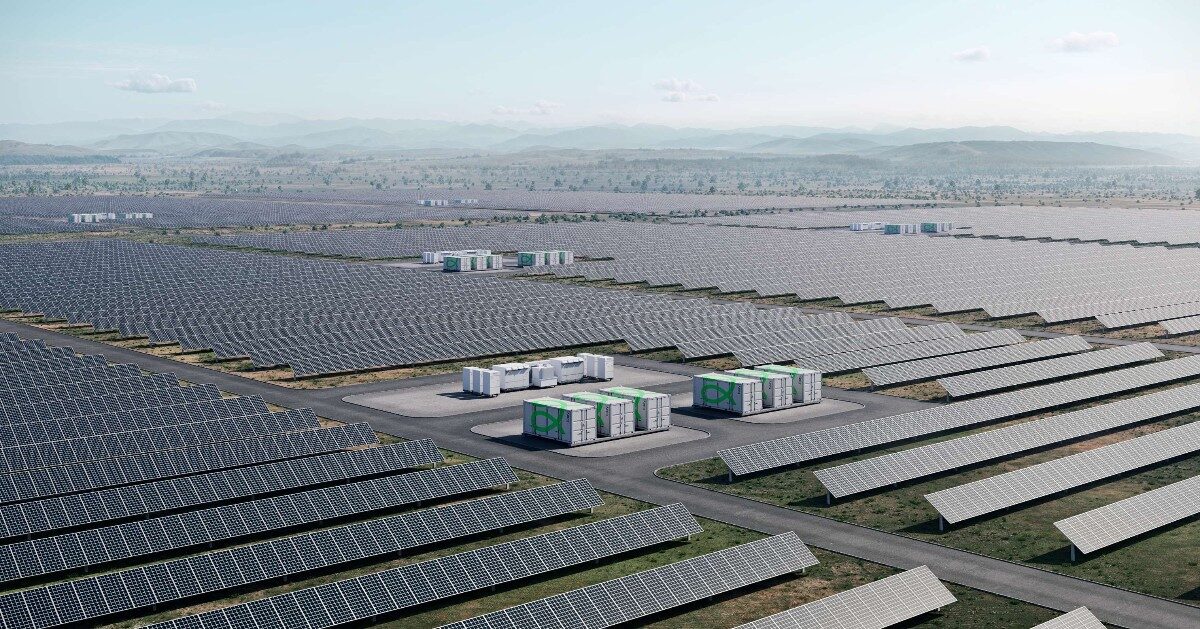
Grid-scale battery expansion saw 3,796 MW / 8,602 MWh of new large-scale battery capacity added to the NEM in the lead up to the end of the year, averaging 268 MW discharge, which signals a tripling of output compared to 2024.
A new peak discharge record occurred in the quarter, reaching 2,885 MW on 29 December 2025 during the half-hour ending 7.30pm, which was 894 MW or 45% more than the previous record set in Q3 2025.
A total 1,060 MW / 2,520 MWh of new capacity came online in Q4 2025 being the NSW-based 500 MW / 1 GWh Liddell battery energy storage system (BESS) and 50 MW / 400 MWh Limondale BESS, and the Queensland-based 260 MW / 620 MWh Supernode, and 250 MW / 500 MWh Swanbank BESS.
Seven battery projects progressed through commissioning to reach full output including the Melbourne Renewable Energy Hub A1, A2 and A3 (600 MW / 1.6 GWh), Tarong BESS (300 MW / 600 MWh), Brendale BESS (205 MW / 410 MWh), Templers BESS (111 MW / 270 MWh), Smithfield BESS (65 MW / 130 MWh).
“Charging activity also grew significantly, rising by 620 MW (+241%) during the daytime (10am-4pm),” the report says.
Wholesale Electricity Market
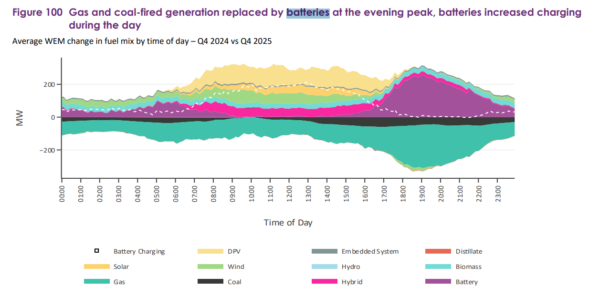
Average battery charging in the WEM also increased by 81 MW or 199%, helping to manage high distributed solar output during the day, and batteries contributed 4.2% to the total energy mix, up from 1.4% in Q4 2024.
“Average battery discharge increased by 70 MW (+200%),” the report says.
“The WEM also experienced battery discharge surpassing 1 GW of injection for the first time on 15 December 2025 in the 6.35pm interval. This record was exceeded on 23 December 2025 in the 6.30pm interval, which saw 1,050 MW of battery discharge.”
The discharge is attributable to new battery capacity operational since Q4 2024, including the 200 MW / 800 MWh Collie ESR1 BESS, the 225 MW / 900 MWh Kwinana ESR2 BESS, the 300 MW / 1.2 GWh Collie BESS 2, the 250 MW / 1 GWh Collie ESR4 and the250 MW / 1 GWh Collie ESR5.
The AEMO report notes batteries significantly influenced price stability and renewable integration across both the NEM and WEM, contributing to the overall record supply respectively of 51% and 52.4%, and helping to drive down the NEMs emission to an all-time record low.
This content is protected by copyright and may not be reused. If you want to cooperate with us and would like to reuse some of our content, please contact: editors@pv-magazine.com.




By submitting this form you agree to pv magazine using your data for the purposes of publishing your comment.
Your personal data will only be disclosed or otherwise transmitted to third parties for the purposes of spam filtering or if this is necessary for technical maintenance of the website. Any other transfer to third parties will not take place unless this is justified on the basis of applicable data protection regulations or if pv magazine is legally obliged to do so.
You may revoke this consent at any time with effect for the future, in which case your personal data will be deleted immediately. Otherwise, your data will be deleted if pv magazine has processed your request or the purpose of data storage is fulfilled.
Further information on data privacy can be found in our Data Protection Policy.