




Renewables developer Australian Solar Enterprises (ASE) has lodged plans for its Tumuruu solar and battery energy storage project for assessment under the federal government’s Environment Protection and Biodiversity Conservation (EPBC) Act.
The EPBC process aims to protect nationally threatened species and ecological communities. Projects must satisfy the necessary criteria before being granted development permission.
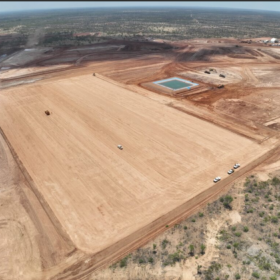
The proposed Tumuruu renewable energy facility, to be built on a 673-hectare site just north of the town of Blackbutt in Queensland’s South Burnett region, includes a 400 MW solar farm supported by a 2,000 MWh battery energy storage system featuring grid-forming inverters. The facility would connect to the electricity grid via two existing 275 kV high-voltage transmission lines that cross the project site.
The land is currently being used to graze cattle and Brisbane-headquartered ASE said agricultural activities are expected to resume on site following construction of the solar farm.
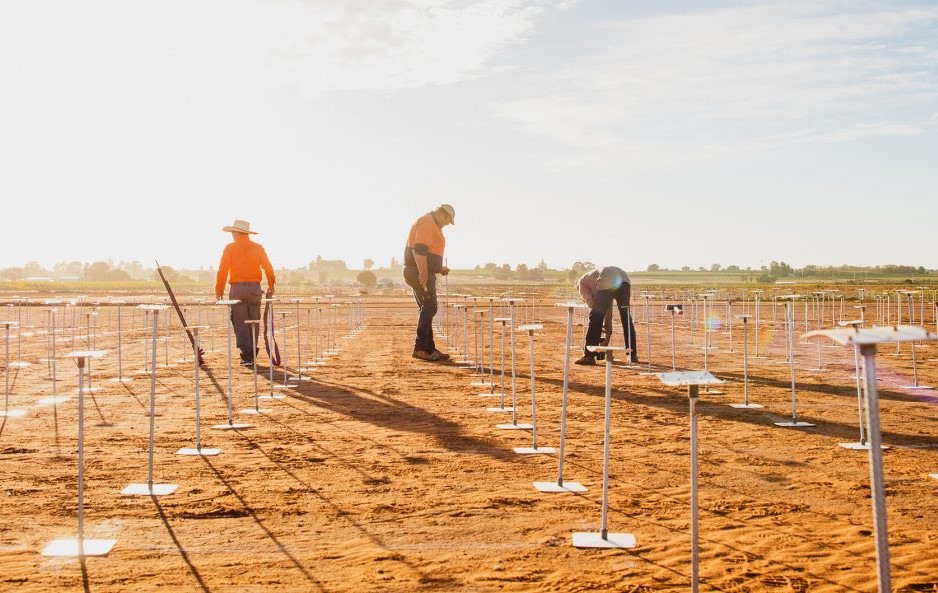
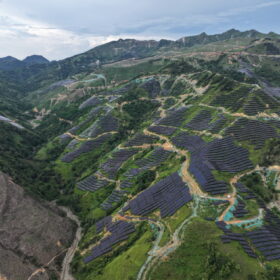
The developer said the PV power plant, that secured local council approval in 2024, will cover just 286 hectares of the site and be developed using a ground-mounted, fixed-pitch racking system that ensures minimal disturbance and supports fast installation.
ASE said it is looking at the PEG racking solution developed by German manufacturer Jurchen Technology but noted the final mounting system will be confirmed during the detailed engineering phase, to “allow flexibility for evolving PV technologies and final geotechnical conditions.”
“We are proposing a low-profile, high density solar solution that will limit visual impact and conserve agricultural land whilst delivering benefits to the community,” ASE said.
Jurchen’s PEG system comprises a top plate, ground plate and steel rod that is approximately 1.0 m in height. The solar panels are seated on the frame and secured in place. The lightweight system is self-stabilising, negating the need for concrete footings and ensuring minimal ground disturbance.
ASE said the simplified installation approach also “reduces construction complexity and requires fewer materials, which will reduce supply, logistics and installation time by up to 40% compared to conventional alternatives.”
The developer is also seeking to simplify the installation process for the battery energy storage system and inverters, looking at using an engineered screw-pile footing system developed by Queensland-based BMSA Footing Solutions.
BMSA’s StumpRite system uses steel screw-piles installed into the ground to form a stable, load-bearing platform, “typically requiring limited excavation and reducing construction impacts compared to full concrete slab foundations.”
This content is protected by copyright and may not be reused. If you want to cooperate with us and would like to reuse some of our content, please contact: editors@pv-magazine.com.


By submitting this form you agree to pv magazine using your data for the purposes of publishing your comment.
Your personal data will only be disclosed or otherwise transmitted to third parties for the purposes of spam filtering or if this is necessary for technical maintenance of the website. Any other transfer to third parties will not take place unless this is justified on the basis of applicable data protection regulations or if pv magazine is legally obliged to do so.
You may revoke this consent at any time with effect for the future, in which case your personal data will be deleted immediately. Otherwise, your data will be deleted if pv magazine has processed your request or the purpose of data storage is fulfilled.
Further information on data privacy can be found in our Data Protection Policy.