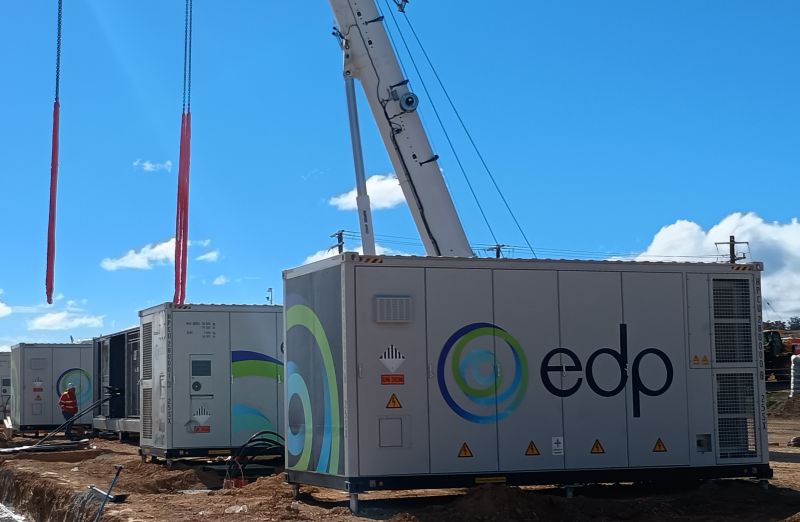





The Braidwood Renewable Microgrid Project (BRMP), located 280 kilometres southwest of Sydney, is the first project funded under Stream A of the Australian Renewable Energy Agency’s (ARENA’s) Regional Microgrid Program.
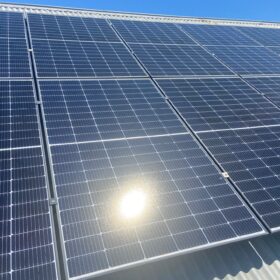
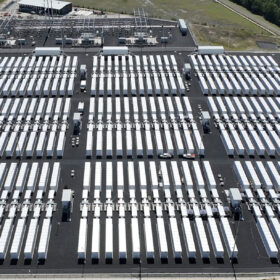
The stand-alone power system (SAPS) has been awarded $3 million (USD 2.1 million) toward an overall $15.5 million cost to deploy the proposed 7 MWp solar and 5 MW / 10 MWh battery energy storage system (BESS).
Secured by developer EDP Renewables (EDPR) Australia, the funding will progress the BRMP that will serve as a backup electricity generation island for the Braidwood community’s energy needs.
Situated at the end of a single 132 kV electricity line, running from the Queanbeyan Substation, Braidwood is vulnerable to faults or incidents cutting off power to the entire community, such as the 2019-20 Black Summer bushfire crisis, which was the catalyst for the microgrid’s development.
The community, EDP and ARENA hope the microgrid could provide a blueprint for replication in areas where the grid is vulnerable to unplanned outages.
Subsidiary of Portugal-headquartered utility EDP, EDP Renewables APAC Australia Country Director Simon Franklin said the project is not just safeguarding the local community from severe grid disruptions.
“We are also setting a new standard for Australia’s energy transition,” Franklin said.
Local advocate for renewable energy, Braidwood Clean Energy President Paul Cockram said the ‘island-able’ solar-generated power supply will demonstrate that Braidwood can be both historic and futuristic in a way that “other towns will surely follow.”
ARENA Chief Executive Officer Darren Miller said the project will derisk Braidwood’s energy access, while providing a model for communities facing similar risks.
“During extreme weather events, the system will pivot, if necessary, to supply the local Braidwood community and the nearby township of Majors Creek with the energy they need,” an EDP Renewables Australia statement said.
Under standard operating conditions, energy generated by the system will be exported to the national grid and is anticipated to offset approximately 7,537 tCO2e per year.
During upstream supply disruptions the local distribution network service provider (DNSP), Essential Energy, will assume operational control in accordance with applicable regulations as a non-market generation unit to maintain the electricity supply until the microgrid can be reconnect to the National Electricity Market (NEM).
This content is protected by copyright and may not be reused. If you want to cooperate with us and would like to reuse some of our content, please contact: editors@pv-magazine.com.



By submitting this form you agree to pv magazine using your data for the purposes of publishing your comment.
Your personal data will only be disclosed or otherwise transmitted to third parties for the purposes of spam filtering or if this is necessary for technical maintenance of the website. Any other transfer to third parties will not take place unless this is justified on the basis of applicable data protection regulations or if pv magazine is legally obliged to do so.
You may revoke this consent at any time with effect for the future, in which case your personal data will be deleted immediately. Otherwise, your data will be deleted if pv magazine has processed your request or the purpose of data storage is fulfilled.
Further information on data privacy can be found in our Data Protection Policy.