Ev Foley

Envirostream Australia signs battery recycling agreement with Hithium
Envirostream Australia, a subsidiary of chemical company Livium, has signed an exclusive recycling agreement with Hithium Energy to recycle lithium-ion batteries supplied by Hithium to Lightsource bp’s Woolooga solar farm in Queensland.
Report finds 50% of Australians don’t know utility-scale solar is a renewable source
A new report from the Climate Council shows Australians are largely in the dark about renewables, including recogising rooftop solar, but not utility-scale solar farms, as renewable sources.
Lodestone powers up 69 GWh agrivoltaic solar farm in New Zealand’s north
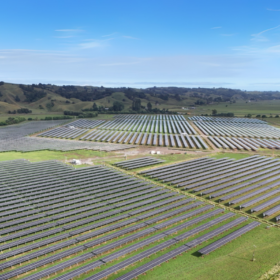
Lodestone Energy has flicked the ‘on’ switch to it’s utility-scale agrivoltaic solar array on the North Island of New Zealand, making it the first in the country to connect directly to the national grid.
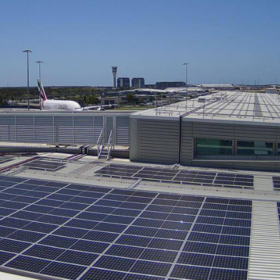
Brisbane Airport net zero milestone includes 10 MW of onsite solar
Brisbane Airport has announced it’s 100% powered by renewable energy from 10 MW of onsite solar generation sourced via 18,000 solar panels installed across the facility, plus a recent purchase of 100% renewable energy from state-owned generator, Stanwell.
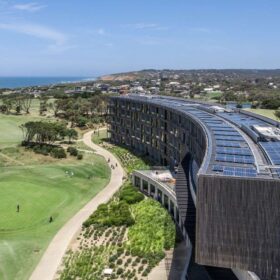
RACV adds virtual power plant services to suite of membership offerings
RACV has added virtual power plant (VPP) services to its catalogue of membership offerings and follows integration of the FCAS-friendly PowerSync platform with solar and battery installations at RACVs Torquay and Inverloch resorts in Victoria.
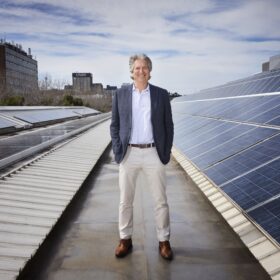
Sydney ferry named after solar panel pioneer Professor Martin Green
Solar panel pioneer Professor Martin Green has added ‘ferry namesake’ to his long list of accollades, honoured for his contribution to advancements in Australia’s and the world’s solar cell advancements.
$1.2 billion loan revs Novonix plans for second US production plant
Australian-listed battery materials and technology company, Novonix, has bought land in Tennessee, USA, to expand existing operations there with a second mass production plant, funded in part with a $1.2 billion US Department of Energy loan.
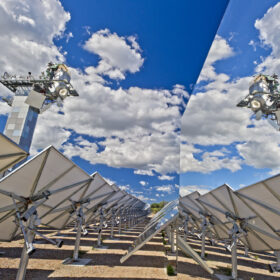
Hydrogen pilot plant aquires linear Fresnel concentrated solar system
Sparc Technologies’ South Australian green hydrogen pilot plant is on track to commence construction in early 2025, following a formal commitment to Stage 2 of the project with industry partners, and procurement of a linear Fresnal concentrated solar system.
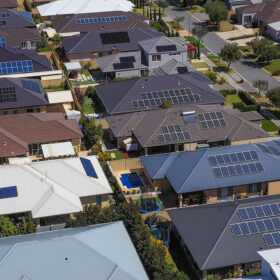
Virtual power plants can compete in the energy market from 2027: AEMC
The Australian Energy Market Commission has released a final determination to allow virtual power plants to compete directly with large-scale generators in the energy market, scheduled to begin in 2027.
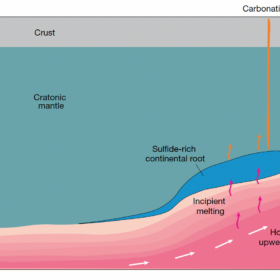
Hot spots for critical minerals needed for green economy unlocked: study
University researchers have identified probable locations for critical metals needed to support a green economy by studying how critical metals accumulate at the margins of old cores of continents.