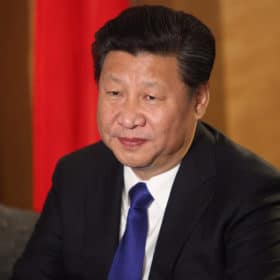
Solar stocks rise as President Xi pledges 1.2 TW of renewables capacity in 2030
The Chinese leader has revealed some details of his nation’s commitment to go carbon neutral by 2060. That solar and wind power promise could even prove to be a conservative estimate, according to the nation’s solar industry.
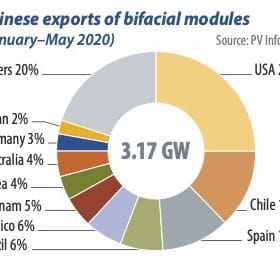
Weekend read: Prospects for bifacial and large-format products
The pandemic and accidents at polysilicon labs in China’s Xinjiang region put PV manufacturers under pressure to maintain production this year, while slowing cell and module R&D. After half-cut and multi-busbar becomes commonplace, manufacturers will continue to explore the high-density assembly methods that emerged last year, as well as n-type cells. But the market is also shifting to large formats, and the share of bifacial products is growing this year. As sizing up modules can bring immediate returns, PV InfoLink’s Amy Fang expects the PV industry to prioritise the development of large formats and bifacial products next year.
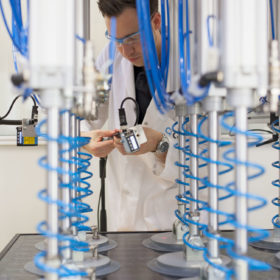
New three-step module testing from TÜV Rheinland
German standards body TÜV Rheinland is introducing a new testing and certification program for pv modules. The program incorporates component specific tests and ongoing, random testing of running production lines. Hanwha Q Cells assisted in the development of the program, and this week announced it is the first manufacturer to receive the new Quality Control PV Certification.
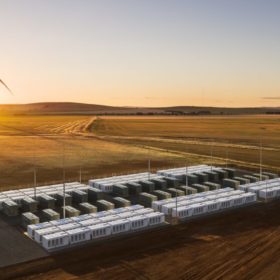
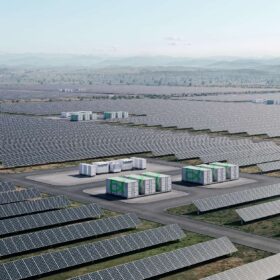
What are batteries?
Batteries are coming to a grid near you, if they’re not there already. Little ones in households and big ones like in Hornsdale, South Australia are being deployed in support of the clean energy revolution. But what are they doing there? What can batteries do?
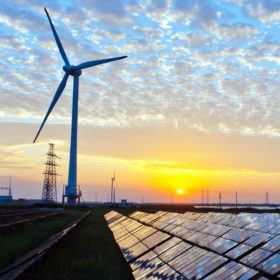
Australia’s states have been forced to go it alone on renewable energy, but it’s a risky strategy
Several Australian states are going it alone on the the energy transition. The policies adopted by New South Wales, Victoria, Queensland and others represent major departures from the existing national approach, and run counter to the neoliberal principles underpinning the current system.

We have the tools to get to net zero. Let us use them
Australia’s failure to set a firm political course to net zero emissions is a profoundly backward act of economic and environmental self-harm. It’s in the national interest that we equip ourselves with not just the political will, but the practical tools required to harness the popular appetite for affordable renewable energy in the absence of a political solution.
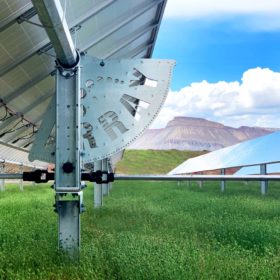
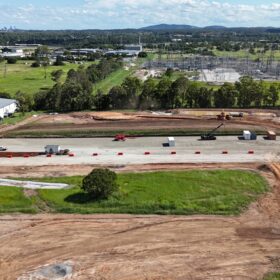
Array Technologies ends 2020 with one more 1 GW solar tracker supply contract
The tracking industry’s second-largest player has signed an agreement to supply RP Construction Services with 1 GW of single-axis solar trackers just 20 days after coming to a 1.4 GW agreement with Lightsource BP.
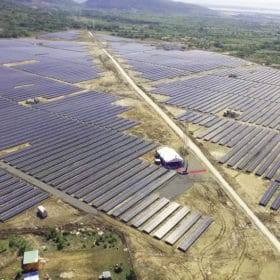
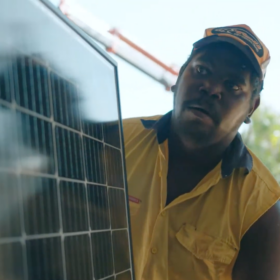
The solar development process in Vietnam, its barriers and hurdles
The development process for ground-mounted utility scale solar projects in Vietnam is laborious, time-consuming, expensive and still largely difficult to navigate for foreign developers without entering a strategic partnership, in whatever form, with a local Vietnamese counterpart.
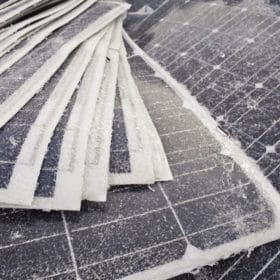
Weekend read: The afterlife of solar panels
Use of the term “circular economy” is growing in virtually every industry worldwide – solar included. As noted throughout Q3, in the UP initiative’s focus on circular manufacturing, work is already underway to integrate circular principles into all areas of business, from internal operations and supply chain management to manufacturing and installations. In a recent analysis of PV recycling, BloombergNEF detailed six conclusions for the solar industry and those who are trying to make it more circular. Cecilia L’Ecluse, solar associate, and Julia Attwood, head of advanced materials at BloombergNEF share these conclusions as part of our quarterly theme on PV module recycling.
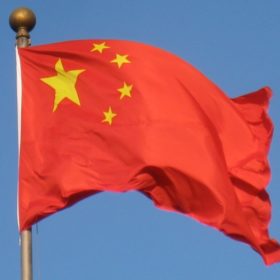
Dual circulation and China’s push for energy security
‘Dual circulation’ has one thing in common with many other major Chinese policy initiatives in that it’s not immediately apparent from its name as to what it means. First raised during a Politburo meeting in May, President Xi introduced this new strategy at the annual ‘Two Sessions’ later that month. It is clear that China’s leadership intends dual circulation to become an important part not only of China’s policy agenda for the next 12 months but to also feature prominently in the upcoming 14th five-year plan (2021-2025).