Greek developer buys stake in NSW green hydrogen project targeting Hume Highway haulage
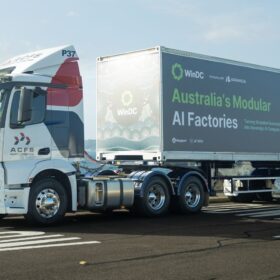
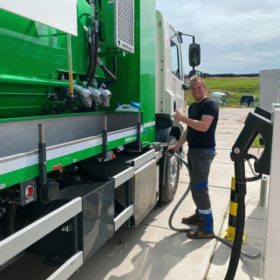
Greek renewables developer Mytilineos has acquired a 15% stake in the Rosedale Green Hydrogen project, which aims to build a 800 MW solar farm next to a 560 MW hydrogen production plant at roughly the midpoint between Melbourne and Sydney on a major trucking corridor.
Floating hydrogen storage solution unveiled by WA company
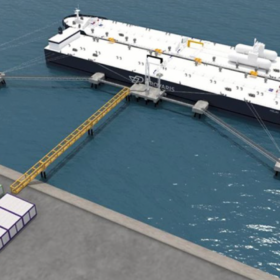
Western Australian hydrogen company Provaris has unveiled a floating hydrogen gas storage solution, which it says will provide the industry with “energy efficient and cost-effective storage.”
Hydrogen truck to be showcased at Brisbane convention before Pepsi trials
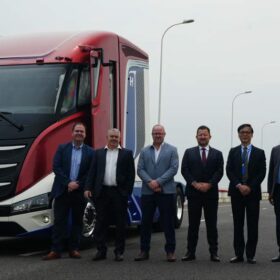
Australian company Pure Hydrogen will showcase its ‘Taurus’ hydrogen fuel cell prime mover at the Brisbane Truck Show in May. The demonstration will be immediately followed by a trial at PepsiCo Australia, which will use the truck at one of its Brisbane manufacturing sites.

NZ hydrogen startup claims it’s ‘cracked the iridium problem,’ raises $2.3m in seed round
A newly-launched New Zealand startup claims its catalyst layer technology reduces the amount of iridium and platinum needed for electrolysis by a factor of 25. The startup, a spinout from a research institute, has raised NZD 2.5 million ($2.3m/USD 1.55m) in a seed funding round.
Australia tries to boost hydrogen competitiveness
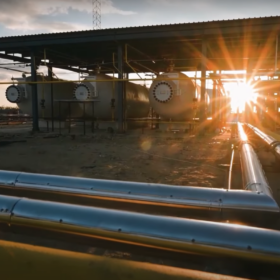
Finance consultancy explains in a new report that the levelised cost of green hydrogen (LCOH) is well below USD 2/kg with subsidies. Using either PEM and alkaline electrolysers, green hydrogen normally has a lower levelised cost than pink hydrogen. Meanwhile, Australian authorities are trying to increase the competitiveness of the local hydrogen sector, and car companies are updating their fuel cell plans.
Report warns of risks for Australia in global green hydrogen race
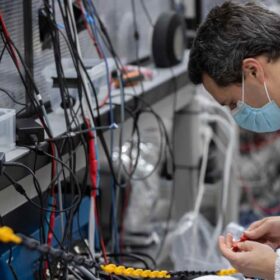
The federal government is increasing its investment in green hydrogen and low-emissions steel with $50 million in research and development funding to help progress the technologies as a new report warns that Australia must act quickly or risk being left behind in the race to become a renewable energy superpower.
Adelaide company granted license to explore hydrogen storage in SA’s underground salt caverns
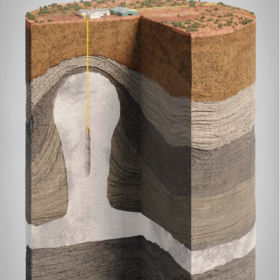
South Australian technology company EntX has been granted a license to explore salt deposits along the western side of the Eyre Peninsula in South Australia for the purpose of hydrogen storage.
5 GW green hydrogen project wins bid for SA’s Eyre Peninsula
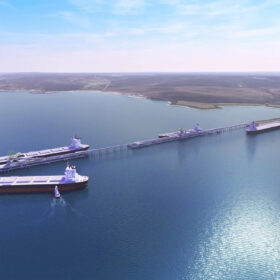
Canadian-headquartered clean energy firm Amp Energy has secured the rights to develop a green hydrogen project with up to 5 GW of electrolyser capacity on the Eyre Peninsula in South Australia. Amp has signed an agreement with iron ore miner Iron Road which owns the coastal site, including the Cape Hardy Port Precinct.
Perth-company with UWA hydrogen technology signs deal with Japan
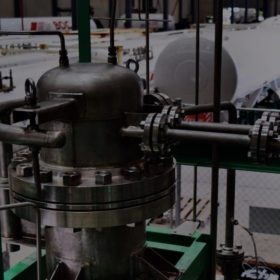
Seeking to commercialise hydrogen technology developed by the University of Western Australia, Perth-based Hazer Group has entered into a somewhat vague agreement with Japan’s Chubu Electric Power Company and engineering firm Chiyoda Corporation.
Global hydrogen pipeline projects to surge by 2035, says Rystad
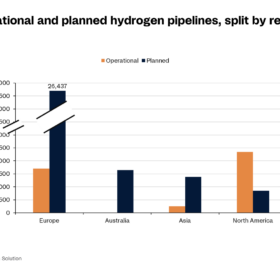
Norwegian consultancy Rystad Energy says that hydrogen pipelines will be “far better” than vessels at moving hydrogen over short- and medium-range distances in the years ahead.