Victorian government doles out over $7 million toward green hydrogen applications in heavy transport
Transport accounts for approximately 20% of the Victoria’s emissions while also being one of the more hard to decarbonise sectors. Due to its commitment to halve its emissions by 2030, the Victorian government has announced over $7 million in grands for a number of projects seeking to commercialise real world applications in the transport sector powered by renewable hydrogen.
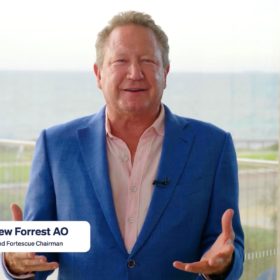
Fortescue partners with German raw materials giant Covestro in landmark green hydrogen supply deal
Fortescue Future Industries has taken another step toward its global green hydrogen ambitions with the signing of a Memorandum of Understanding with Germany polymer company Covestro for the equivalent of 100,000 tonnes of solar-sourced green hydrogen and its derivatives annually, starting as early as 2024.

Green hydrogen could disrupt global trade, bilateral energy relations
While there are still many uncertainties as to the way in which hydrogen trade might evolve and change economic ties and political dynamics between countries, experts agree that green hydrogen can bring winds of change to the global energy arena. According to the International Renewable Energy Agency, significant geoeconomic and geopolitical shifts are just around the corner.
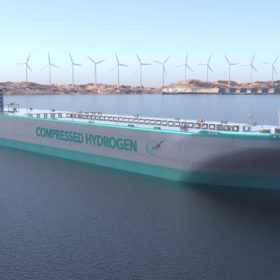
GEV launches development strategy for proposed 2.8 GW green hydrogen project
Western Australian renewables company Global Energy Ventures is steaming ahead with its plan to establish a massive 2.8 GW green hydrogen production and export facility on the Tiwi Islands off the coast of the Northern Territory, announcing it has already commenced the development program.

Sojitz teams with CS Energy in green hydrogen export project
Japanese trading house Sojitz Corporation has announced it will collaborate with Queensland government-owned utility CS Energy and Nippon Engineering Consultants on a project to transport green hydrogen produced in Australia to the Pacific Island nation of Palau in a bid to reduce a reliance on fossil fuels.
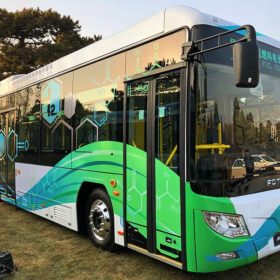
Foton, BOC to collaborate on scaling Australia’s hydrogen bus sector
Vehicle manufacturer Foton and gas company BOC have signed an agreement to develop the hydrogen bus sector in Australia and New Zealand, allowing technology they say is already “widely used” around the world to become affordable in a region where it is still nascent.
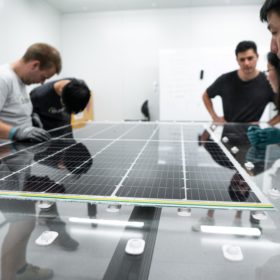
‘Ultra low-cost solar’ gets a $40 million R&D boost from ARENA
The Australian Renewable Energy Agency has announced $40 million in research and development funding is up for grabs across two streams. Stream 1 consists of cells and modules, and Stream 2 is focused on balance of system along with operations and maintenance. It is hoped the additional funding will spur Australia’s pioneering solar research to push for the federal government’s “ultra low-cost solar” target of $15/MWh.
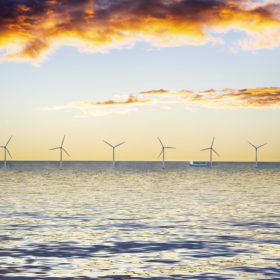
Electrolyser tech to produce hydrogen from seawater
With a new start-up and a consortium in the Netherlands, German automotive supplier Schaeffler wants to significantly reduce the costs of green hydrogen.
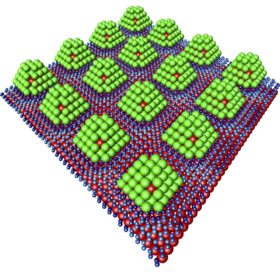
Storing hydrogen with ‘nano-chocolates’
German scientists have developed a novel hydrogen storage method that relies on nanostructures – tiny nanoparticles made of the precious metal palladium – instead of high pressure and lower temperatures.

Getting real about the hydrogen economy
Hydrogen is frequently touted as a major player in decarbonisation, and it is. But it will only be used at scale much later, and at a much lower level than solar and wind.