ARENA in desperate need of funding lifeline says Australia Institute
The Australian Renewable Energy Agency (ARENA) is in desperate need of a short-term funding extension as its funds to allocate to new projects is set to dry up by mid-2020. The Australia Institute has published a discussion paper urging the Morrison Government to legislate.
What lies ahead for the NEM in 2020? Some lessons from 2019
After a leisurely break over the holiday period, I have returned to my desk to get right back into the analysis of what I think will be a pretty exciting year for the NEM. Connection difficulties, commissioning delays and stubbornly high storage costs point to uncertainty on the supply side, while strong rooftop uptake continues to whittle out daytime operational demand.
‘China will add 35-38 GW of solar this year’
Power generation statistics released by the National Energy Administration appear to confirm the nation added 12 GW of solar last month. China also deployed another 41 GW of polluting coal-fired power plants last year.
Investment in Australian renewables sank in 2019
Investment in Australian renewable energy capacity fell 40% in 2019 down from record-breaking levels seen in the year before, according to Bloomberg New Energy Finance (BNEF). Spending on large-scale renewables dropped dramatically due to network woes and long-term policy uncertainty but was ameliorated by the rooftop solar segment’s record growth.
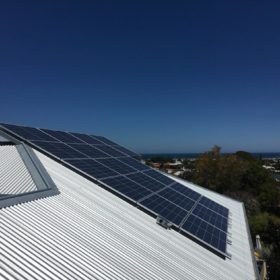
Australia installs 2.13 GW of rooftop solar in 2019
The final tally was 2.13 GW of sub-100kW systems registered in 2019 following a record installation surge in December, according to solar analyst SunWiz. This represents a jump of a 35% year-on-year and puts the grand total at 10 GW.
Power Ledger to integrate blockchain-enabled energy auditing in solar assets
The Australian peer-to-peer (P2P) energy trading pioneer has purchased a 250kW PV system that will utilize the company’s new energy data management and settlement system to provide greater visibility on renewable energy sold to a consumer under a 20-year power purchase agreement.
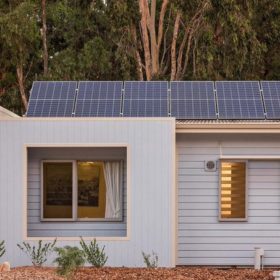
CEFC, Bank of Australia launch first green home loan program
Australia’s green bank has partnered with Bank of Australia to deliver discounted interest rates to green home builders and buyers. The green home loan is the first Australian financial instrument to use energy efficiency measurement tools to determine eligibility.
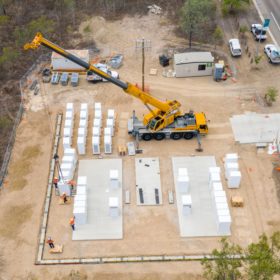
Timely Tesla delivery charges Queensland’s community-scale battery toward fruition
Queensland’s first community-scale battery is nearing completion after the delivery of its 4 MW Tesla battery. The battery, to be charged with excess solar power from Townsville’s residential rooftop PV, should connect to the grid by the end of the summer.

Amber Electric: The year when the promise of smart grid begins to be realized at scale
As the energy landscape continues to evolve to meet the needs of the 21st century, digitalization is growing within generation, distribution and transmission. On the demand management side, Amber Electric is seeking to bring transparency to the market, passing wholesale prices directly to consumers for a $10 flat monthly fee. The Melbourne-based start-up is readying to expand its offering in 2020, as home batteries, EV chargers and other smart devices establish a firmer hold in the Australian electricity market, says Dan Adams, co-founder of Amber Electric.
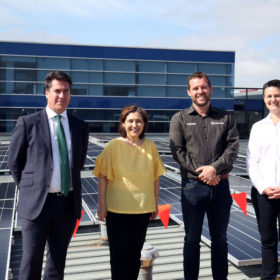
Shared solar switched on at Melbourne apartment block
A microgrid installed on an apartment block in Melbourne will provide clean and affordable electricity to 52 low-income households. It is the first site of Ovida’s Community Energy Hubs project, which will deliver shared solar PV and batteries to more multi-tenanted buildings in the city.