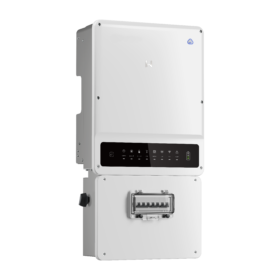
GoodWe unveils hybrid inverters for larger residential applications
GoodWe says its new EHB single-phase hybrid inverters suit larger residential energy storage applications with the series supporting 200% PV oversizing, allowing for systems up to 20 kW in size.
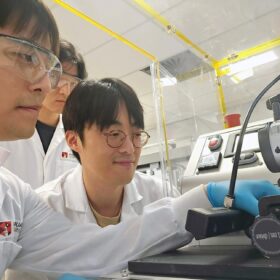
Researchers make green perovskite manufacturing breakthrough
Scientists at Macquarie University and the University of New South Wales have broken through significant barriers to perovskite solar cell industrial adoption with the discovery of ground breaking green manufacturing processes and materials.
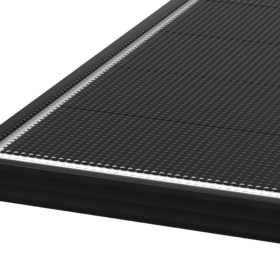
AIKO’s ultra-light solar panel answers structural load limit problem
Pilot shipments of AIKO’s ultra-light 8.6 kilogram solar panel have arrived in Australia offering a solution to structural load limits common in old warehouses, cold stores and lightweight rooftops.
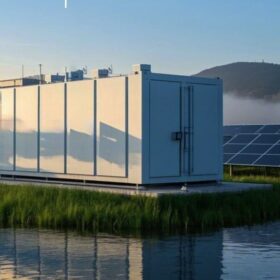
Jinko TOPCon technology tapped for 10 GW green hydrogen project
JinkoSolar has inked a deal to supply PV modules based on its N-type TOPCon technology to power a 10 GW green hydrogen production facility being developed in the Northern Territory.
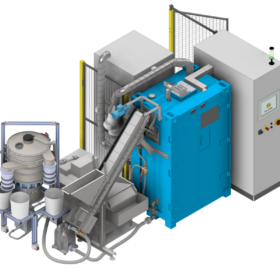
PV module recycling tech based on electrohydraulic shockwave fragmentation
An international research team has developed a new machine that utilises shockwaves to separate the different materials of a PV module. Chemical processes can be further used to extract silicon and silver. Results show the recovery of more than 99.5% of the original weight of the panels.

Scientists propose novel Moon perovskite cell manufacturing strategy
German scientists have proposed power generation for future habitats on the moon could be achieved by manufacturing halide perovskite cells locally, using regolith-based moonglass.
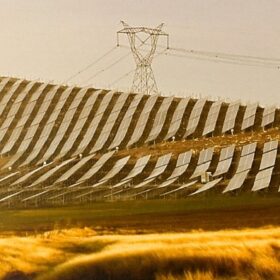
Canadian Solar’s first anti-hail module installation set for Flow Power project
Canadian Solar’s anti-hail technology is to be installed at a new South Australian solar battery energy storage project by Flow Power in the Coonawarra wine region, 370 kilometres southeast of Adelaide.
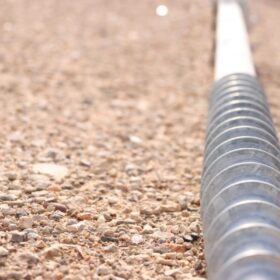
PVH launches foundation system for solar installations on complex terrain
PV Hardware (PVH) has released PVH Terra, a foundation system designed to improve solar plant installation on challenging terrain. The system aims to improve stability in expansive soils, frost-affected areas, and sites with poor geotechnical conditions while reducing costs and environmental impact.
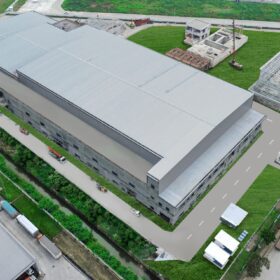
Gstar’s new silicon wafer plant receives first monocrystalline growth furnaces
Singapore-headquartered solar manufacturer Gstar Solar has received the first of 120 monocrystalline growth furnaces to be delivered to its new 3 GW wafer manufacturing facility in Indonesia.
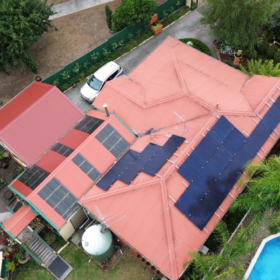
GoodWe powers Victorian wildlife rescuers with donated solar system
Solar energy solutions companies, GoodWe and Six Star Plus, have teamed up with electrical wholesaler AWM Greentech Clayton to install an 8.4 kW solar system in support of a Victorian wildlife rescue operation.