$70 million fund opens to innovate heavy industry decarbonisation
Only innovators need apply: ARENA opens second round of industrial transformation stream funding offering $70 million to support technology development to help industry decarbonise.
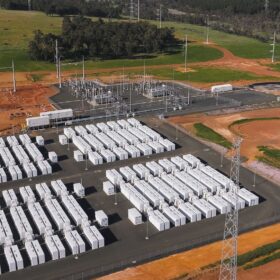
Western Australia CIS tender awards four battery projects totalling 654 MW
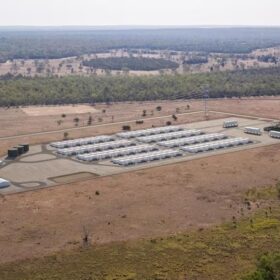
Four new big battery projects in Western Australia have been named in the state’s first Capacity Investment Scheme tender, and combined equate to 654 MW and 2,595 MWh capacity, which is enough to supply the peak electricity load for over 600,000 homes for four hours.
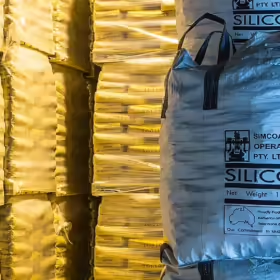
Australia’s only silicon manufacturer bags $38 million in federal funding
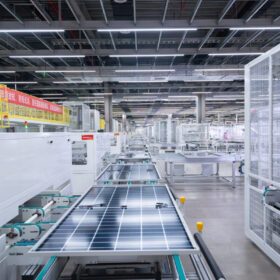
Western Australia silicon manufacturer Simcoa Operations has received a $39.8 million investment from the Australian government to boost the country’s silicon manufacturing capability.
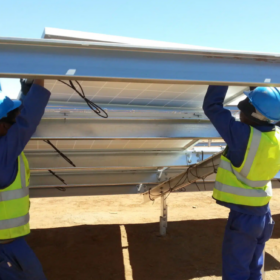
Hydrogen Headstart to break ground with Western Australia project
Danish renewable energy investment firm Copenhagen Infrastructure Partners has been successful in the federal government’s first Hydrogen Headstart round for its Murchison green hydrogen project in Western Australia.

Newcastle Coal to power port facility with solar
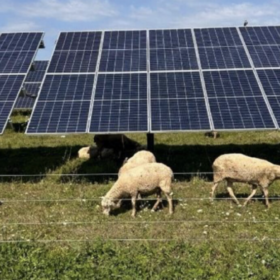
Renewables developer Lightsource BP is pushing ahead with the construction of the 450 MW Goulburn River Solar Farm in the New South Wales Upper Hunter region after striking a long-term offtake agreement with the operators of one of Australia’s major coal export terminals.
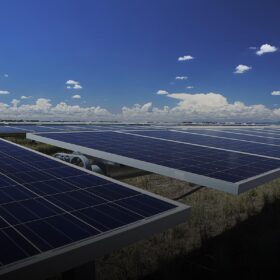
FRV adds 190 MW solar and battery project to portfolio
Global renewables developer Fotowatio Renewable Ventures has boosted its Australian portfolio with the acquisition of a 190 MW hybrid solar and battery energy storage project being constructed in central Victoria.
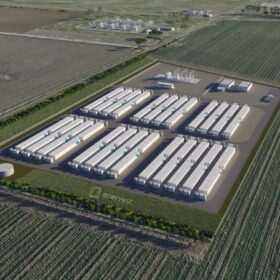
Energy Vault acquires eight-hour battery project in NSW
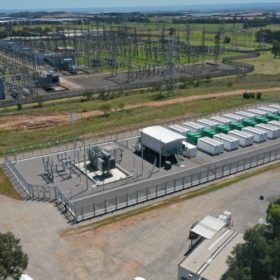
United States-headquartered energy storage solutions company Energy Vault has inked an agreement to purchase the 125 MW / 1,000 MWh Stoney Creek battery energy storage project from Victoria-based renewable energy developer Enervest.

Quinbrook secures financial close on UK’s largest solar and storage project
Australian-owned Quinbrook Infrastructure Partners has completed financing for the Cleve Hill Solar Park in England. The solar and storage project will be the largest in the United Kingdom when it goes live later in 2025.
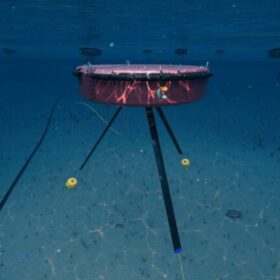
Carnegie secures more funding for Spain wave energy project
Australian wave energy developer Carnegie Clean Energy has secured more than $545,000 in funding to push forward its plans to deliver and operate a 400 kW version of its ‘CETO’ wave power generation system in waters off the coast of Spain.
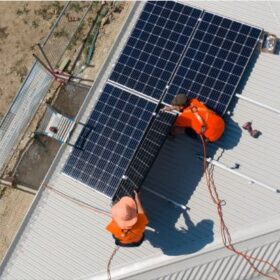
Rooftop solar install rates roll on with 3 GW added in 2024
Australia’s rooftop solar uptake continued to surge in 2024 with a new report revealing more than 300,000 PV systems with a combined capacity of almost 3 GW were bolted on to the roofs of homes and businesses across the nation last year.