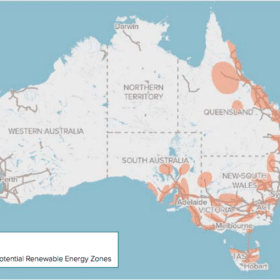
Government advisors class multiple renewable projects among Australia’s highest infrastructure priorities
Australia’s infrastructure advisory body has added a number of renewable energy-related projects to its priority list, recognising the need for investment in the “once-in-a-lifetime transition from thermal generation to intermittent renewables.”
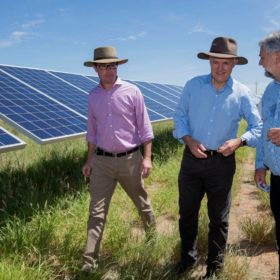
Turnbull to chair Fortescue’s ambitious renewable energy business
Iron ore giant Fortescue Metals Group’s ambitious Fortescue Future Industries wants to build a renewable energy portfolio of more than 235 GW. The ambition, combined with the apparently bullish effort of Fortescue executives in recent months, has garnered headlines, and now Fortescue has announced former Prime Minister Malcolm Turnbull and former National Intelligence chief Nick Warner as part of its team.
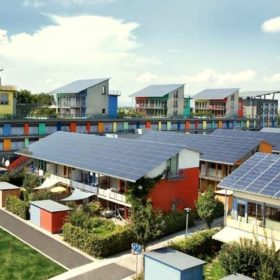
In the mind of a residential PV system owner
Scientists in the Netherlands have identified five different profiles of homeowners that have installed or could install rooftop PV systems. According to their findings, substantial differences characterise the five segmentation groups. The research is intended to help policymakers and solar companies to better promote PV technology among potential new adopters.

Perovskite solar cell with cesium-titanium dioxide nanotubes
A global research group has developed a perovskite PV cell with titanium dioxide nanotubes doped with cesium. It purportedly offers better short-circuit current and power conversion efficiency than cells without cesium nanoparticles. They say it has optimal thermal stability under temperatures up to 800 C.
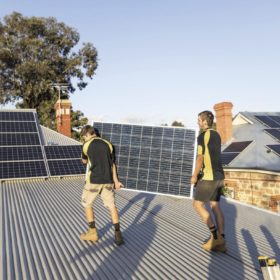
Victoria’s minimum solar feed-in tariffs to drop by 34%
The delicate balancing act between incentivising rooftop solar uptake, versus moderating its effects on the grid and electricity markets continues, with the Victorian energy regulator reducing the state’s minimum solar feed-in tariff from 1 July.
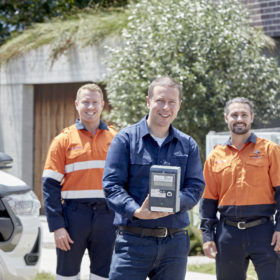
One in a million, solar drives smart meters past the million milestone
Smart metering services provider Intellihub cracked the million meter mark this week as the smart meter market in Australia and New Zealand surges off the back of continuing solar uptake.
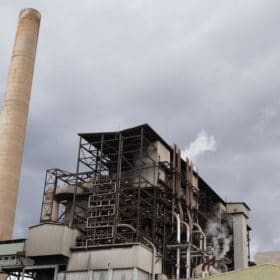
Regulator ranks AGL Australia’s biggest climate polluter
Australia’s largest energy retailer, AGL, is working towards net-zero emissions by 2050 but it can not come soon enough for some with new government data revealing the energy giant is the nation’s biggest polluter, emitting more than 42 million tonnes of carbon emissions in the past year.
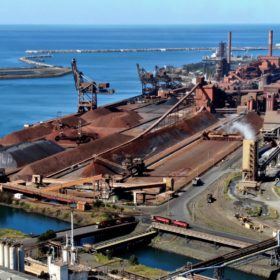
Bluescope says climate action is ‘not optional’, while opting not to take climate action
On the same day as Bluescope Steel announced massive profits and the creation of a new Chief Executive Climate Change, the steel giant also conceded that it was not fully committed to investing in ‘green steel’ solutions in the near future.
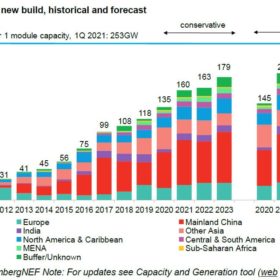
BloombergNEF expects up to 209 GW of new solar for this year
A new report from the U.S.-based analyst predicts that new PV additions for 2021 may range from 163 to 221 GW next year and from 179 to 240 GW in 2023. According to BloombergNEF, the current supply bottlenecks for glass and polysilicon will unlikely halt the global PV market.

The weekend read: The race for green hydrogen
Large swaths of low-cost land: check. Lots of sun and wind: check. The ability to transport green hydrogen cost-effectively to energy importing economies: check. Then you’re in the race to become one of the “renewable energy superpowers” of the low-carbon economy. A growing number of countries are assessing their renewable resources and natural attributes and positioning themselves to become green hydrogen exporters. However, not all are created equal.