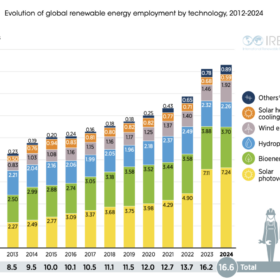
Solar accounted for 7.24 million jobs in 2024
The International Renewable Energy Agency’s annual review into employment finds solar held more than 43% of global jobs in the renewable energy sector in 2024.
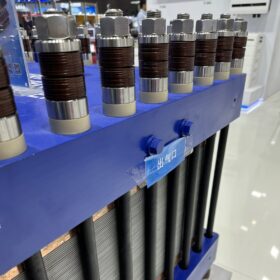
Hydrogen faces ‘year of reckoning’ in 2026, says Wood Mackenzie
Wood Mackenzie’s 2026 market outlook for hydrogen expects non-biological origin hydrogen to gain momentum and ammonia crackers to reach commercial scale but predicts the Middle Eastern market to retreat and the European Union to abandon its industrial hydrogen mandates.
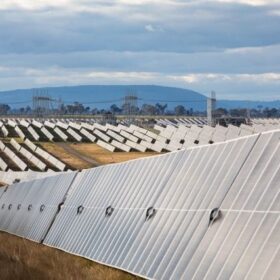
Buyers line up to take look at Zen Energy portfolio
Renewable energy developer and retailer Zen Energy is up for sale with the Australian firm’s expanding portfolio of solar and energy storage projects and offtake agreements attracting interested from both local and international investors.
Solar module efficiency could exceed 35% by 2050
A new Perspectives research study on the future of the global PV supply chain outlines how module prices, performance, and lifetimes could evolve over the next 25 years. The work reflects a collaboration among leading solar research institutions worldwide. One of the study’s authors, the director of the Fraunhofer Institute for Solar Energy Systems, told pv magazine that solar module and cell efficiencies could exceed 35% by 2050, with panel prices expected to drop by a factor of two.
WA utility seeks green tick for solar and battery project
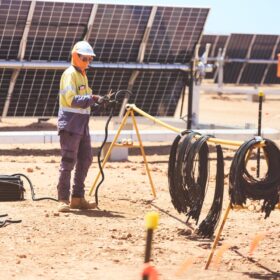
Plans to develop a 90 MW solar farm and a six-hour battery energy storage system to help power the Western Australian town of Broome have joined the queue for federal environmental assessment.
How to avoid ‘long tail’ effects in large-scale PV plants
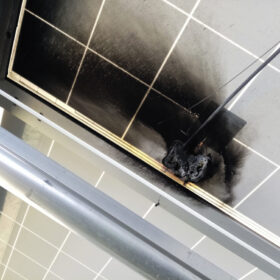
New UNSW research found that about 20% of solar modules in large PV plants degrade much faster than expected. The researchers recommend holistic strategies such as robust materials, advanced designs, and proactive monitoring to decouple degradation pathways and prevent cascading failures.
Line locks in equipment supply deal for Tasmanian green hydrogen project
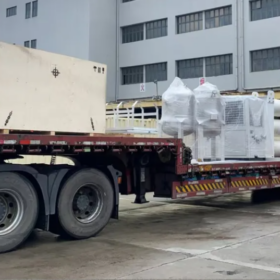
Line Hydrogen has breathed new life into a 7.6 MW green hydrogen project planned for Tasmania with the signing of an equipment supply deal with Chinese manufacturer Jiangsu Guofu Hydrogen Energy Equipment Co.
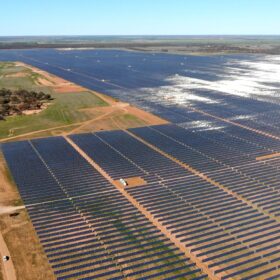
NSW solar farms break 1 TWh generation barrier
Solar farms in New South Wales led the way for Australia’s utility scale PV energy output in December, generating 1,052 GWh of renewable electricity to drive all Australian large-scale PV and wind generation up 19% on the same time last year.
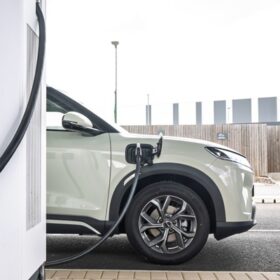
Australia makes gains in electric vehicle uptake
The number of motorists opting to buy an electric vehicle in Australia continues to rise with new-car sales data showing almost 157,000 EVs were purchased in 2025 with total sales increasing by 38% compared to the previous year.
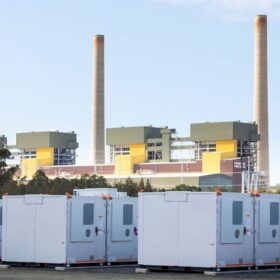
Origin flicks operational switch on Australia’s biggest approved battery
The first stage of the biggest approved battery project in Australia is now fully operational with Origin Energy announcing the initial stage of the 700 MW / 3,160 MWh battery energy storage system being built next to its Eraring coal-fired generator in New South Wales has commenced commercial operations.