VPP pilot provides glimpse of future in DER-rich grid
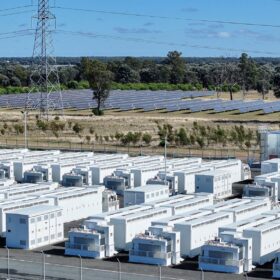
Western Australia has been offered a glimpse of its energy future with the $35 million Project Symphony aggregating its first package of residentially generated energy and successfully participating in a simulated two-way Wholesale Electricity Market.
MPower accelerates renewables strategy with Lakeland acquisition
Australian renewable energy developer MPower has boosted its solar PV and energy storage portfolio, announcing it has finalised an $8 million transaction which will see it purchase the Lakeland Solar & Energy Storage Project in far north Queensland.

Hanwha Q Cells to build US solar module factory, expand cell capacity in South Korea
Hanwha Q Cells plans to build a 1.4 GW solar panel factory at an undisclosed location in the United States. It has also announced plans to expand its cell capacity to 5.4 GW in South Korea. CEO Justin Lee spoke to reporters at the Smarter E event about the company’s plans and current supply chain issues.
Weekend read: Australia’s looming solar cliff
Some believe Australia has begun to tip over the “solar cliff,” reaching penetrations that are becoming disruptive to the balance of the grid and to the business models of solar companies themselves. Following notable exits from the market, alarm bells are ringing for solar companies to offer more than just solar installations, writes pv magazine’s Bella Peacock.
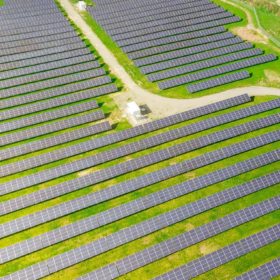
Solar shines bright as world eyes record renewables growth
The International Energy Agency expects the global expansion of solar PV, wind power and other renewable energy technologies will continue to defy rising costs and supply chain bottlenecks to reach triple-digit growth this year with solar additions forecast to reach almost 200GW.
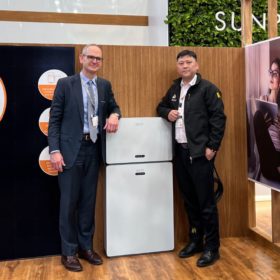
Maxeon moves ‘beyond panels’ with AlphaESS partnership
Singapore-headquartered solar manufacturer Maxeon Solar Technologies has declared it is moving “beyond the panel”, teaming with multinational battery manufacturer AlphaESS to develop integrated solar and energy storage solutions for the residential sector.
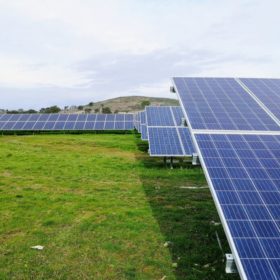
Aquila Capital confirms 1GW solar PV pipeline for New Zealand
New Zealand’s transition to renewable energy has received a boost with German investment manager Aquila Capital teaming with renewable energy asset developer Far North Solar Farm to announce they will commence construction on a 1GW portfolio of large-scale solar PV projects.
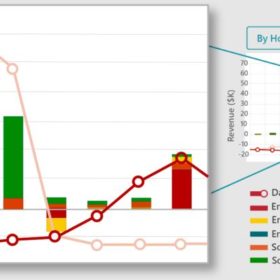
UL releases modelling software for utility scale energy storage
The software, called HOMER Front, is designed for standalone or hybrid solar or wind-plus-storage applications, aimed at maximising revenue streams.
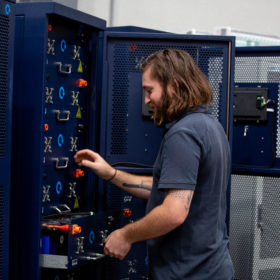
Battery manufacturer builds on Australian supply chain
With global demand for both large scale and distributed battery energy storage on the rise, Australian battery manufacturer Energy Renaissance has reaffirmed its commitment to produce a lithium-ion storage solution using Australian suppliers and components.
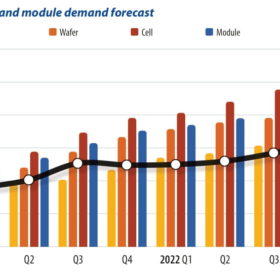
No end to solar supply/demand imbalance
The solar supply chain problems that began last year with high prices and polysilicon shortages are persisting into 2022. But we are already seeing a stark difference from earlier predictions that prices would decline gradually each quarter this year. PV Infolink’s Alan Tu probes the solar market situation and offers insights.