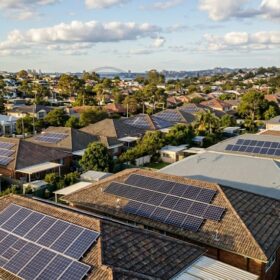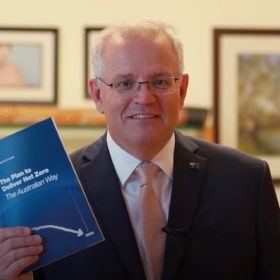
Australia’s belated net zero 2050 commitment depends upon ‘ultra low-cost solar’
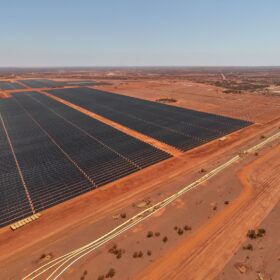
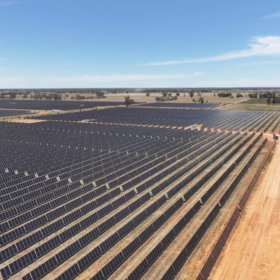
Australia may have finally joined the world net zero party, but it forgot to bring a plate. Considering its lack of policy and dependence on future technologies and cost reductions, the Morrison government’s “plan” is more like a prayer. Nevertheless, a stretch goal of solar generation at $15/MWh is the foundation for Australia’s future.
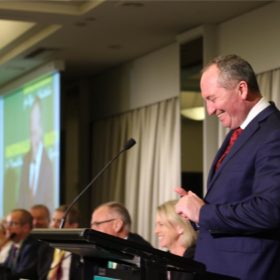
Nats not listening: new data ‘rejects’ assumed attitudes of coal communities
While prime minister Scott Morrison’s preparation for COP26 has been shrouded in controversy, a new survey into coal mining communities’ sentiments toward renewable energy reveals widespread support for the transition. The revelation comes as WWF-Australia also released findings from its expert survey, illustrating the federal government’s lack of ambition is considered the main hurdle slowing an otherwise perfectly poised transition.
Will China’s ‘double carbon’ and ‘dual control’ policies drive demand for solar?
Factories suffering from rationed grid electricity could help drive a boom in on-site solar systems, and recent moves to mandate the retrofitting of PV on existing buildings could also lift the market, as analyst Frank Haugwitz explains.

Made-in-WA cathode precursor plant gets underway
Construction has begun on a manufacturing pilot project to see battery-grade nickel, cobalt and manganese for precursor battery cathode materials (PCAM) in Perth. The facility is expected to be completed in early 2022 and is one of a number of developments that will look to establish Western Australia (WA) as a materials supplier to the growing battery manufacturing industry.
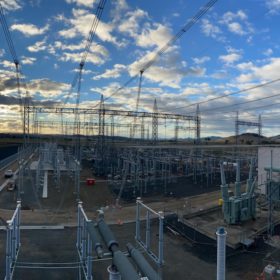
AEMC reveals final rule to shore up system strength
With the transformation of Australia’s power system accelerating, the Australian Energy Market Commission has unveiled a raft of reforms to improve system strength in the national grid, predicting the changes will smooth the way for new energy resources including large-solar PV and batteries to connect to the grid.
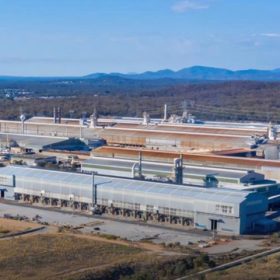
Large-scale renewable uptake to help Rio Tinto’s brand rebuild
Mining giant Rio Tinto has been on the back-foot since its destruction of 46,000-year-old sacred indigenous sites last year, costing one chief executive his job and one country a timeless piece of its cultural heritage. Along with the impacts of Covid-19 and stock price decline, the company is seeking to rebuild its brand with improved emissions reduction targets, which will see multi-gigawatt solar and wind installations.
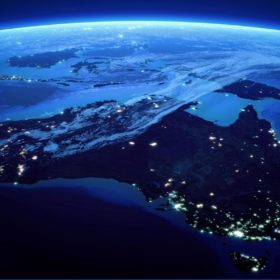
Report finds co-located hubs key to battery industry competitiveness
A report from Australia’s Future Battery Industries Cooperative Research Centre which analysed the development of battery hubs in the U.S., Germany and Japan, has found that co-location and cooperation between industry and government were key to hub success. For Australia to play the same game, it will have to leverage its wealth of resources, and clean up its act along the way.

Victoria invites consultation on how to make renewable energy more accessible to C&I users
Renewable generation is now the cheapest source of electricity, but for many C&I users accessing green energy is a complex proposition. The Victorian Government wants to retain and attract more businesses, build more renewable energy, create more jobs — is a market facilitation platform the next piece of the puzzle?
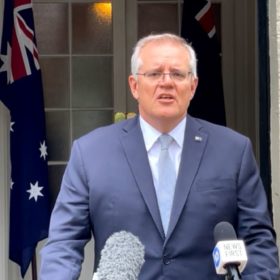
Morrison confirms he will attend COP26 climate summit
Australian Prime Minister Scott Morrison has confirmed he will travel to Scotland for the United Nations COP26 international climate conference later this month, signalling an about-turn after he had previously indicated he might not attend the talks.
States pave way for Morrison to beat 2030 emissions pledge
With Prime Minister Scott Morrison under increasing pressure to back a 2050 net-zero carbon emissions target before the United Nations’ COP26 climate conference in Glasgow at the end of the month, a new report indicates the federal government can capitalise on state and territory efforts to keep the global 1.5°C goal in play.