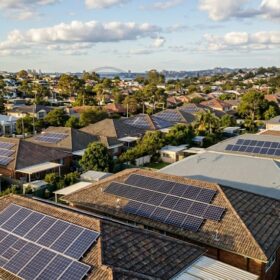
Free electricity coming: are Aussies aware of Solar Sharer?
Australia is world-leading in solar adoption, with one in 3 homes equipped with a rooftop solar system. Ongoing volatility in fuel and energy prices is prompting Australian households to rethink how they power their homes and vehicles, with solar emerging as a way to buffer against rising costs.
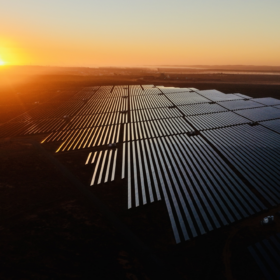
NSW opens tenders for 2.5 GW of solar and wind alongside 12.5 GWh of storage
New South Wales is rolling out two of the biggest renewable energy tenders in the state’s history, seeking 2.5 GW of new generation capacity in addition to 12.5 GWh of long-duration energy storage.
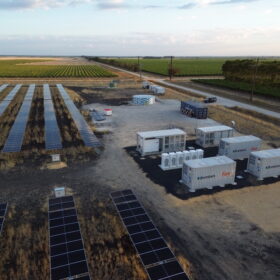
Flow Power adds three solar and battery projects to portfolio
Renewables developer and electricity retailer Flow Power has added almost 20 MW of new solar and 45 MWh of battery energy storage to its operational portfolio with the commissioning of three projects in South Australia.
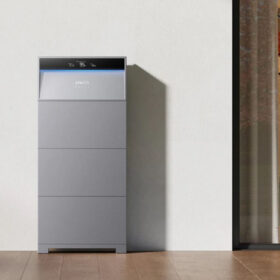
Bowen marks 400,000 home battery installation milestone
Australia is in the grip of a consumer-led energy storage boom with new figures showing more than 400,000 batteries representing 11.2 GWh of storage capacity have been installed nationwide in the past 10 months.
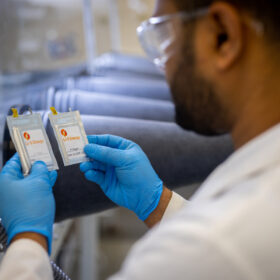
Li-S Energy lands key approvals to fly battery cells into U.S.
Australian battery technology developer Li-S Energy has secured key approvals to airfreight prototype lithium-sulfur cells from Australia to the United States – opening a direct pathway into the world’s largest defence market.
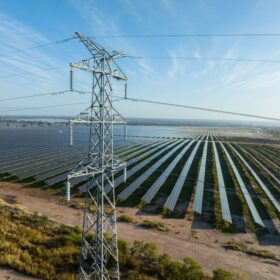
Why Australia needs to recognise the electricity grid as our new national strategic asset
As energy security continues to dominate headlines, Australia is quietly setting records for renewable energy generation.
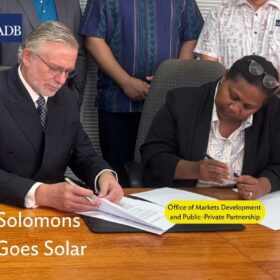
Solomons plan grid-scale solar project as Pacific nations push for faster transition
The Solomon Islands and Asian Development Bank have signed an agreement to develop the country’s first large-scale solar project as Pacific energy ministers convene in Papua New Guinea calling for an accelerated renewable energy transition in Oceania.
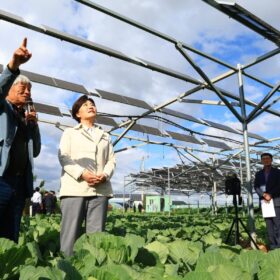
South Korea’s first agrivoltaics law leaves half of farmland off-limits
South Korea’s National Assembly has passed the country’s first dedicated agrivoltaics legislation, enabling dual use of agricultural land for solar power generation, but the law excludes zones covering nearly half of the country’s farmland, according to a Seoul-based nonprofit group focused on energy transition.
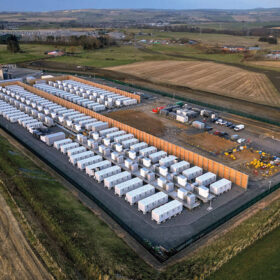
Grid-forming tech on centre stage as search for system resilience steps up
Maintaining grid stability becomes more challenging as the share of intermittent renewables grows in the electricity generation mix, but system resilience is essential to continued solar deployment. Grid-forming inverters offer a solution, and their capabilities are increasingly being tested and relied upon in key energy markets globally.
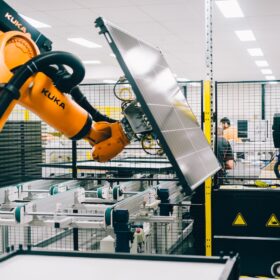
Federal Budget cuts almost $2 billion from clean energy programs
The Australian government has in its latest Federal Budget stripped almost $2 billion from programs designed to accelerate the rollout of new clean energy systems.