Australia’s first large-scale solar and storage plant up for sale
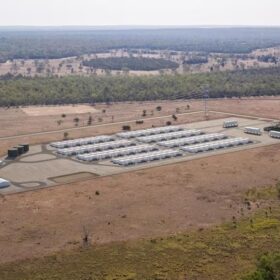
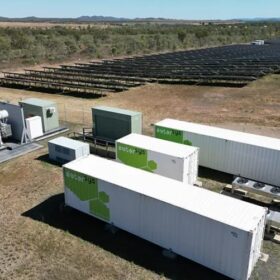
Australia’s first large-scale solar and big battery storage installation – the Lakeland project in far north Queensland – has been placed on the sales block with MPower announcing it will use the proceeds to further expand its portfolio of PV and battery storage projects.

CEFC urged to pick up pace with household energy upgrades fund
The federal government has been urged to pick up the pace after the Clean Energy Finance Corporation opened the purse strings on a $1 billion fund that is to support cheaper finance for rooftop solar, home batteries and other energy efficiency upgrades for Australian homes.

Community battery rollout picks up pace adding 980 kWh capacity in NSW
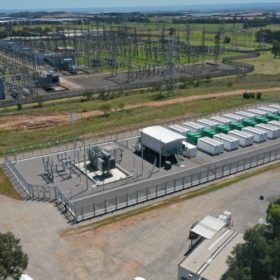
The deployment of community batteries rolls on in New South Wales with network operators Endeavour Energy and Ausgrid both launching new energy storage systems on their networks.

Weekend read: Enhancing safety in lithium-ion batteries
Lithium-ion batteries are generally safe and unlikely to fail but they can catch fire if they are damaged or stored or operated incorrectly. There is a tremendous amount of research and engineering effort going into making batteries safer but are technological advancements being rolled out quickly enough?
Zen Energy links with Japanese subsidiary on green hydrogen path
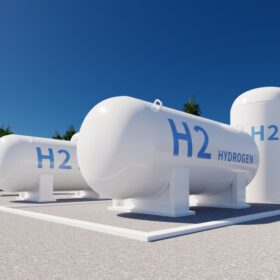
Australian renewable energy gen-tailer Zen Energy has teamed with DGA Energy Solutions Australia, a subsidiary of Japanese trading giant Mitsubishi Corp, to co-develop green hydrogen projects and advance Mitsubishi’s decarbonisation goals.
Horizon on hunt for renewable solutions for Kimberley communities
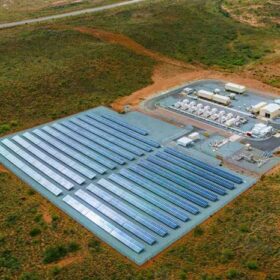
Western Australian regional energy provider Horizon Power has begun the search for electricity supply solutions that maximise renewable energy sources like solar to power five remote communities in the Kimberley region, reducing their reliance on fossil-fuel generation including diesel and gas.
Gold Hydrogen hits purity high in South Australia testing
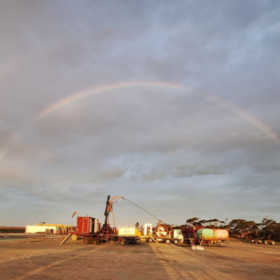
Natural hydrogen explorer Gold Hydrogen says it has uncovered 95.8% pure hydrogen at its Ramsay Project on South Australia’s Yorke Peninsula as it seeks to tap into the growing demand for the gas as a clean energy source.
Renewables must triple by 2030 to hit net-zero by 2050, says BloombergNEF
BloombergNEF says in a new report that solar and wind must drive most emissions cuts before 2030 to stay on track for net zero by 2050. Its net zero scenario targets a combined solar and wind capacity of 31 TW by 2050.
NT community claims ‘Australian first’ with solar-powered microgrid
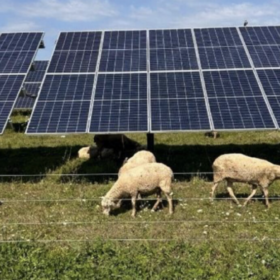
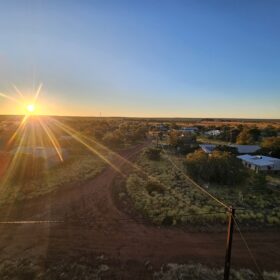
Residents in the remote Northern Territory community of Marlinja are preparing to power up what is being described as Australia’s first 100% First Nations-owned and grid-connected solar microgrid.
Stationary energy storage key priority in new national battery strategy
The Australian government has announced its new multi-billion-dollar National Battery Strategy aiming to boost the country’s domestic battery manufacturing capabilities and critical minerals processing capacity.