Weekend read: Automate, foldout for a ultra-low-cost solar future
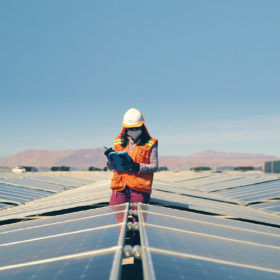
While the efficiency of solar cells will always be important, scaling innovation in sustainable cell technology and solar deployment, is the new game in town. With hydrogen exports and production of green metals in its sights, Australia has some breakthrough tech coming down the pike, as pv magazine Australia’s Natalie Filatoff reports.
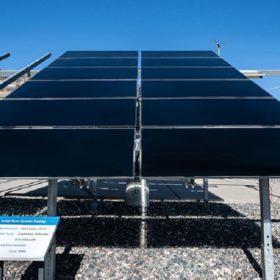
How clean energy technologies achieve commercial success
Analysts study lab-to-market pathways for clean energy technologies including a look at the development of First Solar’s cadmium-telluride thin film solar modules.
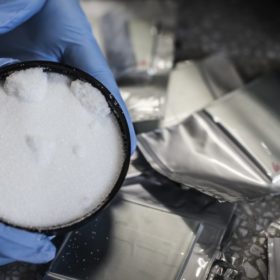
Research team takes on lithium-ion tech with sodium-sulphur battery
Researchers from the University of Sydney have created a new sodium-sulphur battery which they say provides four times the energy capacity of lithium-ion batteries and is far cheaper to produce, providing the potential to dramatically reduce energy storage costs.
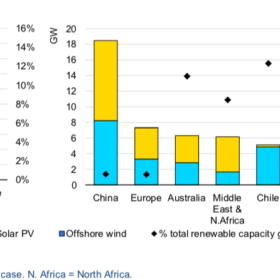
Global renewables capacity for hydrogen to surge by 2027, says IEA
The International Energy Agency says that it expects the use of renewables to support global hydrogen production to surge over the next five years. The Netherlands and Denmark, meanwhile, have revealed plans to expand electrolysis capacity.

Independent tool providing answers to complexities of home solar, storage launched
A free version of SunSPOT, a tool for tailored guidance on the ideal solar and battery set ups, has now been launched. Developed by APVI and UNSW, the online tool allows users to calculate size, cost and potential savings from household renewable systems and is the only such platform offering this information without a sales motive.
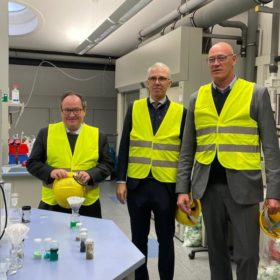
Brisbane startup to build cathode material plant in Germany after securing EU funding
University of Queensland spin-off Pure Battery Technologies which has developed a greener, cheaper process for refining critical battery materials has received a $57.45 million (USD 38.5 million) loan from the European Investment Bank to build a demonstration plant in Hagen, west Germany.
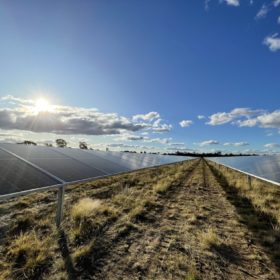
PVH’s success in Australia: ‘There are no obvious choices for us’
PV Hardware has become a leading solar tracker manufacturer in Australia, a market renowned for its growth, opportunities and difficulty. Pv magazine spoke to Alejandro Cantos, director of PVH for the Asia-Pacific region.

Panasonic unveils vehicle-to-home system for PV-powered homes
Panasonic claims that its new vehicle-to-home system can increase the self-consumption rate of residential solar and storage capacity to 90%.
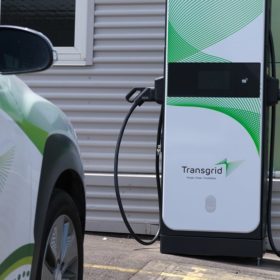
Fast-charger to help drive Transgrid’s net-zero ambitions
As part of net-zero targets, New South Wales transmission network owner Transgrid plans to eliminate 100% of emissions from its passenger and commercial fleets by 2030 and to accelerate that strategy will trial a next-generation electric vehicle charger developed by Spanish firm Wallbox Chargers.
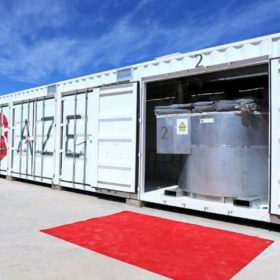
Molten aluminium storage startup enters Australian market, apparently
In a decidedly confusing announcement, Swedish molten aluminium storage startup Azelio says it has secured a conditional order from relatively unknown Australian company MPG Built. Azelio says the order will see it provide “energy-as-a-service” using five of its TES.POD storage units combined with solar power.