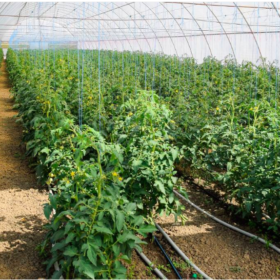
New chapter for solar+agriculture: BIPV for off-grid greenhouses
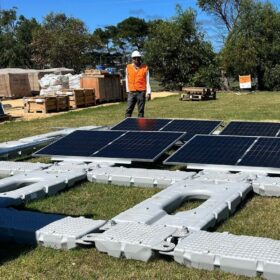
A new partnership is seeking to build a world-first off-grid greenhouse which will use solar glass to maintain optimal temperature and regulate irrigation by condensation inside the facility.
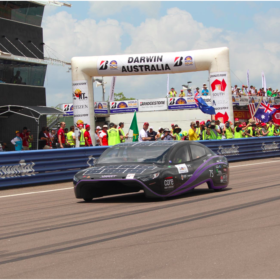
Old and new challenges at Bridgestone World Solar Challenge
Following significant changes to the regulations, all participants in the upcoming Bridgestone World Solar Challenge will need to go an extra mile to reach one of only two recharging stops on their way from the Top End to Adelaide. Following final scrutineering to ensure the vehicles are built to the regulations, the UNSW Sunswift solar car team is feeling extra confident for the race in its upgraded four-seater VIolet.
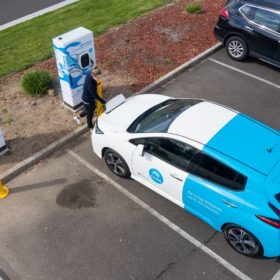
New solar-powered EV charging stations to alleviate grid stress during peak periods
The new solar-powered EV charging stations with integrated energy storage are designed to support electric vehicles even in the height of summer. The technology is developed by Australia’s national science agency in collaboration with Nissan Australia and Delta Electronics and backed by funding from the Victorian Government.
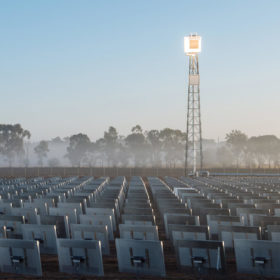
CSP innovator Vast Solar wins International Energy Award
Aussie company Vast Solar wins Technology Innovation Award at the International Energy Agency’s (IEA) SolarPACES 2019.
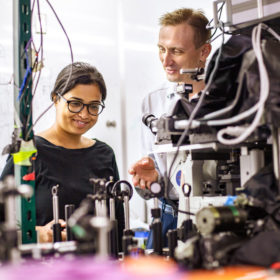
Questioning the quantum behavior of perovskites
Scientists at the University of Texas have made a discovery they say has “altered the understanding of the fundamental properties of perovskite crystals”. Their findings could improve understanding of defect formation in perovskites, leading to devices with enhanced performance and stability.

New antenna for a better photon harvest
An Italian research team has developed a device that it says can easily be integrated into a PV cell, and can boost its efficiency by converting more light particles into a high energy state before they are absorbed by the cell. The scientists claim that their innovation could offer a green‐to‐blue photon upconversion yield as high as 15%.
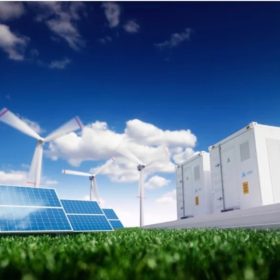
Monash University researchers make electrolysis breakthrough
Researchers at Monash University have managed to find a way past one of the few remaining roadblocks to producing industrial quantities of hydrogen gas through electrolysis via solar energy.

Solar powered smart bins doing a manly job
Sydney’s iconic Shelley Beach is now home to two solar-powered smart bins, the bins are capable of compacting waste to reduce collections, thereby cutting council emissions.

Danish researchers bring some color to rooftop PV
Scientists led by the Technical University of Denmark have begun a project to design solar cells that can be produced in different colors with minimal effect on performance, making them suitable for building-integrated and other applications with aesthetic considerations.
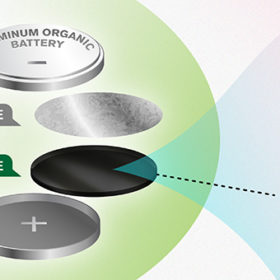
New aluminum batteries for renewables storage
The devices, developed by a European research team, are said to have twice the energy density of conventional aluminum devices. The scientists used a cathode made of anthraquinone, instead of one based on graphene, increasing energy density.