Solar tracker manufacturer offers new terrain-following solution
Spain-based manufacturer PV Hardware has released a terrain-conforming tracker support, enabling up to 2° of variation between posts and enables solar installations on difficult sites without increasing environmental impact or construction costs.
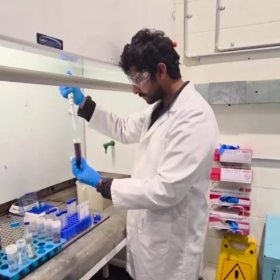
Coal waste breakthrough could unlock resources for 15 million EV magnets
Minerals to make magnets for 15 million electric vehicles is the potential of a Monash University breakthrough, turning proverbial water into wine, after extracting 17 critical minerals from coal fly ash, mine tailings, and old electronics.
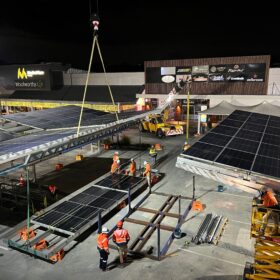
Night works help Canyon knock over 250 kW build in quick time
Australian modular PV manufacturer Canyon Solar has successfully installed 250 kWp of solar in a single night as part of a three-week build at a Queensland shopping centre.
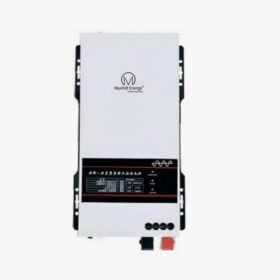
MaxVolt launches smart inverter with inbuilt lithium battery
The Indian battery manufacturer has launched a wall-mountable, high-efficiency inverter with inbuilt lithium battery for residential and commercial solar applications.
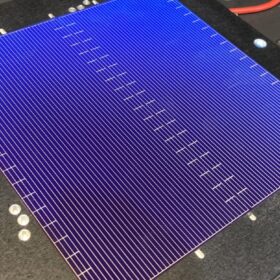
Research warns of UV-induced degradation in TOPCon solar cells from invisible light
Researchers from UNSW have found that invisible light accelerates UV-induced degradation in TOPCon solar cells, producing the same degradation effects as visible light but at a much faster rate. This can lead to significant open-circuit voltage losses and reduce cell efficiency.
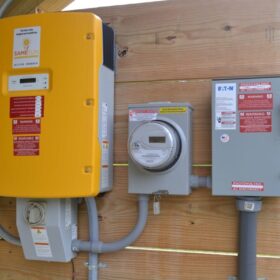
How long do residential solar inverters last?
Multiple factors affect the productive lifespan of a residential solar system. In Part 2 of our series, we look at solar inverters.

New AI-powered tool targets rooftop solar lead generation
The GreenSketch solar and battery design platform has been updated with the launch of a new feature that combines AI-powered roof detection with “radar-style” mapping.
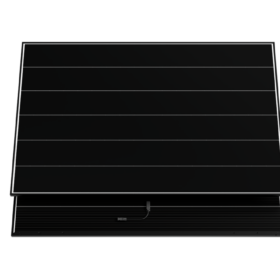
Aiko offers 500 W all-back contact solar modules for C&I applications
The Chinese manufacturer has upgraded its Infinite ABC solar module series with four new product versions. It claims the new modules are the world’s first 500 W panels measuring less than 2 m2.

Battery recycling centre launched at University of Adelaide
The federal government’s Australian Research Council has launched a new training centre in South Australia that will seek to provide industry-led solutions for the recovery, reuse and recycling of battery waste in Australia.
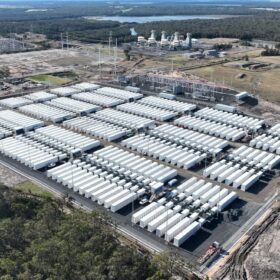
Waratah Super Battery starts operations as ‘shock absorber’
The Waratah Super Battery has commenced working as a giant “shock absorber” for the electricity grid with New South Wales transmission network operator Transgrid enabling what it says is the largest monitoring and control system of its kind in the country.