New tool optimises ground works, PV tracker planning
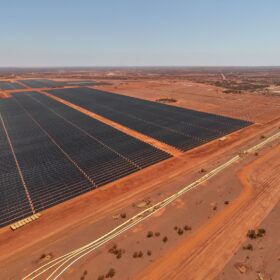
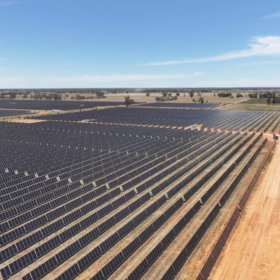
Spanish PV company Soltec and Aplitop have partnered to develop a computer-aided design plug-in application aimed at simplifying the planning process and reducing earth-moving operations, measurements, and the relocation of solar trackers in ground-mounted PV projects.
Aqueous zinc-ion battery research advances biodegradable storage solution
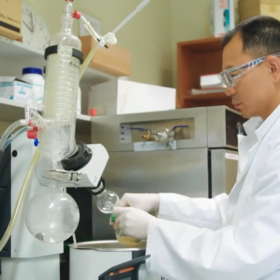
South Australia Flinders University researchers, in collaboration with Griffith University, have published findings into aqueous zinc-ion batteries studies, as a more sustainable energy storage technology alternative to lithium-ion batteries.

Paxos unveils glass-glass PV tile with heat pump integration
Paxos Solar has developed a new glass-glass PV tile that integrates with heat pumps, featuring Longi’s back-contact solar cells. The 44 W, 59.5 cm x 48 cm tile can also produce heat for residential systems.

Sharp unveils 450 W bifacial TOPCon module with 22.52% efficiency
Sharp’s new IEC61215- and IEC61730-certified solar panels have an operating temperature coefficient of -0.29% per C and a bifaciality factor of more than 80%.
WA battery recycling specialist to scale up UK ambitions
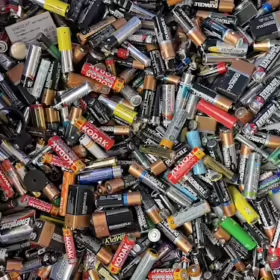
Australian battery recycling startup Renewable Metals intends to expand by a factor of 10 a demonstration-scale lithium battery recycling plant being developed in the United Kingdom after raising $8.1 million in a seed extension round.

New deep learning tech uses electroluminescence images to identify defective PV cells
The novel method uses the YOLOv8 framework, integrating an attention mechanism and a transformer model. It was tested on a dataset of 4,500 electroluminescence images against several other models and its results were up to 17.2% more accurate.

Factory testing marks milestone for AVL value-adding vision
Australian Vanadium Limited has achieved another milestone in its ‘pit to battery’ strategy with the successful deployment of its vanadium electrolyte in a 78 kW / 220 kWh flow battery.
UQ tech captures PFAS chemicals for re-use in batteries
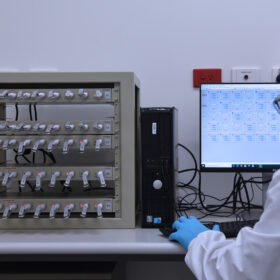
Researchers at the University of Queensland have developed technology to remove harmful synthetic fluorine-based chemicals from water in order to re-purpose them for use in batteries.
China connects first large-scale flywheel storage project to grid
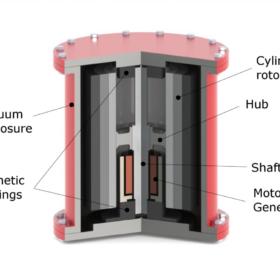
The 30 MW plant is the first utility-scale, grid-connected flywheel energy storage project in China and the largest one in the world.
SmartHelio launches AI solar forecasting tool with 98.5% accuracy
SmartHelio has developed an AI solar forecasting tool with 98.5% accuracy, using socioeconomic details and climate data for predictive analytics.