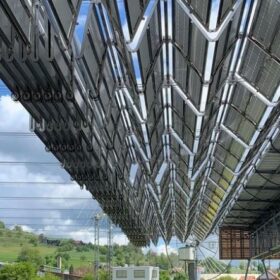
Foldable solar carport extends, retracts in response to weather
Solar technology company Dhp Technology AG plans to deploy new retractable PV systems at 45 motorway service areas in Switzerland. The foldable arrays can be retracted and protected during extreme weather conditions or hail storms.
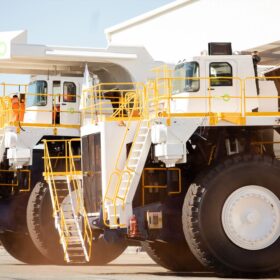
Fortescue powers ahead with battery-electric truck testing
Australian mining major Fortescue is now testing a prototype battery-electric haul truck at its Christmas Creek iron ore mine in Western Australia’s Pilbara region.
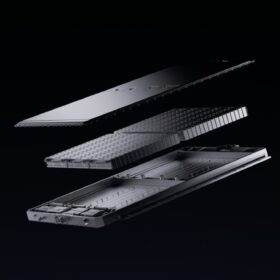
CATL unveils EV battery enabling 400km driving range on 10-minute charge
Chinese battery industry heavyweight Contemporary Amperex Technology has unveiled a new electric vehicle battery that reportedly enables long-range driving on a fast, 10-minute charge. It expects mass production to begin by the end of this year, and vehicles equipped with the battery to be available in the first quarter of 2024.
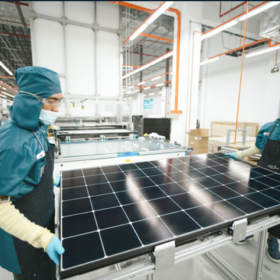
Scientists outline innovation pathways for PV technologies
Continued innovation in PV cell technology will have major impacts as PV is deployed at “multi-terawatt scale” over the next two decades, says a global team of scientists.
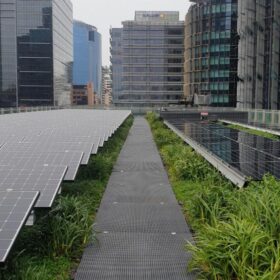
Study shows biosolar rooftop system benefits power output
A group of Australian researchers say they have confirmed the benefits of combining rooftop solar installations with ‘green’ roofs with new research showing the combination increased solar generation by as much as 107% during peak periods.
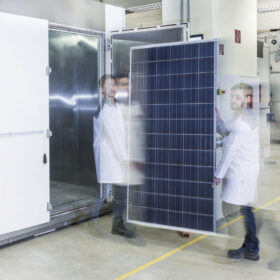
China plans recycling system for wind turbines, solar panels
China will introduce technical standards and policies for the wind and solar industries to recycle their decommissioned equipment by 2030.
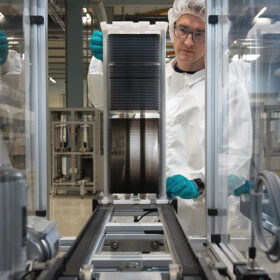
Weekend Read: Mapping a path to tandem commercialisation
Chris Case, chief technology officer for Oxford PV, recently spoke with pv magazine about the U.K.-based company’s new 28.6%-efficient, commercial-sized, tandem solar cell, its U.S. subsidiary, and plans for the future.
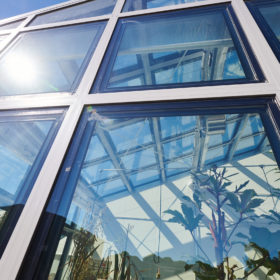
ClearVue releases results from first long-term study of clear solar glass
Perth-based ClearVue is making significant strides as its transparent solar windows demonstrate tangible outcomes following a two-year study and published paper.
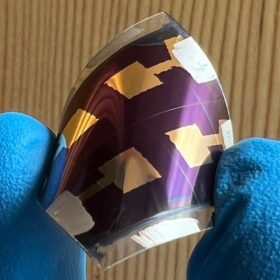
Flexible indoor perovskite solar cell achieves 32.5% efficiency
Italian scientists have developed a flexible indoor perovskite solar cell with 32.5% efficiency. Their design uses a PET substrate combined with a tetrabutylammonium bromide layer over the perovskite absorber. This additional layer effectively reduces defect density and enhances the stability of the underlying 3D perovskite structure.
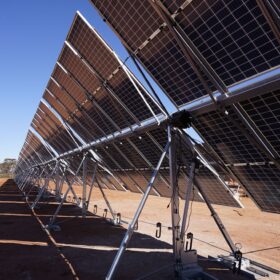
Cambridge completes Australian first install of modular solar solution
Prefabricated solar that integrates single-axis tracking technology has been deployed in Australia for the first time with United Kingdom-headquartered Cambridge Energy announcing a 2.3 MW system has been successfully installed at a mine site in Western Australia.