BIPV shading estimation methods key for uptake, says IEA-PVPS
A recently published report from the International Energy Agency’s Photovoltaic Power Systems Programme on building integrated photovoltaics (BIPV) digitalisation found many industry professionals are unsure of a suitable method for estimating shading in BIPV projects.
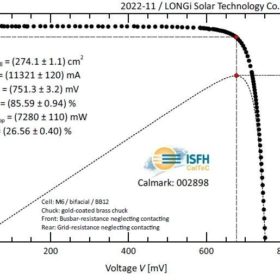
Longi claims world’s highest efficiency for p-type, indium-free HJT solar cells
Longi said it has achieved a 26.56% efficiency rating for a gallium-doped, p-type heterojunction solar cell and a 26.09% efficiency rating for an indium-free HJT cell, both based on M6 wafers. Germany’s Institute for Solar Energy Research in Hamelin has confirmed the results.
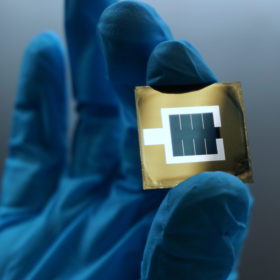
Researchers achieved world record 32.5% efficiency for a perovskite tandem solar cell
A group of researchers from Helmholtz-Zentrum Berlin (HZB) has achieved a new world efficiency record for a silicon-perovskite tandem solar cell, with a certified efficiency of 32.5%.

For Australia to lead the way on green hydrogen, first we must find enough water
Australia is well-positioned to be a global leader in green hydrogen production. Green hydrogen is produced using a renewable power source such as solar or wind. As a substitute for fossil fuels, it will help to meet growing renewable energy needs.
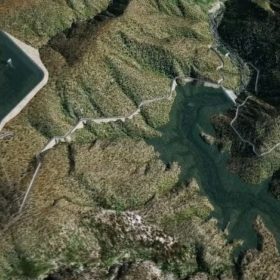
Danish renewables giant buys Queensland clean energy hub
Danish investment firm Copenhagen Infrastructure Partners has sharpened its focus on long-duration storage in Australia, announcing it has acquired the proposed Bowen Renewable Energy Hub project that is expected to combine 1.4 GW of pumped hydro storage with huge solar and wind generation.

OpenSolar to boost online PV platform capability with $22 million injection
Australian software company OpenSolar plans to speed the development of its free online solar design and sales platform and drive customer expansion globally after securing a funding injection of more than $22 million (USD 15 million).
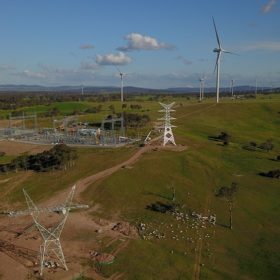
Governments unite on $7.8 billion transmission investment
The federal and New South Wales governments have combined on a landmark $7.8 billion (USD 5.25 billion) investment to help finance the development of eight critical transmission and renewable energy zone projects as they look to accelerate Australia’s clean energy future.

Hydrogen production set for Tasmania
As Australia’s hydrogen project pipeline doubles in 12 months, Iberdrola announces investment in a green hydrogen and green methanol production plant in Tasmania. Meanwhile, projects in Scandinavia target the shipping industry.
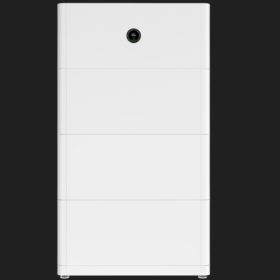
Growatt releases new battery for rooftop solar applications
Growatt’s new APX HV cobalt-free lithium iron phosphate (LFP) battery has a storage capacity of 5 kWh and a nominal voltage of 650 V. It can be scaled up to six battery modules, for a maximum capacity of 30 kWh, or 60 kWh in parallel. It comes with a 10-year warranty.
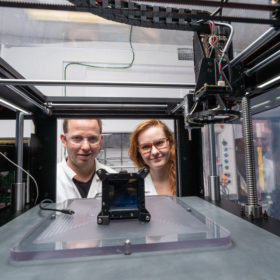
Aussie startup develops 3D electronics printer with potential to reshape solar and storage
Canberra-based startup Syenta has developed a 3D printer capable of printing highly complex and functional electronics like photovoltaics, batteries, sensors and more, promising to do so in ways that are faster, cheaper and using less energy. The technology, which saw an the Australian startup reach the global grand-finals of the global ClimateLaunchpad program, has the potential to reshape both how renewable technologies are manufactured, and their actual performance, the team tells pv magazine Australia.