Solar shines bright as world eyes record renewables growth
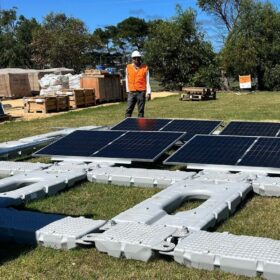
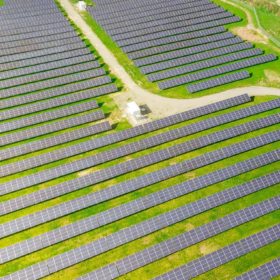
The International Energy Agency expects the global expansion of solar PV, wind power and other renewable energy technologies will continue to defy rising costs and supply chain bottlenecks to reach triple-digit growth this year with solar additions forecast to reach almost 200GW.
Maxeon moves ‘beyond panels’ with AlphaESS partnership
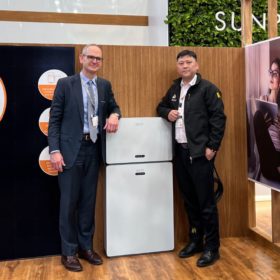
Singapore-headquartered solar manufacturer Maxeon Solar Technologies has declared it is moving “beyond the panel”, teaming with multinational battery manufacturer AlphaESS to develop integrated solar and energy storage solutions for the residential sector.
EV policy should be front and centre this election, but its fallen by the wayside
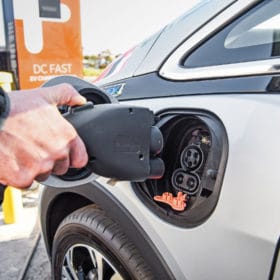
It’s disappointing that EV adoption policy in Australia has been put on the back-burner this election, writes Des Hang, CEO and co-founder of Carbar. The concern is that action on this issue will be slow regardless of who gets into power, simply because it’s not generating as much buzz as it should during the campaign.
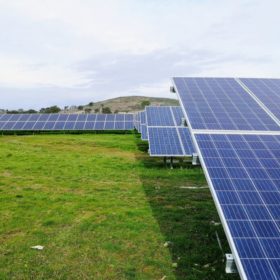
Aquila Capital confirms 1GW solar PV pipeline for New Zealand
New Zealand’s transition to renewable energy has received a boost with German investment manager Aquila Capital teaming with renewable energy asset developer Far North Solar Farm to announce they will commence construction on a 1GW portfolio of large-scale solar PV projects.
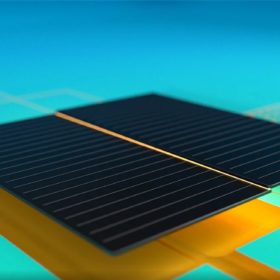
REC showcases G12 residential heterojunction PV module with gapless design
REC’s new heterojunction solar panel series features efficiencies of up to 22.3% and an operating temperature coefficient of -0.26% per degree Celsius.
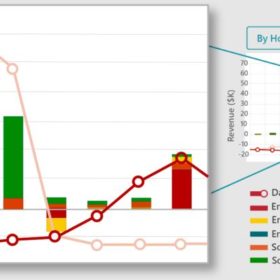
UL releases modelling software for utility scale energy storage
The software, called HOMER Front, is designed for standalone or hybrid solar or wind-plus-storage applications, aimed at maximising revenue streams.
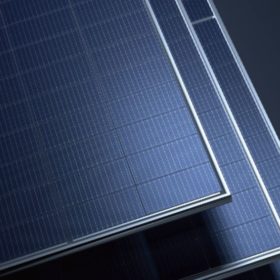
Jetion presents heterojunction solar module series based on n-type G12 wafers
The largest product of the series is a solar module with an efficiency of up to 22.5% and a power output of up to 700 W. For all the panels of the series, the temperature coefficient is -0.26% per degree Celsius and the manufacturer offers a 12-year product guarantee and a 30-year power output guarantee.
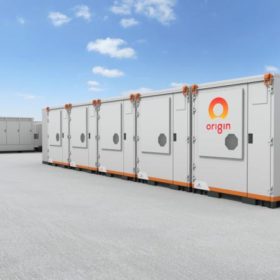
Origin secures government approval for 2,800MWh Eraring battery
Origin Energy has secured planning approval for a 700MW/2,800MWh grid-connected battery to be developed at the site of its coal-fired Eraring power station in the New South Wales Hunter Valley.
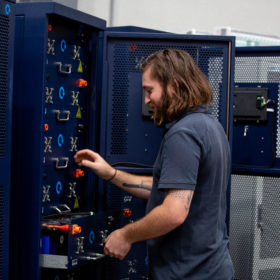
Battery manufacturer builds on Australian supply chain
With global demand for both large scale and distributed battery energy storage on the rise, Australian battery manufacturer Energy Renaissance has reaffirmed its commitment to produce a lithium-ion storage solution using Australian suppliers and components.
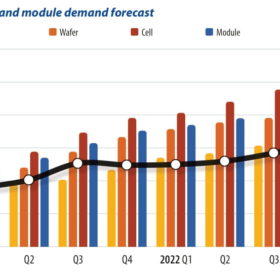
No end to solar supply/demand imbalance
The solar supply chain problems that began last year with high prices and polysilicon shortages are persisting into 2022. But we are already seeing a stark difference from earlier predictions that prices would decline gradually each quarter this year. PV Infolink’s Alan Tu probes the solar market situation and offers insights.